Why Post-Purchase Experience Determines Customer Retention
A well-designed Post-Purchase Customer Experience helps customers build confidence, achieve success faster, and remain loyal long after the initial purchase.
Most businesses celebrate the moment a new customer signs the contract, places an order, or completes a purchase.
The sales team celebrates.
Marketing celebrates.
Revenue increases.
Targets are achieved.
From a business perspective, it feels like the journey has reached an important milestone.
But from the customer’s perspective…
The journey is only beginning.
That single difference in perspective explains why some businesses build loyal, long-term customers while others constantly struggle with churn.
Understanding how post-purchase experience improves customer retention helps businesses focus on long-term relationships instead of short-term sales alone.
Many organisations invest heavily in attracting prospects. They optimise advertising campaigns, improve conversion rates, refine sales pitches, and work hard to increase revenue.
Yet once the sale is complete, something unexpected often happens.
Communication slows.
Support becomes reactive.
Customers are left to figure things out on their own.
The excitement that existed before the sale quietly disappears.
The customer begins asking questions such as:
- “Did I make the right decision?”
- “Will this actually solve my problem?”
- “What happens next?”
- “Am I getting the value I expected?”
How your business answers those questions—through actions rather than words—has a profound impact on whether customers stay or leave.
This is why customer retention is rarely won during the transaction itself.
It is won through every interaction that follows.
The welcome email.
The onboarding experience.
The first conversation with your team.
The speed at which customers experience value.
The clarity of your communication.
The support they receive when challenges arise.
Each of these moments either strengthens confidence or slowly erodes it.
Many businesses believe customer retention is primarily the responsibility of customer support or customer success teams.
In reality, retention is influenced by every experience customers have after making the decision to trust your business.
A great product alone isn’t always enough.
Outstanding service alone isn’t always enough.
Even competitive pricing isn’t always enough.
Customers stay when the experience consistently reinforces that they made the right decision.
Businesses that understand this don’t simply focus on making the sale.
They focus on making customers feel confident about the sale.
That subtle shift often separates businesses with high churn from those that enjoy strong customer loyalty, higher customer lifetime value (LTV), repeat purchases, referrals, and sustainable growth.
In this guide, you’ll discover:
- Why post-purchase experience plays such a critical role in customer retention.
- What customers expect immediately after they buy.
- The hidden mistakes that unintentionally push customers away.
- Practical ways to create experiences that build trust, improve loyalty, and increase long-term profitability.
Because in today’s competitive market, winning a customer is only half the challenge.
Keeping them is where sustainable growth is built.
What Is the Post-Purchase Experience?
When people think about customer retention, they often focus on the quality of the product or service itself.
While that’s certainly important, customers don’t judge your business based on the product alone.
They judge the entire experience of doing business with you.
That’s what we call the post-purchase experience.
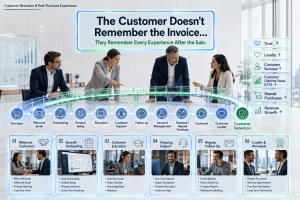
Simply put, the post-purchase experience includes every interaction a customer has with your business after they decide to buy.
It begins the moment payment is completed and continues throughout the entire customer relationship.
For some businesses, that relationship may last a few weeks.
For others, it may continue for years.
Every email.
Every phone call.
Every support interaction.
Every update.
Every follow-up.
Every moment contributes to how customers feel about their decision to choose your business.
A positive post-purchase experience reassures customers that they made the right choice.
A poor one creates uncertainty, frustration, and eventually, churn.
Although the specific journey varies between industries, most businesses include several common touchpoints after the sale.
These may include:
- Welcome emails that acknowledge the purchase and explain the next steps.
- Onboarding programmes that help customers get started quickly.
- Product or service delivery.
- Product setup or implementation.
- Customer support and technical assistance.
- Educational resources such as guides, videos, or webinars.
- Regular follow-up communication.
- Account management and relationship building.
- Renewal or repeat purchase conversations.
Each interaction influences how customers perceive your business.
Let’s look at how this plays out across different types of businesses.
SME Example
Imagine a small business owner purchasing accounting software for their growing company.
The purchase process is smooth.
Payment is completed within minutes.
But after the purchase, nothing happens.
No welcome email.
No setup guide.
No explanation of the next steps.
The owner begins wondering:
“Did something go wrong?”
A day later, they receive login credentials but still have no idea how to use the platform effectively.
Although the software itself may be excellent, the lack of guidance creates unnecessary uncertainty.
Now imagine a different experience.
Within minutes of purchasing, the customer receives a personalised welcome email, a simple getting-started checklist, short video tutorials, and an invitation to a live onboarding session.
The software hasn’t changed.
But the customer’s confidence has.
The experience immediately feels more professional and reassuring.
A positive Customer Retention Experience is created through every interaction customers have after they buy—not through a single moment or transaction.
Service Business Example
Consider a business that hires a digital marketing agency.
After signing the agreement, the client expects clarity about what happens next.
Instead, several days pass without communication.
The client starts wondering whether the agency has forgotten about them.
Confidence begins to decline before any work has even started.
Now compare that with an agency that immediately schedules a kick-off meeting, introduces the project team, shares a detailed implementation timeline, explains milestones, and sets realistic expectations.
The actual marketing strategy may take the same amount of time to produce.
But the customer’s experience is completely different.
Regular communication builds trust long before measurable results appear.
SaaS Example
A company subscribes to a customer relationship management (CRM) platform.
The software offers powerful features, but implementation requires configuration, user training, and integration with existing systems.
Without structured onboarding, many users feel overwhelmed.
Some never complete the setup.
Others stop using the platform after only a few weeks.
Eventually, they cancel their subscription—not because the software lacked capability, but because they never reached the point where they could experience its value.
Now imagine the same platform providing interactive onboarding, guided product tours, milestone tracking, educational emails, and proactive support.
Customers reach their first success much faster.
Confidence grows.
Adoption improves.
Retention naturally follows.
D2C Example
A customer purchases premium skincare products after seeing compelling advertisements.
When the package arrives, the experience continues.
The packaging feels premium.
Inside, there’s a personalised welcome message, simple usage instructions, realistic timelines for visible results, and QR codes linking to educational videos.
Over the following weeks, the customer receives helpful skincare tips rather than constant sales promotions.
The customer doesn’t simply receive a product.
They receive an experience.
That experience strengthens trust, encourages repeat purchases, and makes recommending the brand far more likely.
Now compare that with receiving a plain package, no instructions, and no follow-up communication.
The product may be identical.
But the experience feels ordinary—and ordinary experiences rarely inspire long-term loyalty.
The Bigger Insight
Many businesses believe customer retention depends primarily on product quality.
In reality, customers rarely separate the product from the experience surrounding it.
A great product combined with a poor experience often struggles to retain customers.
Conversely, a good product supported by an outstanding post-purchase experience can create loyal advocates who continue buying for years.
Customers don’t simply remember what they bought.
They remember how your business made them feel after they bought.
That’s why post-purchase experience isn’t a “nice-to-have.”
It’s one of the most important drivers of customer retention, customer lifetime value (LTV), referrals, and sustainable business growth.
Actionable Tips
If you want to improve your post-purchase experience, start with these practical steps:
-
Map Every Customer Touchpoint
List every interaction customers have with your business after they make a purchase. Identify where communication gaps or unnecessary friction exist.
-
Create a Structured Welcome Process
Don’t leave customers wondering what happens next. Explain the journey, timelines, responsibilities, and expected milestones from the very beginning.
-
Help Customers Experience Value Quickly
Identify the fastest way customers can achieve their first meaningful success, then design your onboarding around reaching that moment as early as possible.
-
Communicate Proactively
Don’t wait for customers to ask questions. Regular updates, educational content, and progress check-ins build confidence and reduce uncertainty.
-
Measure the Experience, Not Just the Sale
In addition to tracking revenue and conversions, monitor onboarding completion, product adoption, customer satisfaction, repeat purchases, and retention. These metrics reveal whether your post-purchase experience is creating loyal customers or future churn.
Key Takeaway
The sale marks the start of the customer relationship—not its conclusion.
From that moment forward, every interaction shapes how customers perceive your business. Businesses that intentionally design an exceptional post-purchase experience don’t just satisfy customers—they build trust, accelerate success, increase customer lifetime value, and create the long-term loyalty that fuels sustainable growth.
Why the First Few Days Matter More Than Most Businesses Realise
Most businesses believe the hardest part of the customer journey is getting someone to buy.
In reality, one of the most important moments happens immediately after the purchase.
This is the period when customers begin asking themselves a question that most businesses never hear:
“Did I make the right decision?”
It doesn’t matter whether the customer purchased software, hired a consultant, subscribed to a service, or ordered a product online.
Almost everyone experiences a brief period of uncertainty after making an important buying decision.
Psychologists often refer to this as buyer’s remorse or post-purchase uncertainty.
It doesn’t necessarily mean the customer regrets buying.
It simply means they want reassurance that they made a good decision.
This emotional stage is incredibly important because customers haven’t yet experienced the value they paid for.
All they have is a promise.
Until your business delivers meaningful value, customers naturally look for evidence that confirms they chose the right partner.
This is why the first few days after purchase often have a greater influence on retention than many businesses realise.
During this period, customers are looking for four things.
-
Decision Validation
Customers want confirmation that they made a smart decision.
Small actions can provide that reassurance.
A personalised welcome message.
A thank-you email.
A clear explanation of what happens next.
A short onboarding video.
These simple interactions reduce uncertainty.
Without them, silence often creates doubt.
Customers begin wondering:
- “Has my order gone through?”
- “When will someone contact me?”
- “Have they forgotten about me?”
- “Did I choose the right company?”
The longer those questions remain unanswered, the weaker confidence becomes.
-
Confidence Building
Customers also want confidence that your business knows exactly what it’s is doing.
They want to see structure.
Professionalism.
Organisation.
Clear communication.
Businesses that provide clear timelines, milestones, responsibilities, and expectations immediately appear more trustworthy.
Even when results take time, customers feel more comfortable because they understand the journey ahead.
Confusion creates anxiety.
Clarity creates confidence.
-
Emotional Reassurance
Buying always involves some level of emotional risk.
Customers invest money.
Time.
Resources.
Sometimes even their professional reputation.
Business leaders often wonder:
“What if this doesn’t work?”
“What if I’ve made the wrong investment?”
“What if my team questions this decision?”
Great businesses recognise these emotions.
Instead of assuming customers will simply “wait,” they actively reassure them.
They communicate regularly.
They celebrate small milestones.
They acknowledge progress.
They make customers feel supported.
That emotional reassurance strengthens trust long before major business results appear.
-
Early Momentum
Customers want to feel progress.
Not necessarily big results.
Progress.
Even small achievements create positive momentum.
Completing setup.
Scheduling onboarding.
Receiving the first deliverable.
Activating the first feature.
Seeing the first improvement.
Momentum creates motivation.
Motivation encourages engagement.
Engagement increases retention.
This is why businesses should never underestimate the psychological impact of helping customers achieve an early success.
How This Looks Across Different Types of Businesses
SME Example
Imagine a growing manufacturing company investing in business process consulting.
The directors approve a significant investment.
Immediately after signing the agreement, several days pass without communication.
The leadership team begins asking:
“When does the project actually begin?”
“What exactly are we paying for?”
Although the consultants are preparing internally, the customer cannot see that work.
Silence creates uncertainty.
Now imagine receiving a welcome pack within an hour, introducing the consulting team, outlining the implementation roadmap, confirming workshop dates, and explaining what information will be required.
Nothing about the consulting expertise has changed.
But confidence has.
The customer immediately feels the project is moving forward.
Service Business Example
A business hires a branding agency.
The client is excited about the new direction.
But excitement quickly turns into uncertainty when they hear nothing for several days.
Instead of feeling like a valued client, they begin feeling forgotten.
Now imagine the agency sending a welcome video, introducing the creative team, sharing a detailed timeline, requesting brand assets, and scheduling the discovery workshop within 24 hours.
The customer feels involved.
Trust begins growing before the first design is even created.
SaaS Example
A company purchases a project management platform.
The software offers impressive capabilities.
But implementation requires configuration, team training, and workflow changes.
Without guidance, employees log in once, become overwhelmed, and stop using the platform.
The business concludes the software isn’t suitable.
Now imagine the platform providing guided setup, interactive product tours, milestone tracking, onboarding webinars, and automated progress emails.
Users achieve their first success quickly.
Confidence replaces confusion.
Adoption increases.
Retention naturally improves.
D2C Example
A customer purchases premium fitness equipment online.
After completing payment, they receive only an order confirmation.
Several days later the product arrives with minimal instructions.
Although the equipment is excellent, the experience feels transactional.
Now compare that with receiving order updates, exercise tutorials, setup videos, nutrition advice, motivational emails, and a structured “First 30 Days” programme.
The customer doesn’t simply receive equipment.
They begin a fitness journey.
That experience makes continued engagement—and future purchases—far more likely.
The Bigger Insight
Customers don’t become loyal because they completed a transaction.
They become loyal because every interaction after the transaction reinforces that they made the right decision.
The businesses with the strongest customer retention don’t leave those first few days to chance.
They intentionally design them.
Because confidence created early often becomes loyalty earned later.
Actionable Tips
-
Don’t Let Silence Create Doubt
Contact customers quickly after purchase.
Even if implementation hasn’t started, reassure them that everything is progressing as planned.
-
Show Customers Exactly What Happens Next
Provide a simple roadmap explaining:
- Immediate next steps
- Key milestones
- Expected timelines
- Customer responsibilities
- Success indicators
Customers feel far more confident when they understand the journey.
-
Deliver an Early Win
Identify one meaningful achievement customers can experience within the first few days.
Early progress builds motivation and strengthens engagement.
-
Communicate Before Customers Ask Questions
Proactive communication demonstrates professionalism.
Waiting until customers chase updates often damages confidence unnecessarily.
-
Remember You’re Managing Emotions—Not Just Projects
Behind every purchase is a person hoping they made the right decision.
Businesses that actively reduce uncertainty build stronger trust, higher retention, and more profitable long-term relationships.
Key Takeaway
The first few days after a purchase often determine how customers feel about every experience that follows.
When businesses validate the customer’s decision, build confidence, reduce uncertainty, and create early momentum, they lay the foundation for stronger customer retention, greater loyalty, and higher customer lifetime value.
The Customer Retention Journey Begins Immediately After Purchase
Many businesses think customer retention is something they need to worry about months after a customer buys.
In reality, the retention journey begins the very moment the purchase is complete.
Retention isn’t one event.
It’s a sequence of experiences.
Each stage builds upon the previous one.
When one stage is weak, every stage that follows becomes more difficult.
When each stage is intentionally designed, customers naturally become more engaged, more successful, and more loyal.
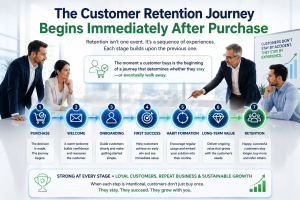
Think of the journey like this:
Purchase
↓
Welcome
↓
Onboarding
↓
First Success
↓
Habit Formation
↓
Long-Term Value
↓
Retention
Let’s look at why every stage matters.
Stage 1: Purchase
The purchase represents something much bigger than a financial transaction.
It’s a decision built on trust.
Customers have chosen your business over numerous alternatives.
At this stage they have expectations.
Hope.
Excitement.
Sometimes uncertainty.
What happens next either strengthens that confidence or weakens it.
Stage 2: Welcome
The welcome experience is your opportunity to reassure customers that they made the right decision.
It should answer questions before customers ask them.
For example:
- Thank them for choosing your business.
- Introduce your team.
- Explain the next steps.
- Set expectations.
- Make customers feel valued.
A professional welcome immediately reduces uncertainty.
A poor welcome creates unnecessary friction.
Stage 3: Onboarding
Onboarding bridges the gap between purchasing and achieving value.
Customers don’t buy products because they want products.
They buy outcomes.
Onboarding helps them move towards those outcomes.
Great onboarding removes confusion.
Builds confidence.
Creates momentum.
Poor onboarding delays value.
Delayed value often leads to disengagement.
Stage 4: First Success
Every customer needs an early victory.
It doesn’t have to be transformational.
It simply needs to demonstrate that progress is happening.
Examples include:
- Launching the first advertising campaign.
- Completing software setup.
- Receiving the first consulting recommendation.
- Successfully using a product.
- Achieving the first measurable improvement.
This first success creates emotional momentum.
Customers begin believing:
“This is working.”
That belief is incredibly powerful.
Stage 5: Habit Formation
Once customers experience initial success, the next objective is consistency.
Successful businesses help customers develop habits.
Regular platform usage.
Weekly reporting.
Monthly strategy meetings.
Routine product use.
Ongoing education.
The more consistently customers engage, the more value they receive.
The more value they receive, the less likely they are to leave.
Stage 6: Long-Term Value
Over time, customers begin experiencing the deeper benefits of your solution.
They become more efficient.
Revenue grows.
Costs reduce.
Processes improve.
Confidence increases.
Now your business becomes difficult to replace.
Switching to a competitor no longer feels worthwhile.
Long-term value strengthens long-term relationships.
Stage 7: Retention
Retention isn’t something businesses suddenly achieve after twelve months.
It’s the natural outcome of successfully managing every previous stage.
Customers stay because:
- Expectations matched reality.
- Onboarding was smooth.
- Success came quickly.
- Communication remained consistent.
- Trust continued growing.
- Value kept increasing.
Retention is the result—not the starting point.
How This Journey Looks Across Different Types of Businesses
SME Example
A business purchases operations consulting.
The consultancy provides a structured welcome, conducts discovery workshops, delivers quick operational improvements, schedules regular review meetings, and continuously measures progress.
Each stage strengthens confidence.
The client renews for another year because value has been consistently reinforced.
Service Business Example
A digital marketing agency welcomes a new client with a kickoff meeting, shares a 90-day roadmap, launches campaigns, explains optimisation milestones, provides transparent reporting, and celebrates incremental improvements.
Although major growth takes time, the client remains engaged because progress is always visible.
SaaS Example
A software company guides customers through setup, offers interactive tutorials, celebrates feature adoption, sends personalised usage insights, and introduces advanced capabilities over time.
Customers continue discovering new value rather than abandoning the platform after initial use.
D2C Example
A premium coffee subscription brand sends brewing guides, personalised recommendations, educational videos, loyalty rewards, and seasonal product suggestions.
The experience extends far beyond the original purchase.
Customers develop routines around the brand.
Repeat purchases become a natural habit.
The Bigger Insight
Every stage in the customer journey either increases or decreases the likelihood of retention.
Businesses often obsess over acquiring customers while overlooking the experiences that determine whether those customers remain.
The strongest retention strategies aren’t built around a single loyalty programme or customer service initiative.
They are built around intentionally designing every step of the customer’s journey after purchase.
When every stage supports the next, customer success becomes easier, customer lifetime value grows, and sustainable business growth follows.
Actionable Tips
-
Map Your Entire Post-Purchase Journey
Don’t stop at the sale.
Document every interaction customers experience until renewal or repeat purchase.
-
Define Success for Every Stage
Ask:
- What should customers feel?
- What should they understand?
- What should they achieve before moving to the next stage?
-
Remove Friction Early
Review where customers commonly become confused, delayed, or disengaged.
Improving one weak stage often improves the entire journey.
-
Celebrate Progress, Not Just Outcomes
Recognise onboarding completion, early milestones, feature adoption, and customer achievements.
Progress keeps customers engaged.
-
Measure the Entire Journey
Track metrics beyond sales, including:
- Onboarding completion
- Time to first value
- Product adoption
- Customer engagement
- Renewal rates
- Customer Lifetime Value (LTV)
These indicators reveal where retention is truly being won—or lost.
Key Takeaway
Customer retention doesn’t begin months after the sale.
It begins with the very first interaction that follows it.
Businesses that intentionally guide customers from Purchase → Welcome → Onboarding → First Success → Habit Formation → Long-Term Value create stronger trust, better customer experiences, higher lifetime value, and sustainable growth that competitors find difficult to replicate.
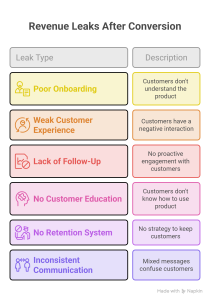
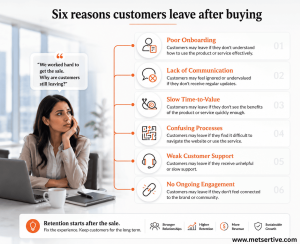
The Six Reasons Customers Leave After Buying
Many businesses believe customers leave because competitors offer lower prices, better products, or more attractive offers.
Sometimes that’s true.
But more often, customers leave because of the experience they have after they buy.
The product may be good.
The service may deliver real value.
The team may be highly capable.
Yet customers still decide to leave.
Why?
Because retention isn’t determined by one big event.
It’s influenced by dozens of small experiences that either strengthen or weaken confidence over time.
Let’s look at six of the most common reasons customers leave after buying—and how businesses can prevent them.
-
Poor Onboarding
The first few interactions after a purchase shape the customer’s confidence.
If onboarding is confusing, delayed, or unstructured, customers quickly begin feeling lost.
Instead of thinking:
“I’m excited to get started.”
They begin wondering:
“What am I supposed to do next?”
“Have I missed something?”
“Is this more complicated than I expected?”
When customers struggle at the beginning, they rarely experience the value that convinced them to buy in the first place.
And customers who never experience value rarely become long-term customers.
The Bigger Insight
Customers don’t need more information.
They need the right guidance at the right time.
A structured onboarding experience removes uncertainty and accelerates confidence.
-
Lack of Communication
One of the fastest ways to damage customer confidence is silence.
After making a purchase, customers naturally expect communication.
They want updates.
Progress reports.
Guidance.
Reassurance.
When businesses disappear after receiving payment, customers begin filling the communication gap with assumptions.
“Maybe they’ve forgotten us.”
“Perhaps our project isn’t important.”
“Did we make the wrong choice?”
Silence creates uncertainty.
Uncertainty weakens trust.
Trust influences retention.
Regular communication keeps customers engaged—even when major results are still being developed.
The Bigger Insight
Customers rarely expect constant communication.
They simply want consistent communication.
-
Slow Time-to-Value
Customers buy because they expect positive outcomes.
The longer they wait to experience those outcomes, the greater the risk of disengagement.
Every customer wants an early indication that progress is happening.
Not necessarily transformational success.
Just meaningful progress.
Without early wins, customers begin questioning their investment.
“When will I actually see results?”
“Is this solution really working?”
Businesses that help customers experience value quickly create momentum.
Momentum increases engagement.
Engagement improves retention.
The Bigger Insight
The faster customers experience meaningful value, the less likely they are to leave before achieving long-term success.
-
Confusing Processes
Many businesses unintentionally make it difficult for customers to succeed.
Too many forms.
Too many approvals.
Too many emails.
Too many disconnected systems.
Too many unnecessary steps.
Every additional layer of complexity creates friction.
And friction quietly reduces customer confidence.
When processes feel difficult, customers often assume the entire business is difficult to work with.
Simplicity creates confidence.
Complexity creates frustration.
The Bigger Insight
Customers don’t just evaluate your solution.
They evaluate how easy it is to achieve success using your solution.
-
Weak Customer Support
Every customer eventually has questions.
That doesn’t mean something has gone wrong.
Questions are a normal part of every customer relationship.
The real issue is how businesses respond.
Slow responses.
Generic answers.
Poor ownership.
Long waiting times.
Unresolved issues.
These experiences make customers feel unsupported.
When customers stop believing they’ll receive help when needed, trust begins to decline.
And declining trust often leads directly to churn.
The Bigger Insight
Great customer support doesn’t simply solve problems.
It reinforces confidence.
-
No Ongoing Engagement
Many businesses invest enormous effort attracting new customers.
Then disappear after the transaction.
No follow-up.
No education.
No new ideas.
No check-ins.
No relationship building.
Eventually customers forget why they chose the business in the first place.
Competitors begin attracting their attention.
The relationship slowly fades.
Retention isn’t strengthened through one interaction.
It’s strengthened through consistent engagement.
The Bigger Insight
Customers are far more likely to stay when businesses continue creating value long after the original purchase.
How These Problems Look Across Different Businesses
SME Example
A growing manufacturing company hires an operations consulting firm.
The proposal is impressive.
The contract is signed.
Then communication slows dramatically.
Workshops are delayed.
Progress updates become infrequent.
The client begins wondering whether enough progress is actually being made.
The consultancy eventually delivers meaningful operational improvements.
But the customer has already lost confidence during the journey.
The project succeeds.
The relationship doesn’t.
The client doesn’t renew.
Service Business Example
A business hires a digital marketing agency.
The agency launches campaigns but provides very little explanation of what is happening behind the scenes.
Optimisation takes time.
Results improve gradually.
Because communication is inconsistent, the client assumes little work is taking place.
Three months later they terminate the agreement.
Ironically, campaigns were just beginning to perform well.
Poor communication—not poor marketing—caused the churn.
SaaS Example
A company purchases a sophisticated CRM platform.
Setup requires integrations, user permissions, workflow configuration, and staff training.
Without guided onboarding, employees become overwhelmed.
Only a handful of features are ever used.
Management concludes the software isn’t delivering value.
The subscription is cancelled.
The software wasn’t the problem.
Poor onboarding delayed value until customers gave up.
D2C Example
A customer purchases premium kitchen equipment.
The product arrives beautifully packaged.
But there are no tutorials.
No setup videos.
No recipes.
No follow-up communication.
The customer struggles to use several features.
Eventually the appliance sits unused.
Months later the customer purchases a competitor’s product that provides a much better ownership experience.
The original product was excellent.
The post-purchase experience wasn’t.
The Bigger Insight
Notice something interesting.
In every example…
The customer didn’t necessarily leave because the product or service failed.
They left because the experience surrounding the product weakened their confidence.
That’s an important distinction.
Improving customer retention isn’t always about improving what you sell.
Sometimes it’s about improving how customers experience what you sell.
Actionable Tips
-
Design Onboarding Like a Customer Journey
Don’t overwhelm customers with information.
Guide them step by step toward their first success.
-
Communicate Before Customers Wonder What’s Happening
Regular updates—even small ones—build confidence and reduce uncertainty.
-
Reduce Time-to-Value
Ask yourself:
“What’s the quickest meaningful result every new customer can experience?”
Design your onboarding around helping them reach it.
-
Remove Unnecessary Friction
Review every customer process.
If a step doesn’t create value, simplify or eliminate it.
-
Treat Customer Support as a Trust-Building Function
Fast, knowledgeable, and empathetic support strengthens long-term relationships.
-
Continue Creating Value After the Sale
Share educational resources.
Schedule check-ins.
Celebrate milestones.
Recommend best practices.
Help customers continue succeeding long after purchase.
Key Takeaway
Customers rarely leave because of one dramatic mistake.
More often, they leave because small moments of uncertainty, friction, poor communication, delayed value, and weak engagement gradually reduce their confidence.
Businesses that intentionally improve these six areas don’t just reduce churn.
They create stronger customer experiences, higher Customer Lifetime Value (LTV), more referrals, and sustainable long-term growth.
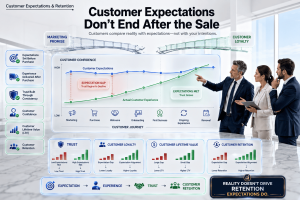
Customer Expectations Don’t End After the Sale
In our earlier discussion on “Why Customer Retention Starts Before the First Purchase,” we explored a powerful idea:
Customers buy expectations before they buy products.
Those expectations don’t disappear the moment payment is made.
If anything…
They become even more important.
The sale creates a promise.
The post-purchase experience proves whether that promise was real.
Think of it like this:
Expectation
↓
Experience
↓
Trust
↓
Retention
Every advertisement.
Every website page.
Every sales conversation.
Every demonstration.
Every proposal.
Every promise.
Together, they create an expectation in the customer’s mind.
After the purchase, customers unconsciously begin comparing reality with that expectation.
If the experience matches—or exceeds—what they expected…
Trust grows.
If the experience falls short…
Trust begins to decline.
And trust is one of the strongest predictors of customer retention.
Notice that customers rarely ask themselves:
“Is this objectively a good product?”
Instead, they ask:
“Is this what I expected?”
That subtle difference explains why two customers can receive the exact same service and feel completely differently about it.
One remains loyal.
The other leaves.
The difference isn’t always the quality of delivery.
It’s often the quality of expectation management.
SME Example
A manufacturing company hires a business consultant after hearing that operational improvements will become visible within the first quarter.
The consultant reinforces this timeline during onboarding and provides monthly progress reviews.
Three months later, measurable improvements begin appearing.
Because expectations and reality are aligned, the client feels satisfied.
Now imagine the consultant initially suggesting that dramatic improvements would happen within two weeks.
The same work is delivered.
The same results are achieved.
But the client becomes disappointed because reality failed to match the earlier promise.
Expectation—not delivery—changed the outcome.
Service Business Example
A branding agency explains that a complete rebrand is only the beginning of market positioning and that business growth depends on consistent execution over time.
The client understands the journey before work begins.
When immediate revenue doesn’t appear, they remain patient because the outcome matches what they were told.
Trust continues growing.
SaaS Example
A project management platform clearly explains that successful implementation usually requires four to six weeks of configuration, staff training, and workflow adoption.
Customers know exactly what to expect.
Instead of becoming frustrated by implementation, they see it as part of the journey.
Adoption improves.
Retention follows.
D2C Example
A premium nutrition company explains that meaningful health improvements generally require consistent use for eight to twelve weeks, combined with healthy eating and exercise.
Customers enter with realistic expectations.
Because the journey unfolds as promised, satisfaction remains high—even though results take time.
The Bigger Insight
Businesses often spend enormous effort creating expectations before the sale.
Far fewer invest the same effort in confirming those expectations after the sale.
The strongest brands do both.
They promise responsibly.
Then they consistently reinforce those promises through every customer interaction.
Customers don’t become loyal simply because you delivered value.
They become loyal because your experience consistently confirms what they believed they were buying.
That’s where trust is built.
And trust is the bridge between a first purchase and a long-term customer relationship.
Actionable Tips
-
Audit the Expectations You’re Creating
Review your advertisements, website, proposals, sales presentations, and marketing messages.
Ask:
“What expectations are customers forming before they buy?”
-
Reinforce Those Expectations During Onboarding
Don’t assume customers remember everything they were told during the sales process.
Restate the journey, milestones, timelines, and success factors.
-
Show Progress Frequently
Customers become more patient when they can clearly see that meaningful progress is being made.
-
Align Every Team Around the Same Promise
Marketing, Sales, Customer Success, Support, and Delivery should all reinforce the same expectations.
Consistency strengthens trust.
-
Aim to Match—or Slightly Exceed—Expectations
The businesses with the highest retention rarely rely on dramatic surprises.
They consistently deliver exactly what they promised, and whenever possible, just a little more.
That combination creates confidence, advocacy, and long-term loyalty.
Key Takeaway
The customer journey doesn’t reset after the sale—it continues.
The expectations created before purchase become the benchmark against which every interaction is judged. When Expectation → Experience → Trust remain closely aligned, customers feel confident in their decision, stay engaged for longer, and are far more likely to become loyal, profitable advocates for your business.
Why Time-to-Value Is the Most Important Retention Metric
Most businesses closely monitor metrics like:
- Website traffic
- Lead generation
- Conversion rates
- Revenue
- Customer Acquisition Cost (CAC)
These metrics are important.
But they don’t answer one of the most important questions in customer retention:
“How quickly do customers experience value after they buy?”
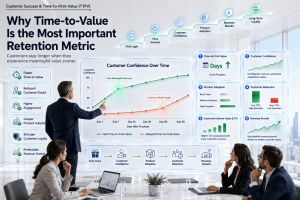
That is where Time-to-First-Value (TTFV) becomes incredibly important.
Simply put, Time-to-First-Value is the amount of time it takes for a new customer to experience the first meaningful benefit from your product or service.
Notice the phrase meaningful benefit.
It doesn’t mean the customer has achieved their final goal.
It means they have experienced enough progress to confidently say:
“This was a good decision.”
That moment is incredibly powerful.
Because once customers experience genuine value, something changes psychologically.
Doubt begins disappearing.
Confidence increases.
Engagement improves.
Trust grows stronger.
And customers become much more willing to continue the journey.
Businesses often assume retention is determined months after the sale.
In reality, many retention decisions begin forming during the customer’s first meaningful success.
Reducing Time-to-First Value is one of the fastest ways to increase customer confidence and reduce early-stage churn.
Why Time-to-First-Value Matters So Much
Imagine two businesses offering almost identical solutions.
Both eventually deliver excellent results.
But one helps customers experience value within the first week.
The other requires customers to wait three months before they see any meaningful progress.
Which business is more likely to retain customers?
For most people, the answer is obvious.
Customers are naturally motivated by progress.
When progress happens early, they become excited.
When progress is delayed, uncertainty begins growing.
Customers start asking questions like:
- “Is this actually working?”
- “Did I make the right investment?”
- “Should I have chosen another provider?”
- “Why haven’t I seen any improvement yet?”
Those questions aren’t always caused by poor delivery.
They’re often caused by delayed value.
This is why reducing Time-to-First-Value is one of the most effective ways to improve customer retention.
Early Value Creates Emotional Momentum
Every successful customer journey has momentum.
It begins with one small success.
That success encourages customers to continue.
The more progress they experience, the more committed they become.
Think about learning to drive.
You don’t become an expert on your first lesson.
But successfully moving the car forward gives you confidence to continue learning.
Business works the same way.
Customers don’t need immediate transformation.
They need evidence that transformation is possible.
That first win creates emotional momentum.
And emotional momentum is one of the strongest drivers of long-term retention.
SME Example
A manufacturing business hires an operational improvement consultancy.
The complete transformation will take six months.
Rather than waiting until the project ends to demonstrate value, the consultants identify one production bottleneck during the first week.
They recommend a simple scheduling improvement.
Within days, production delays reduce noticeably.
The overall project has only just begun.
But the customer has already experienced meaningful value.
Confidence grows.
The directors become more engaged throughout the remainder of the project.
Service Business Example
A digital marketing agency explains that meaningful SEO growth typically requires several months.
However, during the first week they complete a website audit, identify major technical issues, improve page speed, and optimise Google Business Profile settings.
Organic traffic hasn’t increased yet.
But the client can clearly see measurable improvements.
The agency has demonstrated progress.
Trust strengthens long before significant rankings improve.
SaaS Example
A company purchases customer relationship management (CRM) software.
Instead of asking users to configure every feature immediately, the platform guides them toward one objective:
Import customer data.
Send the first email campaign.
Track the first sales opportunity.
Within a few days, users experience practical value.
They begin using additional features because they now understand how the platform helps them.
Adoption improves.
Retention naturally follows.
D2C Example
A customer purchases premium fitness equipment.
Instead of simply delivering the product, the company includes a structured “First Seven Days” programme.
Short workout videos.
Daily progress tracking.
Simple milestones.
By the end of the first week, the customer already feels healthier and more motivated.
Those early wins increase the likelihood of long-term usage—and future purchases.
The Bigger Insight
Customers don’t stay because your solution promises future value.
They stay because they begin experiencing value today.
Businesses that shorten the distance between purchase and first success usually enjoy:
- Higher customer confidence
- Better product adoption
- Greater engagement
- Stronger customer retention
- Higher Customer Lifetime Value (LTV)
- More referrals
Because customers who see progress early rarely stop before experiencing the bigger results later.
Actionable Tips
-
Identify Your Customer’s First Meaningful Win
Ask yourself:
“What’s the smallest success every customer should experience as quickly as possible?”
Then make achieving that success your first priority.
-
Remove Anything That Delays Value
Review your onboarding process.
Eliminate unnecessary paperwork, approvals, meetings, and complexity that prevent customers reaching their first success.
-
Celebrate Early Milestones
Don’t wait until the final outcome.
Acknowledge setup completion.
Successful implementation.
First sales.
First campaign.
First improvement.
Recognition strengthens motivation.
-
Track Time-to-First-Value as a Business Metric
Measure:
- Average days to first success
- First product usage
- First measurable result
- First completed milestone
Improving these metrics often improves retention automatically.
-
Keep Customers Focused on Progress
Even when major outcomes require time, consistently show customers how far they’ve already come.
Visible progress reduces impatience.
Key Takeaway
Many businesses measure how quickly they acquire customers.
Far fewer measure how quickly customers experience value.
Yet Time-to-First-Value is often one of the strongest predictors of long-term retention.
The sooner customers experience meaningful progress, the sooner confidence replaces uncertainty, trust replaces doubt, and loyalty begins to grow.
Why Great Onboarding Improves Customer Retention
When people hear the word onboarding, they often think about training.
Teaching customers how to use a product.
Showing them where the features are.
Explaining the process.
Those things certainly matter.
But great onboarding is much more than training.
An effective Customer Onboarding Process removes uncertainty, builds confidence, and helps customers achieve their first meaningful success much sooner
Great onboarding is confidence building.
Its purpose isn’t simply to educate customers.
Its purpose is to help customers believe:
“I made the right decision.”
That difference changes everything.
Because customers who feel confident remain engaged.
Customers who feel confused often disengage before they ever experience the value your business can deliver.
Think of onboarding as building a bridge.
On one side is the purchase.
On the other side is customer success.
Without that bridge, many customers never reach the outcomes they were hoping for.
Great Onboarding Begins with Education
Education is about helping customers understand the journey ahead.
Not overwhelming them with information.
Customers should understand:
- What happens first
- What comes next
- How success is achieved
- What milestones they should expect
- What role they play
Education reduces uncertainty.
Customers become more patient because they understand the process.
Great Onboarding Provides Guidance
Customers don’t simply need information.
They need direction.
Imagine receiving hundreds of pages of documentation without anyone explaining where to begin.
Most customers would feel overwhelmed.
Great onboarding guides customers step by step.
Instead of asking customers to figure everything out, businesses provide a clear path.
That guidance creates confidence.
Great Onboarding Creates Quick Wins
One of the biggest goals of onboarding should be helping customers experience success quickly.
Every quick win reinforces the buying decision.
Customers begin thinking:
“This is easier than I expected.”
“I’m already seeing progress.”
“This is going to work.”
Those emotions increase engagement.
And engaged customers are far more likely to stay.
Great Onboarding Creates Momentum
Every completed milestone encourages customers to continue.
Momentum is powerful.
Once customers experience several small successes, they naturally become more committed.
Instead of wondering whether to continue…
They begin asking:
“What’s next?”
That’s exactly where businesses want customers to be.
How Great Onboarding Looks Across Different Businesses
SME Example
A business purchases inventory management software.
Rather than handing over login details and documentation, the provider assigns an onboarding specialist.
Week one focuses on inventory setup.
Week two covers reporting.
Week three introduces forecasting.
The business experiences gradual success at every stage.
Confidence continues growing.
Service Business Example
A leadership consulting firm begins every engagement with a structured kick-off workshop.
The client receives a project roadmap, communication schedule, stakeholder responsibilities, expected milestones, and measurable objectives.
Everyone understands the journey before work begins.
Projects run more smoothly because uncertainty has already been removed.
SaaS Example
A project management platform introduces new users through interactive walkthroughs rather than lengthy manuals.
Each completed task unlocks the next stage.
Users achieve success within minutes instead of feeling overwhelmed.
Adoption increases significantly because learning feels simple and rewarding.
D2C Example
A premium coffee subscription doesn’t simply deliver coffee.
Customers receive brewing tutorials, flavour guides, personalised recommendations, storage tips, and a “First Month Experience” programme.
The customer feels supported rather than left to experiment alone.
That richer experience encourages repeat purchases and stronger brand loyalty.
The Bigger Insight
Businesses often believe onboarding ends once customers know how to use the product.
The best businesses understand something different.
Onboarding ends when customers become confident enough to succeed on their own.
That confidence—not the training itself—is what drives retention.
Customers who understand your solution are more likely to use it.
Customers who use it are more likely to experience value.
Customers who experience value are more likely to stay.
Actionable Tips
-
Design Onboarding Around Customer Success—Not Product Features
Instead of asking:
“What should we teach?”
Ask:
“What does the customer need to achieve first?”
Build onboarding around that outcome.
-
Break the Journey into Small Milestones
Large implementations often overwhelm customers.
Small, achievable milestones create continuous progress and confidence.
-
Combine Education with Action
Don’t simply explain what customers should do.
Help them do it.
Interactive guidance creates stronger learning than passive information.
-
Celebrate Every Success
Acknowledge onboarding completion, first usage, first result, and early achievements.
Recognition reinforces commitment.
-
Continue Supporting Beyond Onboarding
Customer success doesn’t stop when onboarding finishes.
Continue providing education, resources, best practices, and proactive guidance to help customers unlock even greater value over time.
Key Takeaway
Onboarding isn’t simply about teaching customers how your product or service works.
It’s about helping them feel confident enough to succeed.
Businesses that educate clearly, guide consistently, create early wins, and build momentum don’t just improve onboarding—they strengthen customer retention, increase Customer Lifetime Value (LTV), and lay the foundation for long-term, profitable customer relationships.
Communication Is the Hidden Driver of Customer Loyalty
Many businesses believe customer communication becomes important only when something goes wrong.
A customer raises a support ticket.
An order is delayed.
A complaint arrives.
A renewal is approaching.
Only then does the business reach out.
Unfortunately, by that stage, the relationship may already be under pressure.
The businesses with the strongest customer retention take a completely different approach.
They don’t communicate only when problems appear.
They communicate consistently throughout the customer journey.
Because communication does far more than share information.
It builds confidence.
It reinforces trust.
It reduces uncertainty.
And most importantly, it reminds customers that they haven’t been forgotten.
Think about any strong relationship—whether it’s personal or professional.
Silence often creates doubt.
Consistent communication creates confidence.
Business relationships are no different.
Customer Loyalty grows naturally when customers consistently experience progress, support, and measurable success after every purchase.
Why Communication Matters After the Sale
The moment a customer completes a purchase, they naturally begin wondering:
- “What’s happening next?”
- “Is everything on track?”
- “Am I using this correctly?”
- “When will I see results?”
- “Is anyone looking after my success?”
If those questions remain unanswered, customers often create their own answers.
Unfortunately, those answers are usually negative.
They may begin thinking:
“Maybe they’re too busy.”
“Maybe this project isn’t progressing.”
“Maybe I made the wrong decision.”
“Maybe they don’t value my business.”
The business may be working hard behind the scenes.
But if customers can’t see the progress…
They often assume no progress exists.
That’s why communication is such a powerful retention strategy.
It makes invisible progress visible.
When Businesses Should Communicate
Many businesses communicate only at the beginning and the end of a project.
Modern customer-focused businesses communicate throughout the entire journey.
Immediately After Purchase
This is where confidence begins.
Customers should immediately receive:
- A welcome message
- Next steps
- Timelines
- Key contacts
- What to expect first
This removes uncertainty almost instantly.
Weekly Communication
Even if there are no major updates, weekly communication reassures customers that progress continues.
A simple update can include:
- Current work completed
- Upcoming activities
- Expected milestones
- Helpful recommendations
Customers feel informed rather than ignored.
Monthly Reviews
Monthly communication creates strategic visibility.
Businesses can review:
- Progress achieved
- Goals completed
- Performance improvements
- Opportunities ahead
This helps customers appreciate how far they’ve already come.
During Major Milestones
Customers love seeing progress.
Celebrate achievements such as:
- Successful implementation
- First measurable results
- Product adoption milestones
- Campaign launches
- Revenue improvements
- Anniversary achievements
Every milestone reinforces the buying decision.
During Challenges
One of the biggest mistakes businesses make is going silent when problems occur.
Customers don’t expect perfection.
They expect transparency.
When delays or challenges happen, proactive communication builds trust.
Explain:
- What happened
- Why it happened
- What is being done
- Expected resolution
- Next steps
Customers are surprisingly understanding when businesses communicate honestly.
What Businesses Should Communicate
Great communication isn’t about sending more emails.
It’s about sending more valuable communication.
Progress Updates
Customers want reassurance that progress is happening.
Even small improvements help maintain confidence.
Education
Continue teaching customers.
Help them use the solution more effectively.
The more customers understand, the more value they receive.
Success Tips
Share practical advice that helps customers achieve better outcomes.
Small improvements often lead to major long-term success.
Encouragement
Sometimes customers simply need reassurance.
Especially when progress requires patience.
A simple reminder that they’re moving in the right direction can dramatically improve confidence.
New Features or Improvements
If your solution evolves, let customers know.
Many businesses release valuable updates without telling customers.
Communication increases perceived value.
Milestones
Celebrate customer achievements.
Recognition strengthens emotional connection.
Customers appreciate businesses that acknowledge their progress.
SME Example
A business purchases financial management software.
Instead of disappearing after installation, the provider sends weekly implementation updates, monthly optimisation tips, and quarterly business reviews.
The software hasn’t changed.
But the customer’s confidence grows because they continually feel supported.
When renewal arrives, staying feels like the obvious decision.
Service Business Example
A branding agency manages a complete rebranding project.
Every Friday the client receives:
- Progress summary
- Work completed
- Upcoming deliverables
- Questions requiring input
- Expected timelines
Even during slower creative phases, the client always knows what’s happening.
Trust remains strong throughout the engagement.
SaaS Example
A customer subscribes to a CRM platform.
Instead of waiting for support tickets, the platform automatically sends:
- Feature tutorials
- Usage insights
- Adoption reminders
- Success recommendations
- New feature announcements
- Monthly performance reports
Customers continue discovering new value months after purchasing.
Engagement remains high.
D2C Example
A premium skincare brand communicates well beyond delivery.
Customers receive:
- Product usage guidance
- Weekly skincare tips
- Progress reminders
- Lifestyle advice
- Seasonal recommendations
- Loyalty rewards
The relationship continues growing long after the first purchase.
Repeat purchases become much more likely.
The Bigger Insight
Communication isn’t simply customer service.
It’s relationship management.
Businesses often lose customers because they disappear after the sale.
Customers naturally assume silence means a lack of commitment.
Consistent communication sends the opposite message:
“We’re invested in your success.”
And customers who feel supported are far more likely to remain loyal.
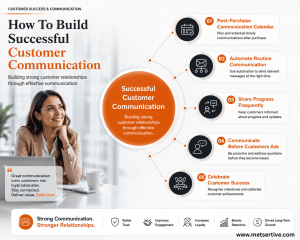
Actionable Tips
-
Build a Post-Purchase Communication Calendar
Plan communication across:
- Day 1
- Week 1
- Month 1
- Quarterly reviews
- Renewal periods
Consistency builds confidence.
-
Automate Routine Communication
Use email automation for:
- Welcome messages
- Educational content
- Progress reminders
- Milestone celebrations
- Success tips
Automation ensures no customer feels forgotten.
-
Share Progress Frequently
Even when outcomes take time, communicate visible progress.
Progress reduces anxiety.
-
Communicate Before Customers Ask
Answer questions before customers need to ask them.
Proactive communication demonstrates professionalism.
-
Celebrate Customer Success
Recognise achievements publicly (with permission) or privately.
Customers remember businesses that celebrate their wins.
Key Takeaway
The strongest customer relationships aren’t built through one outstanding interaction.
They’re built through hundreds of small, consistent conversations.
Businesses that communicate immediately after purchase, regularly during the journey, and transparently during challenges create stronger trust, deeper loyalty, and higher customer retention.
Because customers don’t simply stay with businesses that deliver value.
They stay with businesses that make them feel supported every step of the journey.
Customer Success Starts Long Before Problems Appear
Many businesses think customer success begins when a customer raises a support ticket.
A complaint arrives.
Usage declines.
A renewal is at risk.
Only then does someone step in to help.
By that point, however, the business is often trying to repair a relationship instead of strengthening one.
The most successful businesses take a completely different approach.
They don’t wait for customers to ask for help.
They look for opportunities to help before customers even realise they need it.
This is called proactive customer success.
And it’s one of the most powerful drivers of long-term customer retention.
Reactive vs Proactive Customer Success
Imagine two doctors.
The first doctor only treats patients after they become seriously ill.
The second doctor performs regular health checks, identifies early warning signs, and helps patients stay healthy.
Which approach produces better long-term outcomes?
The answer is obvious.
Customer success works exactly the same way.
Reactive businesses solve problems.
Proactive businesses prevent them.
And preventing problems is almost always less expensive than fixing them later.
Why Waiting for Complaints Is Risky
One of the biggest misconceptions in business is:
“If customers aren’t complaining, they must be happy.”
Unfortunately, that’s rarely true.
Many dissatisfied customers never complain.
Instead, they quietly:
- Stop using the product.
- Reduce engagement.
- Delay renewals.
- Explore competitors.
- Leave without warning.
By the time the business notices, it’s often too late.
That’s why customer success should focus on identifying risk before customers decide to leave.
What Proactive Customer Success Looks Like
Rather than waiting for problems, businesses actively monitor customer behaviour and provide guidance before issues become serious.
This includes:
Monitoring Customer Behaviour
Observe how customers interact with your product or service.
Are they engaged?
Have they stopped logging in?
Are they completing important milestones?
Changes in behaviour often reveal future retention risks.
Identifying Early Warning Signs
Look for indicators such as:
- Reduced usage
- Missed onboarding milestones
- Delayed responses
- Low engagement
- Declining purchases
- Fewer interactions
These signals often appear weeks or months before churn.
Offering Help Early
Instead of waiting for customers to ask:
Reach out.
Offer guidance.
Provide additional education.
Schedule a review.
Recommend best practices.
Customers appreciate businesses that notice when they need support.
SaaS Example
A project management platform notices that a customer hasn’t logged in for ten days after purchasing.
Instead of waiting for cancellation, the customer success team contacts them.
They discover the customer’s team struggled with implementation.
A short onboarding session resolves the issue.
Usage increases.
The customer continues successfully using the platform.
Without proactive intervention, that customer may have quietly churned.
Service Business Example
A digital marketing agency notices a client has become less engaged during monthly meetings.
Rather than assuming everything is fine, the account manager schedules a strategic review.
The discussion reveals unrealistic internal expectations.
The agency clarifies timelines, adjusts reporting, and aligns future objectives.
Confidence returns.
The partnership strengthens instead of deteriorating.
SME Example
A business software provider observes that one client’s employees are only using a small percentage of the platform’s capabilities.
Instead of waiting for renewal discussions, they organise a complimentary optimisation workshop.
Employees discover valuable features that improve productivity.
Product adoption increases significantly.
The customer now sees much greater value in the investment.
D2C Example
An online nutrition brand notices a customer purchased a 30-day programme but hasn’t reordered after the expected usage period.
Instead of relying solely on promotional discounts, the company sends:
- Personalised nutrition guidance
- Progress check-ins
- Healthy recipe suggestions
- Product recommendations based on previous purchases
The customer feels supported rather than sold to.
Repeat purchases increase naturally.
The Bigger Insight
Customer success isn’t about solving customer problems.
It’s about reducing the likelihood that those problems occur in the first place.
Businesses that actively monitor behaviour, recognise risk, and provide guidance before frustration develops create customers who feel genuinely supported.
That support strengthens:
- Trust
- Product adoption
- Customer satisfaction
- Loyalty
- Customer Lifetime Value (LTV)
Most importantly, it dramatically improves customer retention.
Actionable Tips
-
Identify Your Early Warning Indicators
Define the behaviours that usually appear before customers leave.
These might include:
- Reduced usage
- Lower engagement
- Missed milestones
- Fewer purchases
- Support inactivity
Monitor them consistently.
-
Build Customer Health Scores
Rather than relying only on intuition, create a simple scoring system using indicators such as:
- Product usage
- Adoption rate
- Engagement
- Support interactions
- Customer feedback
Customers with declining scores should receive proactive attention.
-
Schedule Success Reviews
Don’t wait until renewal time.
Conduct regular success reviews to discuss:
- Achievements
- Challenges
- Goals
- Opportunities for improvement
This keeps customers focused on long-term success rather than short-term frustrations.
-
Use Data to Trigger Helpful Conversations
Set automated alerts for behaviours such as inactivity, incomplete onboarding, or declining engagement.
Reach out with guidance—not sales pressure.
-
Build a Culture of Prevention
Encourage every department—not just Customer Success—to look for opportunities to prevent future problems.
Marketing, Sales, Onboarding, Support, and Customer Success all contribute to retention.
Key Takeaway
The best customer success teams don’t spend all their time solving problems.
They spend most of their time preventing them.
By monitoring customer behaviour, identifying early warning signs, and offering proactive guidance, businesses create stronger relationships long before dissatisfaction appears.
Because the strongest customer retention strategies don’t begin when customers complain.
They begin long before customers ever have a reason to.
The Businesses That Retain Customers Best Reduce Customer Effort
Many businesses believe customer retention depends primarily on having a great product or delivering exceptional service.
Those things certainly matter.
But there’s another factor that quietly influences whether customers stay or leave.
How easy is it to do business with you?
Think about your own experiences as a customer.
When a company makes everything simple, you naturally enjoy working with them.
When every interaction feels complicated, frustrating, or time-consuming, you begin questioning whether it’s worth the effort.
That is exactly what your customers experience.
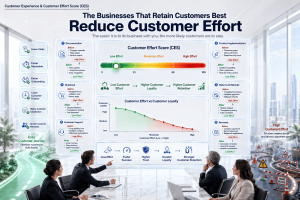
This is why many leading businesses measure something called the Customer Effort Score (CES).
What Is Customer Effort Score (CES)?
Customer Effort Score measures how easy—or difficult—it is for customers to accomplish what they need to do.
It asks a simple question:
“How easy was it to achieve your goal?”
That goal might be:
- Making a purchase
- Setting up a product
- Contacting support
- Resolving an issue
- Renewing a subscription
- Returning a product
- Finding important information
The easier those experiences are, the more likely customers are to remain loyal.
The more effort customers must invest, the greater the risk that they’ll begin looking elsewhere.
Why Customer Effort Matters More Than Businesses Realise
Many businesses focus on creating memorable customer experiences.
That’s valuable.
But before creating memorable experiences, businesses should eliminate unnecessary friction.
Customers don’t wake up hoping to spend more time figuring out:
- How your product works.
- How to contact support.
- How to complete onboarding.
- How to renew.
- How to return a product.
They simply want to achieve their goal quickly and confidently.
Every extra click…
Every confusing instruction…
Every unnecessary form…
Every delayed response…
Adds friction to the relationship.
And friction slowly erodes customer loyalty.
Easy Businesses Retain Customers
The businesses that consistently retain customers share one important characteristic:
They remove unnecessary effort.
They simplify the customer journey at every stage.
Customers feel supported.
Progress feels natural.
Confidence grows.
As a result, customers stay longer.
Complicated Businesses Lose Customers
Now imagine the opposite experience.
A customer buys your product.
They receive no clear instructions.
Documentation is difficult to understand.
Support takes days to respond.
Simple questions require multiple conversations.
Renewals involve lengthy paperwork.
Every interaction feels harder than it should.
Even if the product itself is excellent, customers begin associating your business with frustration.
Eventually they ask themselves:
“Is there an easier alternative?”
And very often…
There is.
Where Businesses Should Reduce Customer Effort
Documentation
Customers shouldn’t have to search through dozens of pages to find simple answers.
Great documentation is:
- Easy to navigate
- Clearly written
- Visual where possible
- Available when customers need it
The faster customers solve problems independently, the better their overall experience.
Checkout Process
Buying should feel effortless.
Complicated checkout pages increase abandonment before the relationship even begins.
Reduce:
- Unnecessary fields
- Multiple confirmation pages
- Confusing payment options
- Hidden costs
Simple checkout builds immediate confidence.
Customer Support
Customers shouldn’t work hard just to ask for help.
Support should be:
- Easy to access
- Responsive
- Friendly
- Clear
- Solution-focused
The easier support becomes, the stronger customer trust grows.
Returns and Refunds
No customer enjoys requesting a return.
But making the process difficult rarely improves profitability.
Instead, it often damages trust.
Transparent return policies demonstrate confidence in your product and reduce customer anxiety.
Implementation
Whether it’s software, consulting, or professional services, implementation should feel guided—not overwhelming.
Customers should always know:
- What’s happening
- What’s expected
- What’s next
Clarity dramatically reduces customer effort.
Renewals
Renewing should feel like continuing a successful relationship.
Not restarting the buying process.
Simplify:
- Renewal reminders
- Payment processes
- Contract approvals
- Customer reviews
Customers who see continued value should find renewal effortless.
SME Example
A manufacturing equipment supplier sells inventory management software to small businesses.
Previously, implementation required customers to read lengthy manuals before getting started.
Many clients delayed adoption because the process felt overwhelming.
The company redesigned the experience.
New customers now receive:
- A simple welcome guide
- Short video tutorials
- Step-by-step setup instructions
- Scheduled implementation check-ins
Customers begin using the platform much faster.
Adoption improves.
Retention increases because customers experience success earlier with less effort.
Service Business Example
A business consultancy previously asked new clients to complete multiple forms, gather large amounts of information, and coordinate meetings independently.
Clients felt overwhelmed before the consulting even began.
The consultancy simplified onboarding.
Clients now receive:
- A clear onboarding roadmap
- One structured information request
- A dedicated project coordinator
- Weekly progress updates
The consulting quality remains the same.
But the experience feels dramatically easier.
Client satisfaction improves from the very beginning.
SaaS Example
A CRM platform notices that many customers abandon setup halfway through implementation.
The product isn’t the problem.
The setup process is.
The company redesigns onboarding by adding:
- Interactive product tours
- Progress indicators
- One-click integrations
- Contextual help
- Live onboarding assistance
Customers reach their first success much faster.
Retention improves significantly because customer effort decreases.
D2C Example
An online fitness equipment retailer notices increasing returns.
Customer feedback reveals a common issue.
Assembly instructions are difficult to follow.
Rather than redesigning the product, the business redesigns the experience.
Customers now receive:
- QR-code video assembly guides
- Illustrated instruction booklets
- Live chat support
- Assembly tips emailed after delivery
Returns decline.
Customer confidence increases.
Positive reviews become more frequent.
The Bigger Insight
Businesses often compete by adding more features.
But customers frequently remain loyal because of something much simpler.
Ease.
The easier your business is to buy from…
Understand…
Use…
Get help from…
And continue working with…
The stronger customer retention becomes.
Customers rarely leave businesses that consistently make their lives easier.
Actionable Tips
-
Map Your Customer Effort Points
Walk through every post-purchase interaction.
Ask:
“Where are customers working harder than they should?”
Every unnecessary step is an opportunity to improve retention.
-
Measure Customer Effort Score (CES)
After key interactions, ask customers:
“How easy was it to complete what you wanted today?”
Their responses often reveal hidden friction that internal teams overlook.
-
Simplify Every Customer Process
Review:
- Onboarding
- Documentation
- Support
- Billing
- Renewals
- Returns
Aim to remove unnecessary complexity wherever possible.
-
Invest in Self-Service Resources
Create:
- Knowledge bases
- Video tutorials
- FAQs
- Interactive guides
Customers appreciate finding answers quickly without needing support.
-
Reduce Steps Wherever Possible
Challenge every process by asking:
“Can we remove one step?”
Small improvements across multiple customer touchpoints create a dramatically better experience over time.
Key Takeaway
Customers don’t only remember the value your business delivers.
They also remember how much effort it took to receive that value.
Businesses that reduce customer effort create smoother experiences, faster adoption, stronger confidence, and higher customer retention.
Because in today’s competitive market, making business easier is often a bigger competitive advantage than adding another feature.
Warning Signs Your Post-Purchase Experience Is Creating Future Churn
Most businesses don’t lose customers overnight.
Customer churn usually develops gradually.
It begins with small frustrations.
A missed expectation.
A confusing process.
An unanswered question.
A delayed response.
A lack of guidance.
Individually, these moments may seem insignificant.
Collectively, they slowly reduce customer confidence until leaving feels like the easiest decision.
The challenge is that these warning signs often appear long before customers actually cancel, stop purchasing, or fail to renew.
Businesses that recognise these signals early have an opportunity to strengthen relationships before retention begins to decline.
Let’s look at some of the most common indicators.
-
Customers Disappear After Buying
Customers purchase…
Then become silent.
They stop responding to emails.
They don’t attend onboarding sessions.
They rarely log in.
They don’t engage with your team.
Silence isn’t always satisfaction.
Very often, it’s disengagement.
The earlier you reconnect, the greater your chances of rebuilding momentum.
2. Low Onboarding Completion
Customers start onboarding…
But never finish.
This usually indicates:
Confusing onboarding
Too much complexity
Poor guidance
Lack of motivation
Weak communication
Incomplete onboarding almost always leads to weaker adoption later.
3. Low Product Adoption
Customers buy your solution…
But only use a small percentage of its capabilities.
This often means they haven’t experienced enough value yet.
Customers rarely remain loyal to products they don’t fully understand.
4. High Support Tickets
A high volume of support requests doesn’t always mean customers are demanding.
Sometimes it means your post-purchase experience isn’t providing enough clarity.
Repeated questions often reveal:
- Poor documentation
- Weak onboarding
- Confusing interfaces
- Inconsistent communication
Support data is one of the richest sources of retention insights.
5. Increasing Refund Requests
Refund requests often signal more than product dissatisfaction.
They frequently indicate:
- Unrealistic expectations
- Slow time-to-value
- Poor onboarding
- Customer confusion
Understanding why customers request refunds helps prevent future churn.
6. Customers Repeatedly Ask Basic Questions
When customers continually ask questions like:
- “What happens next?”
- “How do I start?”
- “Where do I find this?”
- “Who should I contact?”
They’re telling you something important.
Your customer journey isn’t providing enough guidance.
Good post-purchase experiences answer these questions before customers need to ask.
7. Low Repeat Purchases
For businesses that depend on repeat buying, declining purchase frequency is an early warning signal.
Customers may still like the product.
But they may no longer feel emotionally connected to your business.
Ongoing engagement often determines whether first-time buyers become loyal customers.
8. Low Renewal Rates
Subscription businesses often focus heavily on renewal campaigns.
But renewals are usually won—or lost—months earlier.
Customers renew when they’ve consistently experienced value.
Low renewal rates often reflect weaknesses throughout the entire customer journey.
9. Poor Reviews
Negative reviews rarely focus only on product quality.
Customers often mention:
- Poor communication
- Difficult onboarding
- Slow responses
- Confusing processes
- Feeling unsupported
Reviews provide valuable insight into where the post-purchase experience needs improvement.
10. Customers Say:
“I didn’t know that.”
This may be the most revealing warning sign of all.
It usually means:
- Expectations weren’t clear.
- Education was insufficient.
- Communication broke down.
- Customers weren’t properly prepared.
Every time a customer says:
“I didn’t know that.”
Ask yourself:
“Should we have told them earlier?”
SME Example
A small accounting software provider notices many customers stop using the platform within the first month.
Customer interviews reveal a common pattern.
Most customers never completed onboarding.
They didn’t understand how to configure the software correctly.
The issue wasn’t product quality.
It was the post-purchase experience.
Service Business Example
A leadership consultancy delivers excellent workshops.
Yet many clients don’t renew.
Follow-up conversations reveal clients felt uncertain about what should happen after the workshops ended.
Adding structured follow-up meetings and implementation support dramatically improves renewals.
SaaS Example
A project management platform notices declining product usage after two weeks.
Instead of waiting for cancellations, the customer success team reaches out.
Customers explain they became overwhelmed during implementation.
The company redesigns onboarding and adds milestone check-ins.
Product adoption increases significantly.
D2C Example
A premium coffee subscription brand experiences declining repeat purchases.
Customer feedback consistently mentions uncertainty about brewing techniques.
The company introduces brewing guides, video tutorials, and personalised recommendations.
Repeat purchases begin increasing because customers experience better results.
The Bigger Insight
Customer churn rarely arrives without warning.
Customers almost always leave clues before they leave your business.
The businesses with the highest retention don’t simply react to churn.
They monitor these early signals, investigate the underlying causes, and improve the customer experience before dissatisfaction grows.
That’s why retention isn’t just about keeping customers.
It’s about recognising the warning signs early enough to help customers succeed.
Actionable Tips
-
Build a Customer Health Dashboard
Monitor indicators such as:
- Onboarding completion
- Product adoption
- Support activity
- Renewal likelihood
- Customer engagement
Small changes often predict future churn.
-
Review Customer Feedback Regularly
Don’t only analyse complaints.
Pay close attention to recurring questions and moments of confusion.
Patterns reveal opportunities for improvement.
-
Contact Silent Customers Proactively
If customers suddenly become inactive, don’t assume they’re satisfied.
Reach out with helpful guidance before disengagement becomes permanent.
-
Investigate Every Refund
Treat every refund as a learning opportunity.
Ask:
- What expectation wasn’t met?
- Where did confusion begin?
- How could we prevent this next time?
-
Look Beyond Individual Problems
Instead of fixing isolated issues, identify recurring patterns across your customer journey.
Improving the system prevents the same problems from affecting future customers.
Key Takeaway
Customer churn is rarely a surprise.
The warning signs usually appear weeks or even months in advance.
Businesses that monitor customer behaviour, improve onboarding, simplify processes, communicate consistently, and respond proactively can address problems before customers decide to leave.
Because the strongest retention strategies don’t begin when customers cancel.
They begin when businesses learn to recognise the subtle signals that customers need more support.
How to Build an Exceptional Post-Purchase Experience
Every business wants loyal customers.
Every business wants more renewals.
More referrals.
Higher Customer Lifetime Value (LTV).
Greater profitability.
But very few businesses deliberately design the experience that makes those outcomes possible.
Instead, they focus almost entirely on acquiring customers.
Once the sale is complete, the customer is expected to “figure things out.”
The businesses with the highest retention don’t leave the post-purchase experience to chance.
They build it intentionally.
Every interaction after the sale is designed to answer one simple question:
“How can we help this customer become successful as quickly and as easily as possible?”
Businesses wondering how to improve customer retention after the sale should begin by improving onboarding, communication, education, and customer success rather than relying solely on support.
The best post-purchase customer experience strategies focus on reducing uncertainty, delivering early wins, maintaining communication, and helping customers achieve measurable success.
Let’s explore a practical framework that any SME, service business, SaaS company, or D2C brand can apply.
-
Welcome Customers Immediately
The first few hours after a purchase are incredibly important.
Customers are excited.
But they’re also uncertain.
They begin asking themselves:
- “What happens next?”
- “Did I make the right decision?”
- “When will I hear from the company?”
- “How do I get started?”
A delayed response allows uncertainty to grow.
A timely welcome creates confidence.
A great welcome should include:
- A thank-you message
- A warm introduction
- Next steps
- Expected timelines
- Key contact information
- Helpful resources
Customers should never wonder what comes next.
SME Example
A business purchases accounting software.
Within minutes they receive:
- A personalised welcome email
- Setup instructions
- Login details
- Links to beginner tutorials
Instead of confusion, they experience clarity.
Service Business Example
A new consulting client receives:
- A welcome pack
- Project roadmap
- Team introductions
- Meeting schedule
The relationship immediately feels organised and professional.
SaaS Example
A CRM platform welcomes new users with:
- Interactive product tours
- Guided setup
- Short training videos
- Customer Success contact details
Confidence begins before customers even explore the platform.
D2C Example
A premium furniture brand sends:
- Order confirmation
- Delivery expectations
- Assembly resources
- Product care tips
Customers feel informed rather than anxious while waiting for delivery.
-
Create a Structured Onboarding Process
Many businesses assume onboarding simply means teaching customers how to use a product.
In reality…
Onboarding is the process of helping customers succeed.
Every customer should know:
- What happens first
- What happens next
- What success looks like
- What support is available
- What milestones they should expect
Structure removes uncertainty.
Customers who know where they’re going rarely feel lost.
SME Example
A payroll software company divides onboarding into four simple milestones.
Customers always know what to complete next.
Completion rates improve significantly.
Service Business Example
A marketing agency creates a 90-day onboarding roadmap with clear deliverables and timelines.
Clients understand the journey before work even begins.
SaaS Example
Each implementation phase unlocks automatically after the previous one is completed.
Customers progress naturally instead of feeling overwhelmed.
D2C Example
A fitness equipment company provides a structured 30-day success programme instead of simply delivering the product.
Customers stay engaged beyond delivery.
-
Deliver a Quick Win
Customers shouldn’t wait months before experiencing value.
Every business should identify one meaningful success customers can achieve quickly.
This builds momentum.
Confidence increases.
Trust grows.
Early success encourages long-term commitment.
SME Example
Accounting software helps customers generate their first financial report within 30 minutes.
Service Business Example
A business consultant identifies one operational improvement during the first week.
The client immediately sees progress.
SaaS Example
A CRM automatically imports customer contacts and creates the first sales dashboard within minutes.
D2C Example
A coffee machine produces the customer’s first café-quality coffee on day one using guided setup instructions.
The customer immediately experiences value.
-
Communicate Consistently
Silence creates uncertainty.
Communication creates confidence.
Customers should hear from your business regularly—not only when something goes wrong.
Share:
- Progress updates
- Educational content
- Success stories
- Helpful reminders
- Product improvements
- Milestone celebrations
The relationship should feel active.
Not forgotten.
-
Educate Continuously
The most successful customers are usually the best-informed customers.
Education shouldn’t stop after onboarding.
Continue teaching customers through:
- Articles
- Videos
- Webinars
- Guides
- FAQs
- Best practices
- Customer communities
The more customers understand, the more value they receive.
And customers who achieve greater value tend to stay longer.
SME Example
Monthly operational improvement newsletters help customers maximise business performance.
Service Business Example
A consulting firm shares implementation checklists and leadership insights throughout the engagement.
SaaS Example
Customers receive feature tutorials whenever new functionality is released.
D2C Example
A premium nutrition brand sends healthy recipes, lifestyle tips, and product usage guidance throughout the customer’s journey.
-
Measure Adoption—Not Just Sales
Many businesses celebrate when a sale is completed.
But sales only measure acquisition.
Adoption measures success.
Ask questions like:
- Are customers actively using the solution?
- Have they completed onboarding?
- Are they achieving early wins?
- Are they using key features?
- Are they progressing toward success?
High adoption almost always leads to stronger retention.
-
Ask for Feedback Early
Don’t wait until customers are leaving.
Ask for feedback while there’s still time to improve the experience.
Questions like:
- “How easy was onboarding?”
- “Is anything unclear?”
- “What’s been most helpful?”
- “Where can we improve?”
Small improvements made early often prevent much larger problems later.
Effective Customer Experience Management ensures every post-purchase interaction consistently reinforces trust and delivers on the promises made before the sale.
SME Example
An inventory software company surveys customers after the first month.
Several customers highlight confusion around reporting features.
The company simplifies the interface.
Future onboarding becomes easier.
Service Business Example
A consulting firm conducts a satisfaction review after the first strategy workshop.
Minor adjustments improve the remainder of the engagement.
SaaS Example
Product feedback collected during implementation identifies usability improvements that increase long-term adoption.
D2C Example
Customers receive a short product experience survey after two weeks.
Insights lead to better packaging, clearer instructions, and improved customer satisfaction.
-
Celebrate Customer Success
One of the most overlooked aspects of customer retention is recognition.
Customers enjoy knowing they’ve made progress.
Celebrate milestones such as:
- First successful implementation
- First measurable result
- One-year partnership
- Revenue growth
- Productivity improvements
- Customer achievements
Recognition reinforces value.
It reminds customers why they chose your business.
SME Example
A software provider congratulates customers after completing their first successful quarterly reporting cycle.
Service Business Example
A consulting firm celebrates measurable operational improvements with executive review presentations.
SaaS Example
The platform awards customers for reaching adoption milestones and completing advanced workflows.
D2C Example
A fitness brand celebrates customers completing their first 90-day wellness journey with personalised achievement messages.
The Bigger Insight
An exceptional post-purchase experience doesn’t happen accidentally.
It’s intentionally designed.
Businesses that:
- Welcome quickly
- Guide customers clearly
- Deliver early value
- Communicate consistently
- Educate continuously
- Measure adoption
- Gather feedback
- Celebrate success
Create customers who feel confident, supported, and successful.
And customers who feel successful rarely look elsewhere.
Businesses that improve customer retention rarely focus on one department—they improve the entire customer journey after the sale.
Actionable Tips
-
Design a 90-Day Customer Success Journey
Map every interaction customers should experience during their first three months.
Don’t leave important moments to chance.
-
Remove Friction at Every Stage
Review every customer touchpoint.
Ask:
“Can we make this simpler?”
Reducing effort almost always improves retention.
-
Build Cross-Department Alignment
Marketing, Sales, Customer Success, Support, and Operations should all contribute to the same customer journey.
Customers experience one business—not separate departments.
-
Define Your “First Success” Metric
Identify the earliest meaningful result customers can achieve.
Then optimise your onboarding around helping every customer reach it quickly.
-
Review the Post-Purchase Journey Quarterly
Customer expectations evolve.
Regularly audit your onboarding, communication, education, and support to ensure the experience continues improving.
Key Takeaway
Exceptional businesses don’t stop serving customers once payment is received.
They begin building long-term relationships.
The post-purchase experience determines whether customers become:
- One-time buyers…
- Loyal advocates…
- Long-term partners…
- Or future referrals.
Because the businesses that retain customers best don’t simply deliver products or services.
They consistently deliver confidence, progress, and success.
The Revenue Architecture Perspective
Throughout this series, we’ve explored an important shift in how businesses should think about customer retention.
We’ve seen that retention begins before the first purchase.
We’ve seen how marketing shapes customer expectations.
We’ve seen how lead nurturing influences customer quality.
And we’ve now seen why the post-purchase experience determines whether customers stay long enough to realise the value your business promises.
Together, these ideas reveal something much bigger.
They show that customer retention isn’t an isolated business function.
It’s part of a larger revenue system.
This is the foundation of Metsertive’s Revenue Architecture™ perspective.
Most Businesses Measure the Wrong Success Metrics
Traditional businesses often evaluate performance using metrics such as:
- Sales
- Revenue
- Website traffic
- Leads generated
- Conversion rates
- Monthly growth
These numbers certainly matter.
But they only measure what happened before or at the point of sale.
They tell you how effectively you’re acquiring customers.
They tell you very little about whether those customers will become profitable over time.
That’s why two businesses with identical sales figures can have completely different financial outcomes.
One business continually replaces customers who leave.
The other steadily grows because customers remain loyal.
The difference isn’t acquisition.
It’s Revenue Quality.
The Revenue Architecture Perspective
Instead of measuring success only by acquisition metrics, sustainable businesses monitor the entire customer journey.
The flow looks like this:
Customer Success
↓
Customer Retention
↓
Customer Lifetime Value (LTV)
↓
Revenue Quality
↓
Long-Term Profitability
Each stage strengthens the next.
When customers achieve success:
- They stay longer.
- They buy more.
- They renew more often.
- They require less support over time.
- They become advocates.
- They refer new customers.
Revenue becomes healthier—not simply larger.
Why Revenue Quality Matters More Than Revenue Volume
Imagine two businesses each generating $1 million in annual revenue.
At first glance, they appear equally successful.
But look beneath the surface.
Business A
- High customer churn
- Constant discounting
- Rising Customer Acquisition Cost (CAC)
- Low repeat purchases
- Weak referrals
- Heavy pressure to replace lost customers
Revenue appears impressive.
Profitability remains under constant pressure.
Business B
- Strong onboarding
- High product adoption
- Excellent customer retention
- Growing Customer Lifetime Value (LTV)
- Regular referrals
- High renewal rates
Revenue grows more steadily.
Profit margins improve.
Growth becomes predictable.
The difference isn’t how many customers they acquired.
It’s how many customers they successfully retained.
SME Example
A manufacturing supplier focuses exclusively on increasing monthly sales.
Sales targets are consistently achieved.
However, many customers stop ordering within six months.
The company spends increasing amounts on advertising just to replace lost accounts.
After redesigning its post-purchase experience with structured onboarding, proactive account reviews, and customer education, repeat business increases significantly.
Revenue becomes more stable because existing customers stay longer.
Service Business Example
A consulting firm wins many new clients every quarter.
But inconsistent onboarding and limited follow-up lead to low renewal rates.
The firm shifts its focus from simply winning projects to ensuring measurable client success.
Executive reviews, implementation support, and milestone tracking become standard.
Client retention improves, referrals increase, and long-term profitability grows.
SaaS Example
A software company proudly reports thousands of new subscriptions.
Yet product usage declines rapidly after the first month.
By focusing on adoption metrics, customer health scores, proactive support, and faster Time-to-Value, the company significantly reduces churn.
Fewer new customers are required to achieve stronger revenue growth.
D2C Example
An online wellness brand generates strong sales through promotional campaigns.
However, repeat purchase rates remain low.
Instead of investing only in more advertising, the company improves post-purchase education, loyalty rewards, personalised communication, and customer success content.
Repeat purchases increase.
Customer Lifetime Value rises.
Marketing becomes more profitable because loyal customers buy again.
The Bigger Insight
Revenue isn’t created by a single department.
Marketing influences expectations.
Sales influences customer fit.
Onboarding influences confidence.
Customer Success influences adoption.
Support influences trust.
Retention influences profitability.
Every stage of the customer journey contributes to the quality of your revenue.
That’s why Revenue Architecture™ views customer retention as the outcome of an entire business system—not simply the responsibility of one team.
Actionable Tips
-
Expand Your Success Metrics
Don’t measure only:
- Leads
- Sales
- Revenue
Also measure:
- Customer Success
- Customer Retention Rate
- Customer Lifetime Value (LTV)
- Product Adoption
- Renewal Rate
- Repeat Purchase Rate
- Referral Rate
These metrics reveal the true health of your business.
-
Connect Every Department to Retention
Ensure Marketing, Sales, Customer Success, Support, and Operations all understand how their decisions influence long-term customer retention.
Retention should be everyone’s responsibility.
-
Audit Your Entire Customer Journey
Instead of asking:
“Where are we losing customers?”
Ask:
“Where are we making it difficult for customers to succeed?”
That question often uncovers the real opportunities for growth.
-
Prioritise Revenue Quality Over Revenue Quantity
The goal isn’t simply to acquire more customers.
It’s to attract, retain, and grow the right customers.
Those customers generate healthier, more predictable revenue.
-
Build Your Business Around Long-Term Success
Every decision should support one outcome:
Helping customers achieve meaningful results.
When customers succeed, retention improves.
When retention improves, Customer Lifetime Value grows.
And when Customer Lifetime Value grows, sustainable profitability follows.
Key Takeaway
The strongest businesses don’t become predictable because they continually acquire more customers.
They become predictable because they consistently help more customers succeed and stay.
Within the Revenue Architecture™ framework, customer success is not the end goal—it’s the starting point for creating higher retention, stronger Customer Lifetime Value (LTV), healthier revenue quality, and sustainable long-term profitability.
Reducing friction during the post-purchase journey often increases Customer Lifetime Value (LTV) because satisfied customers stay longer and purchase more frequently.
Because revenue doesn’t become predictable because more customers buy.
Revenue becomes predictable because more customers stay.
Conclusion
Throughout this guide, we’ve explored an important shift in how businesses should think about customer retention.
Many organisations invest enormous time and resources into acquiring new customers.
They optimise advertising campaigns.
They improve landing pages.
They increase conversion rates.
They celebrate every new sale.
Yet one of the biggest opportunities for sustainable growth often begins after the customer has already purchased.
Because the sale is not the finish line.
It’s the beginning of a much more important journey.
The post-purchase experience determines whether customers simply buy once…
Or become loyal customers who stay, renew, purchase again, and recommend your business to others.
That’s why customer retention is not built through a single interaction.
It’s built one experience at a time.
Let’s Bring Everything Together
Throughout this guide, we’ve seen that exceptional post-purchase experiences don’t happen by accident.
They’re intentionally designed.
Customers stay because they experience consistent value.
They stay because they trust your business.
They stay because they achieve meaningful success.
They stay because they feel supported rather than forgotten.
They stay because they can clearly see progress.
And perhaps most importantly…
They stay because every interaction reinforces that they made the right decision.
When businesses focus only on making the sale, they often overlook the moments that matter most after the transaction.
Those moments include:
- The welcome customers receive.
- The confidence created during onboarding.
- The speed at which customers experience their first success.
- The quality of ongoing communication.
- The clarity of educational resources.
- The responsiveness of customer support.
- The simplicity of doing business.
- The recognition customers receive as they achieve milestones.
Each of these moments may seem small on its own.
But together, they shape the overall customer experience.
And that experience ultimately determines customer retention.
The Businesses That Win Think Beyond the Sale
The most successful businesses don’t ask:
“How can we acquire more customers?”
They also ask:
“How can we help every customer become successful?”
That shift changes everything.
Instead of viewing onboarding as an administrative task, they see it as confidence building.
Instead of treating communication as occasional updates, they use it to strengthen trust.
Instead of waiting for customers to ask for help, they proactively guide them towards success.
Instead of measuring only sales, they monitor adoption, engagement, Customer Lifetime Value (LTV), and long-term customer success.
This is why exceptional businesses consistently outperform competitors with similar products or services.
Their competitive advantage isn’t always what they sell.
It’s how customers feel after they buy.
A Simple Reflection for Every Founder, CEO, and Business Leader
Take a moment to look at your own customer journey.
Ask yourself:
- What does a customer experience during the first hour after purchasing?
- What happens during the first day?
- The first week?
- The first month?
- Where might uncertainty appear?
- Where might customers become frustrated?
- Where could confidence be strengthened?
- How quickly do customers experience meaningful value?
- If you became your own customer today, would the experience make you excited to stay?
The answers to these questions often reveal opportunities that traditional business metrics fail to uncover.
Because improving retention isn’t always about changing your product.
Sometimes it’s about improving the experience surrounding it.
The Bigger Insight
Throughout this retention series, we’ve explored three connected ideas:
- Customer retention starts before the first purchase because expectations are formed long before customers buy.
- Marketing influences retention because the promises businesses make shape the experience customers expect.
- Post-purchase experience determines retention because it confirms—or challenges—the expectations customers already have.
These aren’t separate strategies.
They’re connected parts of the same customer journey.
Every advertisement…
Every conversation…
Every onboarding email…
Every support interaction…
Every milestone…
Every follow-up…
Contributes to one continuous experience.
And customers judge your business based on that experience—not individual departments.
The Revenue Architecture™ Perspective
Within the Revenue Architecture™ framework, customer retention isn’t viewed as a customer support initiative.
It’s viewed as the outcome of an entire business system.
Marketing sets expectations.
Sales establishes customer fit.
Onboarding builds confidence.
Customer Success drives adoption.
Support reinforces trust.
The post-purchase experience strengthens relationships.
Together, these elements create something every business wants:
- Higher Customer Lifetime Value (LTV)
- Greater customer loyalty
- More referrals
- Stronger profitability
- Predictable, sustainable growth
When every stage of the customer journey works together, customer retention becomes a natural outcome—not a constant struggle.
This explains why post-purchase experience is important for customer retention, because every interaction after the sale either strengthens or weakens customer confidence.
Final Insight
The businesses with the highest customer retention don’t simply deliver great products or services.
They design exceptional experiences after the sale.
Because every interaction after purchase quietly answers one question every customer is asking:
“Did I make the right decision?”
When your welcome builds confidence…
When your onboarding creates momentum…
When your communication provides clarity…
When your support removes obstacles…
When your customers achieve meaningful success…
That question is answered with a confident “Yes.”
And when customers consistently feel they’ve made the right decision, they are far more likely to:
- Stay longer.
- Buy again.
- Renew with confidence.
- Recommend your business to others.
- Become long-term advocates for your brand.
In the end, customer retention isn’t built through one extraordinary moment.
It’s built through hundreds of small, intentional experiences that consistently reassure customers they chose the right business.
And businesses that master those experiences don’t just retain more customers.
They build stronger relationships, healthier revenue, and more predictable long-term growth.