Measurement Marketing Strategies SMEs Can Use to Boost ROI

In today’s digital landscape, understanding the impact of your marketing efforts is crucial. Measurement marketing empowers businesses to make informed decisions, optimize strategies, and achieve better results. Let’s delve into the essentials of measurement marketing and how it can transform your business.

What Is Measurement Marketing?

Measurement marketing involves systematically collecting and analyzing data from marketing activities to gauge their effectiveness. By leveraging this data, businesses can refine their strategies, enhance customer engagement, and boost return on investment (ROI). As Gartner notes, building a winning marketing measurement plan is essential for improving ROI and achieving business goals.

Examples of Marketing Metrics to Measure and Optimize

To make informed decisions and maximize the ROI of your marketing efforts, tracking the right metrics across various channels is essential. Below are enhanced examples of marketing metrics categorized by channels that offer deeper insights and actionable data:

📧 Email Marketing Metrics

  • Open Rate: Measures the percentage of recipients who open your emails, indicating subject line effectiveness.
  • Click-Through Rate (CTR): Tracks how many readers clicked on links in your email.
  • Bounce Rate: Identifies invalid or blocked email addresses, helping you maintain a clean email list.
  • Unsubscribe Rate: Reveals the percentage of recipients opting out, signaling content relevance and audience engagement.

đŸ“± Digital Advertising Metrics

  • Click-Through Rate (CTR): Measures the ratio of users clicking on your ad versus those who saw it.
  • Cost-Per-Acquisition (CPA): Analyzes how much you’re spending to convert a lead into a customer.
  • Impressions: Tracks how many times your ad was displayed, providing insights into ad visibility and reach.
  • Return on Ad Spend (ROAS): Evaluates the revenue generated for every dollar spent on digital advertising.

📊 Social Media Metrics

  • Follower Growth Rate: Measures how quickly your audience is expanding over time.
  • Engagement Rate: Tracks likes, shares, comments, and other interactions, reflecting how well your content resonates.
  • Reach and Impressions: Indicates how many users have seen your content and how often.
  • Share of Voice (SOV): Assesses your brand’s visibility compared to competitors across social platforms.

🌐 Website Analytics Metrics

  • Total Website Traffic: Measures the number of visitors over a specified period.
  • Bounce Rate: Shows the percentage of visitors leaving your site after viewing only one page, signaling content or user experience issues.
  • Conversion Rate: Tracks how many visitors complete desired actions, such as form submissions or purchases.
  • New vs. Returning Visitors: Provides insights into audience retention and brand loyalty.
  • Traffic Sources: Identifies which channels (organic, paid, referral, direct) drive the most traffic.

✍ Content Marketing Metrics

  • Blog Traffic: Measures visits to blog posts, indicating the success of your content strategy.
  • Social Shares and Backlinks: Shows how frequently your content is shared or linked to, reflecting authority and relevance.
  • Lead Generation: Tracks content downloads, form fills, and sign-ups to gauge content effectiveness in nurturing leads.
  • Time Spent on Content: Indicates how engaging and valuable your content is to the audience.

đŸŽ„ Video and Streaming Metrics

  • Total Views: Tracks how many people watched your video content.
  • Average Watch Time: Measures how long viewers stay engaged with your videos.
  • Engagement Rate: Analyzes likes, comments, and shares to assess audience interest.
  • Video Completion Rate: Indicates the percentage of viewers who watched the video in its entirety.

📞 Sales Performance Metrics

  • Sales Response Time: Measures how quickly your sales team responds to leads.
  • Call Volume and Duration: Tracks the number and length of sales calls, helping assess team productivity.
  • Lead-to-Customer Conversion Rate: Analyzes how efficiently leads are converted into paying customers.

💾 Revenue and ROI Metrics

  • Revenue Per Channel: Identifies which marketing channels contribute the most to revenue.
  • Customer Lifetime Value (CLV): Estimates the total revenue a business can expect from a customer over their lifetime.
  • Monthly Recurring Revenue (MRR): Measures predictable revenue generated from subscription-based services.

🔍 SEO and Organic Search Metrics

  • Keyword Rankings: Monitors how well your site ranks for targeted keywords.
  • Organic Traffic Growth: Tracks how many users visit your site from search engines.
  • Backlink Profile: Analyzes the number and quality of backlinks to assess domain authority.
  • Click-Through Rate (CTR) from SERPs: Shows how often your site is clicked after appearing in search results.

⭐ Quality and Customer Experience Metrics

  • Net Promoter Score (NPS): Measures customer loyalty and satisfaction.
  • Customer Satisfaction Score (CSAT): Tracks immediate feedback on customer experiences.
  • Online Reviews and Ratings: Monitors feedback and public perception of your brand.
  • Quality Score (Google Ads): Assesses the relevance of your ads, keywords, and landing pages.

By tracking and analyzing these diverse metrics, businesses can fine-tune their marketing strategies, identify high-performing channels, and allocate budgets more effectively.

The Importance of Measurement Marketing

Implementing measurement marketing offers several key benefits:

Benefits of Measurement Marketing

  1. Informed Decision-Making:Data-driven insights enable marketers to make strategic choices that align with business objectives.
  2. Optimized Marketing Spend:    Understanding which campaigns yield the best results allows for efficient allocation of resources.
  3. Enhanced Customer Understanding: Analyzing customer behavior data helps tailor marketing efforts to meet audience needs.
  4. Improved ROI: Effective measurement identifies high-performing strategies, leading to better returns.
  5. Better Competitor Analysis: Measurement marketing provides insights into how your strategies perform against competitors, enabling you to adjust and stay ahead in the market.
  6. Faster Identification of Trends: With constant data monitoring, businesses can quickly spot emerging market trends and adapt their strategies to capitalize on them.
  7. Stronger Team Alignment: A well-structured measurement plan ensures all teams—from sales to marketing—work towards shared objectives using a unified data-driven approach.
  8. Improved Customer Retention: By understanding customer pain points and preferences through data, businesses can develop strategies to improve satisfaction and loyalty.

By leveraging these advantages, businesses can build a solid foundation for sustained growth and success in the competitive digital landscape.

According to Supermetrics, understanding the incremental impact of marketing is a key piece in a successful measurement strategy.

Key Metrics to Measure Your Marketing Success

To effectively measure your marketing efforts, focus on these essential metrics:

  1. Return on Investment (ROI): Calculates the profitability of marketing campaigns by comparing gains to costs.
  2. Customer Acquisition Cost (CAC): Determines the average expense required to acquire a new customer.
  3. Customer Lifetime Value (CLV): Estimates the total revenue a business can expect from a single customer account over time.
  4. Conversion Rate: Measures the percentage of website visitors who take a desired action, such as making a purchase.
  5. Engagement Metrics: Includes click-through rates, bounce rates, and time spent on site, indicating how users interact with your content.

As highlighted by Amazon Advertising, marketing metrics are crucial for measuring the success of campaigns and tracking key performance indicators (KPIs).

Implementing a Measurement Marketing Framework

To establish a robust measurement marketing strategy, consider the following steps:

Implementing Measurement Marketing

  1. Define Clear Objectives: Set specific, measurable, achievable, relevant, and time-bound (SMART) goals for your marketing efforts.
  2. Select Appropriate Tools: Utilize analytics platforms and marketing measurement tools that align with your business needs.
  3. Collect and Analyze Data: Gather data from various marketing channels and analyze it to gain actionable insights.
  4. Adjust Strategies Accordingly: Use the insights gained to refine and optimize your marketing tactics.
  5. Map the Customer Journey: Understand how potential customers interact with your business across different touchpoints to identify key conversion moments.
  6. Segment Your Audience: Use data to group your audience into segments based on demographics, behaviors, or purchasing patterns to deliver personalized experiences.
  7. Set Benchmarks and Track Trends: Establish baseline performance metrics and monitor how they change over time to identify emerging patterns.
  8. Incorporate A/B Testing: Regularly experiment with different versions of your campaigns, landing pages, or ads to find the most effective approach.
  9. Integrate Cross-Channel Analytics: Ensure all your marketing platforms and channels are connected, enabling seamless data analysis and a holistic view of performance.
  10. Train Your Team on Analytics Tools: Equip your team with the knowledge and skills to effectively use analytics tools, ensuring consistent data accuracy and interpretation.

By following these ten steps, you’ll build a comprehensive and actionable measurement marketing framework that aligns with your business goals and drives tangible results.

Challenges in Measurement Marketing

While measurement marketing is invaluable, it comes with its challenges:

  • Data Quality Issues: Inaccurate or incomplete data can lead to misguided decisions.
  • Attribution Difficulties: Determining which marketing efforts contribute most to conversions can be complex.
  • Rapid Technological Changes: Staying updated with evolving tools and platforms requires continuous learning.

As noted by Research Live, focusing on less meaningful effectiveness data points can lead to quality media environments being undervalued.

How to Overcome These Challenges:

  1. Addressing Data Quality Issues

  • Implement Data Validation Processes: Regularly audit and clean your data to eliminate errors and inconsistencies.
  • Use Reliable Tracking Tools: Invest in reputable analytics tools such as Google Analytics, HubSpot, or Adobe Analytics for accurate data collection.
  • Establish Clear Data Governance Policies: Define guidelines for data collection, storage, and usage to maintain data accuracy and consistency.
  1. Solving Attribution Difficulties

  • Adopt Multi-Touch Attribution Models: Use advanced attribution models (such as linear, time decay, or position-based) to analyze the contribution of each touchpoint in the customer journey.
  • Leverage AI-Powered Attribution Tools: AI-based solutions can identify patterns and assign credit more accurately across various channels.
  • Track Offline and Online Conversions: Use offline conversion tracking to capture the complete impact of your marketing efforts.
  1. Keeping Up with Rapid Technological Changes

  • Invest in Continuous Learning: Encourage your team to attend workshops, webinars, and training on emerging technologies and analytics tools.
  • Subscribe to Industry News and Updates: Follow trusted industry publications like HubSpot, Moz, and Search Engine Journal to stay informed about the latest trends.
  • Work with Technology Partners: Collaborate with software providers and digital marketing experts to ensure seamless adoption of new technologies.

By implementing these strategies, businesses can overcome the challenges associated with measurement marketing and maintain a competitive edge.

Expert Insights on Marketing Measurement 

Industry experts emphasize the significance of measurement marketing:

  • Gartner: “Build a winning marketing measurement plan to improve your ROI and achieve your business goals.”
  • Supermetrics: “Understanding the incremental impact of marketing is a key piece in a successful measurement strategy.”
  • Amazon Advertising: “Marketing metrics measure the success of marketing campaigns and show how well campaigns are tracking toward key performance indicators (KPIs).”

Conclusion

Embracing measurement marketing is essential for businesses aiming to thrive in the digital age. By systematically analyzing your marketing efforts, you can make informed decisions, optimize strategies, and achieve superior results.

Ready to elevate your marketing game? Contact us today to discover how our measurement marketing services can drive your business forward.
Product Review Strategies to Enhance Your Business Growth

Product review is more than just an evaluation—it’s a powerful marketing tool that can drive sales, build trust, and boost your brand’s reputation. For small and medium-sized businesses (SMBs), a well-crafted product review can influence potential buyers by providing authentic insights that help them make informed decisions.

However, to maximize the impact of product reviews, it’s best to rely on your internal team of writers and marketing strategists. Why? Because your internal team understands your brand’s values, voice, and target audience, allowing them to create reviews that are not only informative but also aligned with your overall business strategy. This article explores the essential steps and strategies for crafting product reviews that convert readers into loyal customers.

Why Product Reviews Are Essential for Business Growth

Product reviews serve as a bridge between your brand and potential customers. When crafted with precision and authenticity, they:

  • Build Trust and Credibility: Genuine reviews give customers confidence in their purchasing decisions.
  • Enhance SEO and Visibility: SEO-optimized reviews can improve search engine rankings, driving organic traffic to your site.
  • Drive Conversions and Sales: Reviews that address customer pain points and highlight benefits can lead to higher conversion rates.

By leveraging the expertise of your internal team, you ensure that product reviews not only reflect accurate information but also resonate with your target audience, leading to stronger engagement and increased sales.

Key Elements of an Effective Product Review


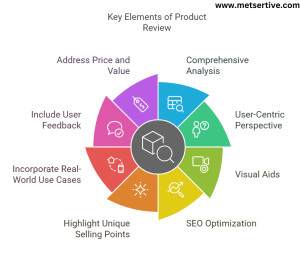
Key Elements of Product Review

  1. Comprehensive Analysis

    Provide an in-depth evaluation of the product, covering features, benefits, and potential drawbacks. Your internal team can dig deeper into what sets your product apart and align the review with customer expectations.

  2. User-Centric Perspective

    Write from the user’s viewpoint, addressing common questions and concerns. An internal team familiar with your customer personas can tailor the content to answer the most pressing concerns of your target audience.

  3. Visual Aids

    Incorporate high-quality images or videos to showcase the product, enhancing the reader’s understanding and engagement.

  4. SEO Optimization

    Integrate relevant keywords naturally throughout the review to improve visibility on search engines. Internal writers, with their knowledge of your SEO goals, can ensure that keywords are placed strategically without compromising readability.

  5. Highlight Unique Selling Points (USPs)

    Clearly articulate what makes the product stand out from the competition. An in-house team can emphasize these points effectively, aligning the review with your brand’s positioning.

  6. Incorporate Real-World Use Cases

    Share practical examples of how the product can be used in everyday scenarios.

  7. Include User Feedback

    Feature insights or testimonials from actual users to provide diverse perspectives. This reinforces trust and shows that your product delivers real value.

  8. Address Price and Value

    Discuss the product’s cost in relation to its quality and features. Mention whether it offers good value for money and if there are any promotions, discounts, or bundled deals available.

Steps to Writing a Compelling Product Review


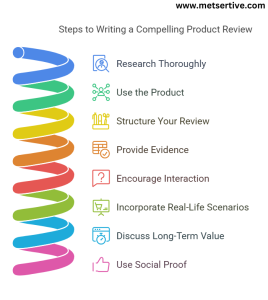
Writing a compelling product review

  1. Research Thoroughly

    Gather detailed information about the product, including specifications, user feedback, and comparisons with similar products. Your marketing or your internal team can access insider knowledge and customer data to enrich the review.

  2. Use the Product

    Whenever possible, personally use the product to gain firsthand experience. Marketing or Internal teams have easy access to test and explore the product, enabling them to provide authentic insights.

  3. Structure Your Review

    Organize your review with clear headings and subheadings, making it easy for readers to navigate.

  4. Provide Evidence

    Support your claims with data, testimonials, or expert opinions.

  5. Encourage Interaction

    End with a call-to-action, inviting readers to share their experiences or ask questions.

  6. Incorporate Real-Life Scenarios

    Show how the product can solve specific problems or fit into everyday life.

  7. Discuss Long-Term Value

    Evaluate how the product performs over time. Mention durability, maintenance, and any cost considerations.

  8. Use Social Proof

    Include user testimonials, ratings, or quotes from reputable sources.

  9. Test Across Multiple Scenarios

    If applicable, test the product in various situations or settings to provide a comprehensive assessment.

  10. Provide Practical Buying Tips

    Share additional advice such as where to purchase, tips for getting the best deals, or complementary products.

SEO Best Practices for Product Reviews

  • Keyword Integration

    Identify and incorporate relevant keywords that potential customers might use when searching for product reviews. Tools like Google’s Keyword Planner can assist in this process.

  • Meta Descriptions

    Craft compelling meta descriptions that include the focus keyword to improve click-through rates from search engine results.

  • Internal and External Links

    Include links to related content on your site and reputable external sources to enhance SEO and provide additional value to readers.

Avoiding Common Pitfalls

  1. Bias

    Maintain objectivity to build trust. Disclose any affiliations and provide balanced views.

  2. Overwhelming Jargon

    Use clear and concise language, avoiding technical terms that may confuse readers. Your Marketing team can ensure the tone aligns with your brand voice and is accessible to your audience.

  3. Neglecting Updates

    Regularly update your reviews to reflect any changes in the product or market, ensuring the content remains relevant.

  4. Focusing Solely on Positives

    Avoid creating overly promotional reviews that only highlight the positives.

  5. Ignoring the Target Audience

    Tailor your review to the needs and interests of your target audience.

  6. Failing to Verify Claims

    Avoid relying solely on manufacturer descriptions or marketing materials.

  7. Poor Formatting

    Reviews that are difficult to read can discourage readers.

  8. Neglecting Legal Disclosures

    If you’re an affiliate or received the product for free, disclose this information to maintain transparency.

Conclusion

Product review is a powerful marketing tool that can significantly boost business growth when executed effectively. By leveraging your internal team of writers and marketing strategists, you ensure that product reviews not only capture the essence of your brand but also address the needs of your audience, ultimately driving conversions and building long-term customer trust. When done right, product reviews can position your brand as a trusted authority and pave the way for sustainable growth.

For businesses looking to harness the power of well-crafted product reviews, investing in internal expertise can make all the difference. Start refining your product review strategy today and watch your brand thrive.

Predictive Analytics in Marketing Unlocking Growth Through Customer Insights

Predictive analytics in marketing is revolutionizing the way businesses connect with their audience. By leveraging historical data and advanced technologies like machine learning and artificial intelligence, marketers can predict customer behavior, personalize experiences, and optimize campaigns with unparalleled precision.

Imagine knowing what your customers want before they do—this isn’t just a dream, it’s a reality made possible through predictive analytics. Whether you’re a small business owner or managing a large-scale marketing operation, understanding how to implement predictive analytics can give you a competitive edge in today’s data-driven world. Let’s explore how this powerful tool can transform your marketing strategy and help you achieve measurable results.

What Is Predictive Analytics in Marketing?

Predictive analytics leverages historical data, artificial intelligence (AI), and machine learning (ML) to forecast future consumer actions and trends. By analyzing patterns from past data, this technology helps marketers anticipate behaviors such as:

  • What products a customer is likely to purchase next
  • When a user is likely to churn or unsubscribe
  • Which campaigns are most likely to convert

It’s not just about crunching numbers; it’s about extracting actionable insights that can shape the customer experience and drive business growth.

According to Gartner, by 2025, 80% of B2C marketers will rely on predictive analytics to create personalized campaigns.

How Does Predictive Analytics Work?

Predictive analytics in marketing revolves around three core components:

  1. Data Collection: Collect historical data from your CRM, email campaigns, website analytics, and sales records.
  2. Model Building: Use machine learning algorithms to analyze this data and create predictive models.
  3. Insights and Action: Apply the model’s predictions to marketing campaigns, such as recommending products or optimizing ad spend.

For example, tools like HubSpot and Google Analytics 4 integrate predictive analytics capabilities to help businesses forecast customer behavior.

Why Is Predictive Analytics a Game-Changer for Marketing?

Predictive analytics isn’t just another buzzword—it’s a tool that can transform how you approach marketing. Here are the top benefits:

1. Hyper-Personalization

Consumers expect brands to know their needs. Predictive analytics can analyze individual preferences to deliver highly targeted content, emails, and ads. According to Salesforce, 73% of customers expect companies to understand their unique needs and expectations .

For instance, Netflix uses predictive analytics to recommend shows based on your viewing history, and Amazon suggests products tailored to your purchase patterns.

2. Better Lead Scoring

Predictive analytics can identify which leads are most likely to convert, allowing you to prioritize your sales efforts. Instead of wasting resources on unqualified leads, you can focus on high-value prospects.

3. Reduced Customer Churn

By identifying patterns in user behavior, predictive models can help you spot customers who are likely to churn. This allows you to take proactive steps, such as offering discounts or personalized engagement, to retain them.

4. Optimized Marketing Spend

No one wants to throw money into campaigns that don’t work. Predictive analytics ensures you’re allocating your budget to the channels and campaigns that will yield the best ROI.


Benefits of Predictive Analytics in Marketing

5. Improved Product Recommendations

Product recommendation engines powered by predictive analytics increase cross-selling and upselling opportunities. In fact, McKinsey reports that personalization can deliver five to eight times the ROI on marketing spend.

6. Enhanced Customer Lifetime Value (CLV)

Predictive analytics enables marketers to identify high-value customers and focus on nurturing those relationships. By predicting lifetime value, businesses can prioritize efforts to retain these customers with tailored loyalty programs, incentives, or premium experiences. This ensures your resources are spent on customers who contribute the most to your revenue over time.

7. Accurate Demand Forecasting

One of the biggest challenges for marketers is predicting what products or services will be in demand. Predictive analytics helps by analyzing seasonal trends, market data, and customer behavior to forecast demand more accurately. This allows for better inventory management, campaign timing, and product launches.

8. Smarter Content Marketing Strategies

Predictive analytics can help you create content that resonates with your target audience. By understanding which topics, formats, or headlines are most likely to engage your audience, you can craft content strategies that drive higher engagement, shares, and conversions. This is particularly useful for blogs, social media, and email campaigns.

By leveraging these eight benefits, businesses can significantly enhance their marketing strategies, create more meaningful customer experiences, and drive measurable results. Predictive analytics truly is a game-changer for marketers looking to stay ahead in a data-driven world.

How to Implement Predictive Analytics in Your Marketing Strategy


Step 1: Define Your Goals

Start by identifying what you want to achieve with predictive analytics. Do you want to improve email open rates? Reduce customer churn? Boost conversion rates? Defining clear objectives will guide your efforts.

Step 2: Leverage the Right Tools

There are numerous tools that integrate predictive analytics into your marketing workflow. Some of the most popular platforms include:

  • Google Analytics 4: Offers predictive metrics like purchase probability.
  • HubSpot: Includes AI-powered lead scoring.
  • Marketo Engage: Helps with behavioral predictions for email campaigns.

Step 3: Gather and Organize Data

Ensure your data is clean, accurate, and well-organized. The accuracy of your predictions depends on the quality of your data. Consolidate your customer data from CRM systems, email campaigns, website analytics, and any other data sources.

Step 4: Test, Learn, and Iterate

Start small by testing predictive models on a specific campaign or audience segment. Monitor the results, learn from the insights, and refine your strategy.

Implementing Predictive Analytics in Marketing

Step 5: Segment Your Audience

One of the key benefits of predictive analytics is its ability to uncover patterns that allow for granular audience segmentation. Use predictive models to divide your audience into highly specific segments, such as:

  • High-value customers
  • Likely-to-churn customers
  • New leads with the highest conversion potential
    Segmentation helps you create tailored messaging for each group, driving better engagement and conversion rates.

Step 6: Integrate Predictive Insights Across Channels

Your predictive insights shouldn’t live in isolation. Integrate them across all your marketing channels for maximum impact. For example:

  • Use predictive data to target ads on social media.
  • Customize email campaigns with predictive recommendations.
  • Personalize website landing pages for individual users.
    By ensuring that your insights influence every touchpoint, you create a seamless, data-driven experience for your audience.

Step 7: Monitor Key Performance Indicators (KPIs)

To understand whether your predictive analytics strategy is working, track relevant KPIs over time. These might include:

  • Customer lifetime value (CLV)
  • Conversion rates for targeted campaigns
  • Customer retention rates
  • ROI on predictive-driven campaigns
    Regularly evaluating your KPIs will help you identify areas for improvement and adjust your strategy accordingly.

Step 8: Invest in Continuous Improvement

The world of predictive analytics is constantly evolving, with new tools, algorithms, and techniques emerging regularly. Stay ahead by:

  • Regularly updating your predictive models with new data.
  • Training your team on the latest AI and machine learning developments.
  • Experimenting with new predictive analytics platforms and integrations.
    Continuous improvement ensures that your strategy remains cutting-edge and adapts to changing market dynamics.

By following these eight steps, you can effectively implement predictive analytics into your marketing strategy and unlock its full potential for driving growth, improving ROI, and creating memorable customer experiences.

Real-Life Examples of Predictive Analytics in Marketing

  1. Spotify: By analyzing user listening habits, Spotify creates personalized playlists and recommends songs. Their “Discover Weekly” playlist, powered by predictive algorithms, has significantly boosted user engagement.
  2. Sephora: The beauty retailer uses predictive analytics to recommend products based on past purchases and browsing history, increasing both sales and customer satisfaction.
  3. Coca-Cola: Predictive analytics helps Coca-Cola analyze social media conversations to identify trends and develop targeted campaigns.

Common Challenges and How to Overcome Them

While predictive analytics is powerful, it does come with challenges:

  • Data Silos: Incomplete or fragmented data can lead to inaccurate predictions. Solution: Invest in tools that integrate data from multiple sources.
  • Implementation Complexity: Predictive analytics requires technical expertise. Solution: Start with user-friendly tools and gradually scale up.
  • Privacy Concerns: Consumers are wary of how their data is used. Solution: Be transparent and comply with privacy regulations like GDPR and CCPA.

The Future of Predictive Analytics in Marketing

As AI and machine learning continue to evolve, predictive analytics will become even more sophisticated. Soon, marketers will be able to predict not only what customers want but also when and how they want it, creating seamless, hyper-personalized experiences.

According to Forrester, companies that excel at using predictive analytics will see 20% higher revenue growth than their peers by 2025 (source: Forrester).

Final Thoughts

Predictive analytics in marketing is no longer a luxury; it’s a necessity for businesses looking to stay ahead of the competition. By leveraging data and AI, you can create smarter campaigns, retain more customers, and drive higher ROI.

If you’re ready to integrate predictive analytics into your marketing strategy, now is the time to act. Tools like Google Analytics 4 and HubSpot can get you started, but having the right partner to guide you through the process can make all the difference.

Let’s work together to create data-driven marketing strategies that deliver real results.

Difference Between Marketing and Sales How SMEs Can Use Both to Grow

Understanding the difference between marketing and sales is crucial for small and medium-sized enterprise (SME) owners aiming to enhance business growth. While both functions drive revenue, they operate differently and serve unique purposes. This article explores these differences with real-world examples and actionable strategies to help SMEs integrate both effectively.

Defining Marketing and Sales

What is Marketing?

Marketing refers to the strategies and activities used to attract, engage, and nurture potential customers before they make a purchase. It involves market research, branding, advertising, and content creation to generate awareness and interest.

✅ Example of Marketing:
A bakery launches an Instagram ad campaign showcasing its freshly baked cakes, encouraging people to visit its store.

What is Sales?

Sales is the process of directly converting potential customers into paying customers through personal interaction, negotiations, and relationship-building.

✅ Example of Sales:
A salesperson at the bakery talks to a customer, answers their questions about custom cakes, and finalizes an order for a wedding cake.

Key Differences Between Marketing and Sales

  1. Scope and Objectives

  • Marketing: Aims to attract a broad audience and create brand awareness. It focuses on educating potential customers and building trust.
  • Sales: Focuses on individual customers who are ready to buy. It involves one-on-one interactions to close deals.

✅ Example:

Marketing
A digital marketing agency runs a free webinar on “How to Rank Higher on Google” to attract business owners looking to improve SEO.

Sales
A sales representative from the agency calls an attendee from the webinar and offers them a paid SEO consultation service.

  1. Strategies and Activities

  • Marketing: Uses long-term strategies like content marketing, SEO, social media, and ads to engage potential customers.
  • Sales: Uses direct communication, such as phone calls, emails, meetings, and product demos, to close a deal.

✅ Example:

Marketing
A fashion brand posts styling tips on TikTok to showcase its new collection and drive website traffic.

Sales
A sales associate at the brand’s store helps a customer choose the right outfit based on their preferences and makes a sale.

  1. Metrics of Success

  • Marketing: Success is measured by website traffic, lead generation, engagement rates, and brand awareness.
  • Sales: Success is measured by revenue, conversion rates, and the number of closed deals.

✅ Example:

Marketing
A SaaS company tracks the number of downloads for its free eBook on “Productivity Hacks for Small Businesses.”

Sales
The company tracks how many people who downloaded the eBook signed up for a paid software subscription.

  1. Customer Interaction Approach

  • Marketing: Uses indirect communication to reach a larger audience through content, social media, email campaigns, and ads.
  • Sales: Involves direct interaction with potential customers through calls, meetings, live demos, and negotiations.

✅ Example:

Marketing:
A skincare brand runs a blog titled “How to Get Glowing Skin Naturally” (marketing) to educate potential customers.

Sales:
A sales representative reaches out via chat to recommend specific products based on the customer’s skin type (sales).

  1. Customer Journey Stage

  • Marketing: Focuses on the awareness and consideration stages, attracting and nurturing leads before they are ready to buy.
  • Sales: Works on the decision and purchase stages, converting warm leads into paying customers.

✅ Example:

Marketing:
A travel agency creates an Instagram video on “Top 10 Budget-Friendly Destinations” (marketing).

Sales:
Later, when a prospect expresses interest in booking, the sales team reaches out with a personalized vacation package (sales).

  1. Timeline of Impact

  • Marketing: A long-term process that builds brand equity and generates leads over time.
  • Sales: A short-term process focused on immediate revenue generation through direct conversions.

✅ Example:

Marketing
A SaaS company invests in SEO and content marketing, generating steady traffic over months.

Sales

Meanwhile, its sales team works on closing deals with leads who are ready to purchase this week.

  1. Emotional vs. Logical Influence

  • Marketing: Appeals to emotions and storytelling, creating a connection with potential customers.
  • Sales: Uses logic and personalized solutions to address specific needs and objections.

✅ Example:

Marketing
A luxury watch brand runs an ad campaign featuring celebrities and success stories to create emotional appeal.

Sales
The sales team then highlights the watch’s craftsmanship, resale value, and exclusive features to persuade customers logically.

  1. Scalability

  • Marketing: Scalable and reaches thousands or millions of potential customers simultaneously.
  • Sales: Limited by time and resources since it involves one-on-one interactions.

✅ Example:

Marketing
A digital course creator runs Facebook ads that reach 500,000 potential learners .

Sales
Meanwhile, the sales team only has time to personally follow up with 50 high-intent leads.

The Importance of Aligning Marketing and Sales for SMEs

For SMEs, aligning marketing and sales ensures a smooth customer journey and higher revenue growth.

Benefits of Alignment:

  1. Improved Lead Quality

  • When marketing and sales align, marketing generates higher-quality leads that are well-informed and more likely to convert.
  • Example: A B2B software company implements a lead scoring system where only prospects who engage with multiple marketing touchpoints (e.g., webinars, case studies, pricing pages) are passed to sales. As a result, the sales team closes 40% more deals with less effort.
  1. Consistent Messaging Across Customer Journey

  • When marketing and sales share the same messaging, prospects receive a clear and cohesive brand experience, increasing trust and conversion rates.
  • Example: A financial consulting firm ensures that its marketing content promotes the same value propositions as its sales team. This avoids confusion and ensures that when a lead speaks to a sales rep, they hear a reinforcement of the benefits already advertised, making them more confident in their decision.


Benefits of aligning marketing and sales

  1. Enhanced Customer Experience

  • A seamless transition from marketing content to sales conversations makes the buying journey smoother, improving customer satisfaction and reducing drop-offs.
  • Example: An online education platform offers a free course preview through marketing emails. When a prospect completes the preview, the sales team follows up with personalized recommendations for full courses based on the topics they engaged with. This leads to a 20% increase in course enrollments.
  1. Increased Revenue and Faster Sales Cycles

  • When marketing delivers high-quality leads, sales teams spend less time convincing and more time closing deals.
  • Example: A SaaS company that aligns marketing and sales sees a 30% reduction in the time it takes to close a deal because leads are already educated and interested.
  1. Better Use of Marketing Budget

  • Sales teams provide feedback on which marketing efforts generate the best leads, allowing for smarter ad spend and content creation.
  • Example: If sales notices that leads from webinars convert 2x better than paid ads, the marketing team can shift more budget to webinars for better ROI.
  1. Higher Customer Retention and Loyalty

  • A smooth transition from marketing to sales ensures customers receive a cohesive experience, increasing satisfaction and long-term loyalty.
  • Example: An e-commerce brand that aligns messaging across ads, product pages, and customer service sees a higher repeat purchase rate.
  1. Stronger Brand Reputation

  • When marketing and sales tell the same story, customers trust the brand more and recommend it to others.
  • Example: A real estate firm ensures that the pricing and offers advertised in marketing campaigns match what sales agents discuss, avoiding confusion and building credibility.
  1. More Accurate Business Forecasting

  • With shared data and reporting, SMEs can predict revenue trends more accurately and make better business decisions.
  • Example: A fitness coaching business that tracks lead conversion rates can estimate future sign-ups, helping them plan staffing and resources efficiently.

Aligning marketing and sales isn’t just about better communication—it directly impacts growth, efficiency, and customer relationships, making it a game-changer for SMEs.

Insights to Align Your Marketing and Sales Efforts

  1. Develop a Unified Strategy

  • Marketing: Creates educational content to attract leads.
  • Sales: Uses the content to build credibility during sales conversations.

✅ Example:
A fitness coach offers a free meal plan as a lead magnet. Sales then follows up with an offer for a one-on-one coaching program.

  1. Implement Integrated Technologies

  • Marketing: Uses tools like email marketing and CRM to capture leads.
  • Sales: Uses CRM data to follow up with personalized offers.

✅ Example:
An online furniture store sends automated emails about new arrivals to leads who browsed a specific category.

  1. Establish a Continuous Feedback Loop

  • Marketing: Collects and analyzes customer feedback for campaign improvements.
  • Sales: Shares common customer objections with marketing to refine messaging.

✅ Example:
A software company learns from sales team that users hesitate due to pricing. Marketing then creates a blog post on “How Our Software Saves You Money” to address concerns.

  1. Create a Content Strategy That Supports Sales Conversations

  • Why? Marketing content should educate potential buyers and address common sales objections, making the sales process easier.
  • How? Develop content like blog posts, case studies, and FAQs based on real questions sales teams receive from leads.

✅ Example:
A cybersecurity company notices that potential customers hesitate due to concerns about implementation complexity. Marketing creates a blog titled “How to Set Up Our Cybersecurity Solution in Just 3 Steps” to reassure them.


Insights to align marketing and sales

  1. Train Sales Teams on Marketing Campaigns and Messaging

  • Why? If sales teams are unaware of marketing efforts, they may miss opportunities to connect with leads effectively.
  • How? Regularly update sales teams on new marketing campaigns, promotions, and key messages through training sessions or internal newsletters.

✅ Example:
A SaaS company launches a limited-time “Get 2 Months Free” offer but notices sales reps are unaware of it. After internal training, sales start mentioning the offer on calls, leading to a 20% increase in conversions. 🚀

  1. Implement Lead Nurturing Workflows for Non-Ready Prospects

  • Why? Not every lead is ready to buy immediately. A lead nurturing system ensures they stay engaged until they are.
  • How? Use email sequences, remarketing ads, and personalized follow-ups to stay in touch with potential customers over time.

✅ Example:
A real estate agency captures leads from an online form but notices that only 10% are ready to buy. Instead of dropping the rest, they send bi-weekly emails with market updates and home-buying tips. After 3 months, many “cold leads” turn into serious buyers!

  1. Use Retargeting Ads to Bring Leads Back into the Funnel

  • Why? Many prospects visit websites but don’t take action immediately. Retargeting ads remind them and encourage conversion.
  • How? Show personalized ads to users who interacted with your website, downloaded a lead magnet, or engaged with an email.

✅ Example:
A furniture store notices that many visitors browse their “Luxury Sofa Collection” but don’t buy. They run retargeting ads showing the same sofas with “Limited-Time 10% Discount”, bringing back 15% of lost prospects to complete their purchase.

  1. Leverage Customer Testimonials and Case Studies in Sales Conversations

  • Why? Trust is crucial for closing deals, and social proof makes potential customers feel more confident.
  • How? Use video testimonials, written case studies, or before-and-after results in both marketing materials and sales pitches.

✅ Example:
A fitness coach’s marketing team publishes a case study on how a client lost 20 lbs in 3 months. The sales team then shares this case study in emails and sales calls, leading to a 25% increase in sign-ups.

By applying these 8 actionable insights, SMEs can bridge the gap between marketing and sales, leading to higher-quality leads, smoother conversions, and increased revenue.

 Conclusion

Understanding the difference between marketing and sales is essential for SMEs. By aligning both functions, businesses can create a cohesive strategy that attracts, nurtures, and converts customers efficiently.

Want to take your business to the next level? Let’s discuss how digital marketing can help you generate quality leads and drive sales. Contact us today!