Lead Nurturing Reduces Customer Acquisition Cost and Increases Conversions

Lead nurturing reduces customer acquisition cost (CAC) by improving conversion rates, building trust with prospects, and maximizing the value of existing leads instead of constantly acquiring new ones. When businesses guide leads through the buyer journey with relevant content and timely follow-ups, they convert more leads into customers—lowering CAC and increasing overall marketing ROI.

Here’s the problem most businesses face:

They invest heavily in ads, generate leads…
but only a small percentage actually convert.

The result?
High CAC, wasted budget, and inconsistent growth.

But the real issue isn’t traffic.

It’s what happens after the lead comes in.

Most leads are not ready to buy immediately.
They need:

  • Clarity
  • Trust
  • Confidence

And that’s exactly what lead nurturing provides.

Instead of pushing for a sale too early,
lead nurturing focuses on:

  • Educating prospects
  • Addressing objections
  • Building relationships over time

Think of it this way:

If 100 leads enter your funnel and only 2 convert, your CAC is high by default.
But if you can convert 5, 10, or even 15 of those same leads…

Your CAC drops—without increasing your ad spend.

Understanding how lead nurturing reduces customer acquisition cost comes down to one principle—converting more of the leads you already paid to acquire.

In this guide, you’ll learn how to use lead nurturing as a system, not just a tactic—so you can reduce CAC, increase conversions, and build a more efficient, scalable growth engine.

What Is Customer Acquisition Cost (CAC) — And Why It Matters

Let’s simplify this.

Customer Acquisition Cost (CAC) is:

The total cost you spend to acquire one customer.

Simple Formula:

CAC = Total Marketing + Sales Cost ÷ Number of Customers Acquired

What goes into CAC?

Most businesses underestimate this.

It’s not just ad spend.

Your CAC includes:

  • Ad spend (Google Ads, Meta Ads, etc.)
  • Tools (CRM, email software, analytics tools)
  • Team salaries (marketing + sales teams)
  • Content creation (blogs, videos, creatives)
  • Sales effort (calls, demos, follow-ups)

Why This Matters More Than You Think

Here’s where most businesses go wrong:

They assume:

“High CAC = expensive marketing”

But that’s not always true.

The Real Insight

High CAC often means:

Low conversion efficiency

Let’s look at a simple example:

You spend ₹1,00,000 on marketing.

Case 1:

  • You acquire 10 customers
    CAC = ₹10,000

Case 2:

  • You acquire 20 customers
    CAC = ₹5,000

What changed?

Not your budget.
Not your ads.

Your conversion rate improved.

That’s the game changer

You don’t always need to reduce spend to lower CAC.

You need to increase how many leads turn into customers.

Reduce Customer Acquisition Cost and increase conversion

Real-World Scenario

A SaaS company runs ads and gets:

  • 500 sign-ups for a free trial

But only:

  • 10 people convert to paid users

CAC stays high.

Now they introduce:

  • Onboarding emails
  • Product walkthroughs
  • Feature education

Conversions go from:

  • 10 → 30 users

Same traffic. Same spend. Lower CAC.

Valuable Tip

Before increasing your marketing budget, ask:

  • Are we converting enough of the leads we already have?
  • Where are leads dropping off in our funnel?
  • Do we have a system to nurture them?

Because:

Optimizing conversion is often cheaper than acquiring new leads.

✅ Key Takeaway

Customer Acquisition Cost is not just about how much you spend.

It’s about how efficiently you turn attention into customers.

And that’s exactly where lead nurturing becomes your biggest advantage.

The Real Problem: Most Leads Don’t Convert (And Why)

Here’s something most businesses don’t realize:

The majority of your leads are not ready to buy when they first interact with you.

But many businesses treat every lead like they’re ready to purchase immediately.

And that’s where things start breaking.

Let’s look at what actually happens:

A potential customer:

  • Visits your website
  • Downloads a guide
  • Signs up for a webinar

What does that mean?

They’re interested.
But not necessarily ready to buy.

So why don’t most leads convert?

Let’s break it down.

1. Leads Are Not Ready to Buy Immediately

Every buyer goes through a journey:

  • Awareness
  • Consideration
  • Decision

Most leads are stuck in the early stages.

Scenario:

A business owner downloads your “SEO checklist.”

That doesn’t mean:
They’re ready to hire you today

It means:
They’re trying to understand the problem

If you immediately pitch your service…

You lose them.

2. Lack of Trust

People don’t buy from brands they don’t trust.

Especially in:

  • B2B
  • High-ticket services
  • SaaS

Scenario:

A lead visits your pricing page.

They’re interested.

But they still wonder:

  • “Will this actually work for me?”
  • “Can I trust this company?”

Without:

  • Case studies
  • Testimonials
  • Educational content

They hesitate… and leave.

3. No Follow-Up (or Poor Follow-Up)

This is one of the biggest revenue leaks.

Scenario:

A lead fills out your contact form.

You respond after 3 days.

By then:

  • They’ve forgotten you
  • Or chosen a competitor

Or worse…

You send:
One email
And then nothing

That lead goes cold.

4. Generic Messaging

Not all leads are the same.

But many businesses communicate like they are.

Scenario:

  • A first-time visitor gets the same email as a pricing-page visitor
  • A curious reader gets the same message as a high-intent buyer

Result?

The message doesn’t resonate
The lead disengages

Important Data Insight

Studies consistently show:

Only a small percentage of leads are sales-ready at the first touchpoint

Which means:

Most of your leads need nurturing before they convert

Common Mistakes That Kill Conversions

  • Treating all leads the same
  • Pushing for a sale too early
  • Not understanding buyer intent
  • Ignoring follow-ups

Think of it this way:

If someone just walked into a store…

Would you immediately say:

“Buy this now.”

Or would you:

  • Understand their needs
  • Answer questions
  • Guide them

That’s exactly what your funnel should do.

Key Takeaway

Without nurturing, you’re leaking money at every stage of your funnel.

You paid to acquire the lead.

But without:

  • Follow-up
  • Education
  • Trust-building

That investment goes to waste.

At its core, effective lead nurturing is a form of sales funnel optimization—it ensures that leads don’t just enter your funnel, but actually move through it and convert.

What Is Lead Nurturing (And What It’s Not)

Now that we understand the problem…

Let’s talk about the solution.

What Is Lead Nurturing?

Lead nurturing is a structured process of:

  • Educating your leads
  • Engaging them over time
  • Building trust gradually

So that when they’re ready to buy…

They choose you.

Simple Way to Understand It

Lead nurturing is not about pushing a sale.

It’s about guiding a prospect toward a decision.

Real-World Example

A SaaS company gets a new sign-up.

Instead of immediately selling…

They send:

  • Day 1: Welcome email + quick start guide
  • Day 3: Feature walkthrough
  • Day 5: Case study
  • Day 7: Invite to demo

By the time they pitch:

The user already understands the value

Conversion becomes easier.

What Lead Nurturing Looks Like in Practice

  • Helpful emails
  • Educational content
  • Timely follow-ups
  • Personalized messaging
  • Behavior-based communication

What Lead Nurturing Is NOT

Let’s clear some common misconceptions.

1. Random email blasts

Sending emails without:

  • Strategy
  • Timing
  • Relevance

That’s noise, not nurturing.

2. Hard selling in every message

If every email says:
“Buy now”

Leads will:
Ignore or unsubscribe

3. One-size-fits-all communication

Different leads need different messages.

  • New leads → education
  • Interested leads → value
  • High-intent leads → conversion

Valuable Tip

Before sending any message, ask:

“What does this lead need at this stage?”

Not:

“What do I want to sell?”

Another Practical Insight

Good nurturing feels like:

  • Guidance
  • Help
  • Clarity

Not:

  • Pressure
  • Spam
  • Noise

Core Idea

Lead nurturing = Guiding a prospect toward a decision, not forcing one.

✅ Key Takeaway

When done right, lead nurturing:

  • Builds trust
  • Reduces hesitation
  • Increases conversions

And most importantly…

It turns your existing leads into customers—without increasing your ad spend. 

How Lead Nurturing Directly Reduces CAC


Lead nurturing reduces customer acquisition cost

Lead nurturing reduces customer acquisition cost


If you’re wondering how to convert more leads without increasing ad spend, the answer lies in building a structured nurturing process that guides prospects toward a decision.

Now let’s connect the dots.

You’ve seen:

  • Leads don’t convert immediately
  • Most businesses don’t nurture properly

So what happens when you do nurture?

Your Customer Acquisition Cost starts dropping—without reducing spend.

Let’s break down how.

1. Improves Lead-to-Customer Conversion Rate

This is the biggest lever.

If more leads convert into customers:

Your CAC automatically goes down.

Scenario:

You generate 100 leads.

  • Without nurturing → 5 customers
  • With nurturing → 15 customers

Same traffic. Same budget.

But your CAC drops by 3X.

Why this works:

Nurturing:

  • Builds trust
  • Answers objections
  • Keeps your brand top-of-mind

So when the lead is ready…

They choose you.

2. Maximizes ROI on Existing Traffic

Every lead you generate already costs you money.

Through:

  • Ads
  • Content
  • SEO
  • Social media

Scenario:

A user downloads your guide.

Without nurturing:
They leave and never return

With nurturing:

  • You send follow-up emails
  • Share relevant content
  • Invite them to a webinar

That same lead now converts.

Key Idea:

You don’t need more traffic.

You need to extract more value from the traffic you already have.

3. Reduces Dependency on Paid Ads

Most businesses fall into this trap:

“We need more leads → Increase ad spend”

But here’s the smarter way:

Convert more from what you already have.

Scenario:

  • Without nurturing → 2% conversion rate
  • With nurturing → 6% conversion rate

Now you get:
3X more customers from the same leads

Which means:
Less pressure to keep increasing ad budgets

Valuable Tip

Before scaling ads, fix your funnel.

Because:
Scaling a broken funnel = scaling your losses

4. Shortens the Sales Cycle

Time is money.

The longer it takes to convert a lead:

  • The more follow-ups needed
  • The more effort required
  • The higher your cost

Scenario:

Two leads:

Lead A (Not nurtured):
  • Asks basic questions
  • Needs multiple calls
  • Takes 30 days to convert
Lead B (Nurtured):
  • Already read your content
  • Understands your offering
  • Takes 10 days to convert

What changed?

Education.

Nurtured leads:

  • Come prepared
  • Ask better questions
  • Decide faster

5. Increases Customer Lifetime Value (LTV)

This is often overlooked.

Lead nurturing doesn’t stop at conversion.

Scenario:

A SaaS company:

  • Without onboarding → users drop off
  • With onboarding emails + guidance → users stay longer

Result:

  • Higher retention
  • More repeat purchases
  • Higher lifetime value

Why this matters for CAC:

When Customer Life Time Value increases:

You can afford higher CAC
Or maintain the same CAC with better profitability


Key Insight

Here’s the truth most businesses miss:

CAC doesn’t drop because you spend less
It drops because you convert more efficiently

This is where conversion rate optimization plays a critical role—because even small improvements in how leads move through your funnel can significantly reduce your overall CAC.

✅ Key Takeaway

Lead nurturing is not a cost-cutting tactic.

It’s a revenue efficiency system

That:

  • Converts more leads
  • Faster
  • With less effort

How Lead Nurturing Increases Conversions (Stage-by-Stage)

The most effective lead nurturing strategies to increase conversions focus on delivering the right message at the right stage of the buyer journey.

Now let’s make this practical.

Not all leads are the same.

And more importantly:

Not all leads are at the same stage.

Big Mistake Most Businesses Make

They send the same message to everyone.

Result?

  1. Low engagement
  2. Low conversions

The Smarter Approach

Align your messaging with the buyer’s journey

Stage 1: Awareness → Interest

This is where the journey begins.

The lead is:

  • Exploring
  • Learning
  • Trying to understand the problem

Goal: Build Trust

Not sell.

What to Share:

  • Educational emails
  • Blog content
  • Guides and checklists
  • Industry insights

Scenario:

A business owner searches:
“How to improve website traffic”

They land on your content.

If you immediately pitch:

You lose them

But if you:

  • Educate
  • Provide value
  • Simplify their problem

You earn attention and trust

Tip

Focus on:
Helping, not selling

At this stage:
Trust > Transaction

How Lead Nurturing increases conversion

Stage 2: Interest → Consideration

Now the lead is thinking:

“This looks interesting… but is it right for me?”

Goal: Reduce Doubt

What to Share:

  • Case studies
  • Product benefits
  • Comparisons
  • Use-case examples

Scenario:

A SaaS user is evaluating tools.

They’re comparing:

  • Features
  • Pricing
  • Results

If you provide:

  • Real results
  • Customer success stories

You move from “option” to “preferred choice”

Tip

Answer questions like:

  • “Will this work for me?”
  • “Is it worth it?”

Stage 3: Consideration → Decision

This is where conversion happens.

But even here…

Leads hesitate.

Goal: Drive Action

What to Share:

  • Testimonials
  • Product demos
  • Free trials
  • Limited-time offers

Scenario:

A lead:

  • Visited your pricing page
  • Opened multiple emails

They’re close.

Now is the time to:
Nudge them forward

Tip

Use:

  • Urgency
  • Clarity
  • Strong CTA

But keep it:
Helpful, not pushy

Big Insight (This Changes Everything)

Each stage needs different messaging.

If you:

  • Sell too early → you lose trust
  • Educate too late → you lose momentum

Simple Way to Remember

  • Awareness → Educate
  • Consideration → Build confidence
  • Decision → Convert

✅ Key Takeaway

Lead nurturing works because it aligns:

  1. The right message
  2. With the right person
  3. At the right time

And when that happens:

Conversions increase naturally.

Lead nurturing is a key part of customer journey optimization, ensuring that each interaction moves the prospect closer to a confident buying decision.

Types of Lead Nurturing That Drive Real Results

Now that we understand why nurturing matters…

Let’s talk about how to actually do it.

Because here’s the truth:

🔸Lead nurturing is not one tactic.
🔸It’s a system of touchpoints working together.

1. Email Drip Campaigns

This is the foundation of most nurturing systems.

A drip email campaign is a sequence of emails sent over time based on:

  • User action
  • Signup
  • Behavior

Scenario:

A user downloads your guide.

Instead of sending just one email, you send:

  • Day 1 → Welcome + resource
  • Day 3 → Educational content
  • Day 5 → Case study
  • Day 7 → Offer/demo

Why it works:

  • Keeps your brand top-of-mind
  • Builds trust gradually
  • Moves the lead step-by-step

Tip:

Each email should have one clear goal
Don’t try to educate, sell, and survey all in one email.

2. Retargeting Ads

Not every lead converts the first time.

But that doesn’t mean they’re lost.

Scenario:

A visitor:

  • Visits your pricing page
  • Leaves without taking action

You run retargeting ads showing:

  • Testimonials
  • Benefits
  • Limited-time offers

They come back and convert.

Why it works:

  • Reinforces your message
  • Reminds users of their interest
  • Targets high-intent audiences

 Tip:

Don’t show generic ads
Show stage-specific ads based on user behavior

3. WhatsApp / SMS Follow-Ups

This is where speed and visibility matter.

Emails can be ignored.

But messages?

They get opened.

Scenario:

A lead signs up for a demo.

You send:
“Hey, just confirming your demo for tomorrow. Let us know if you have any questions.”

Simple. Human. Effective.

Why it works:

  • High open rates
  • Feels personal
  • Faster response

Tip:

Use this for:

  • Reminders
  • Quick nudges
  • Important updates

Avoid overuse—it can feel intrusive.

4. Webinar Sequences

Webinars are powerful for:

  • Education
  • Trust-building
  • High-intent engagement

Scenario:

You host a webinar on:
“How to Reduce CAC for SMEs”

Your nurturing flow:

  • Before → Reminder emails
  • During → Value-packed session
  • After → Replay + offer

Why it works:

  • Builds authority
  • Engages leads deeply
  • Warms up cold audiences

Tip:

Don’t stop at the webinar
The post-webinar follow-up is where conversions happen

5. Personalized Content Journeys

This is where nurturing becomes powerful.

Instead of sending the same content to everyone…

You tailor it based on behavior.

Scenario:

  • Lead A → Reads beginner blogs → gets educational emails
  • Lead B → Visits pricing page → gets case studies + demo invites

Why it works:

  • Feels relevant
  • Matches intent
  • Increases engagement

Tip:

Even simple segmentation (beginner vs high-intent) can make a big difference

Big Insight

Multi-channel nurturing performs better than single-channel

Because your audience is not in one place.

They:

  • Check emails
  • Scroll social media
  • Use WhatsApp
  • Watch videos

Simple Rule

Be present across channels…

But stay consistent in your message

✅ Key Takeaway

The best nurturing systems are:

  • Timely
  • Relevant
  • Multi-channel
  • Behavior-driven

Real-World Scenarios 

Let’s bring everything together with real examples.

Because this is where theory becomes clear.

Scenario 1: SaaS Business

Problem:

Free trial users sign up… but don’t convert.

What’s really happening?

Users:

  • Don’t understand features
  • Don’t see value quickly
  • Get overwhelmed

Solution:

  • Onboarding email sequence
  • Feature walkthroughs
  • Use-case-based education

Result:

  • Higher activation
  • More users experience value
  • More conversions

CAC drops because more users convert from the same pool

Scenario 2: Service-Based Business

Problem:

Leads inquire… then go silent.

What’s happening?

  • Lack of follow-up
  • No trust built
  • No differentiation

Solution:

  • Follow-up emails
  • Case studies
  • Testimonials
  • Educational insights

Result:

  • Builds credibility
  • Keeps conversation alive
  • Increases conversion chances


Scenario 3: E-commerce Business

Problem:

Customers add to cart… but don’t purchase.

What’s happening?

  • Price hesitation
  • Distraction
  • Second thoughts

Solution:

  • Cart reminder emails
  • Limited-time offers
  • Customer reviews

Result:

  • Recovered revenue
  • Increased conversions


Scenario 4: SME (Small & Medium Business)

Problem:

Leads come in through ads or website… but conversion is low.

What’s happening?

  • Leads are not ready
  • No structured follow-up
  • Sales team engages too early

Solution:

  • Lead nurturing email sequence
  • Educational content
  • Lead scoring to identify high-intent leads

Scenario:

An SME offering digital services:

  • Starts sending weekly insights + case studies
  • Tracks engagement

Result:

  • Warmer leads
  • Better sales conversations
  • Higher conversion rates

Same leads → better outcomes → lower CAC


Scenario 5: D2C Brand (Direct-to-Consumer)

Problem:

High traffic but low repeat purchases.

What’s happening?

  • No post-purchase engagement
  • Weak brand connection
  • No retention strategy

Solution:

  • Post-purchase email flow
  • Product usage tips
  • Loyalty offers
  • Re-engagement campaigns

Scenario:

A skincare brand:

  • Sends tips on product usage
  • Recommends complementary products
  • Offers repeat purchase discounts

Result:

  • Higher repeat purchases
  • Increased LTV
  • Better ROI on acquisition

Key Insight

In all these scenarios, the pattern is the same:

The problem is not lack of leads
The problem is lack of nurturing

Final Takeaway

Lead nurturing turns:

  • Interest → trust
  • Trust → action
  • Action → revenue

And when that happens:

  1. Your CAC drops
  2. Your conversions rise
  3. Your growth becomes sustainable 

Common Lead Nurturing Mistakes That Increase CAC (And How to Fix Them)

Here’s the uncomfortable truth:

Most businesses don’t have a lead problem.
They have a lead handling problem.

And every mistake here?
Quietly increases your CAC.

Let’s break down 8 high-impact mistakes—with fixes and real-world scenarios.

1. No Segmentation

What Happens:

All leads get the same emails, same offers, same messaging.

Why It Hurts:

A first-time visitor and a pricing-page visitor are not the same.

Fix:

Segment based on:

  • Behavior (visited pricing page, downloaded guide)
  • Source (ads, organic, referral)
  • Stage (cold, warm, hot)

Scenario:

SaaS:
A CRM tool sends the same onboarding emails to:

  • Trial users
  • Blog subscribers

Result: Low engagement.

Fix:

  • Trial users → product tutorials
  • Subscribers → educational content

Engagement improves → more conversions → lower CAC

2. Over-Selling Too Early

What Happens:

You push demos, pricing, or calls too soon.

Why It Hurts:

Trust isn’t built yet.

Fix:

Follow the rule:
Educate → Build trust → Then sell

Scenario:

Service Business:
A marketing agency sends:
“Book a paid consultation” immediately after signup.

Low response.

Fix:

  • First: Share insights/case studies
  • Then: Invite for consultation

Leads warm up → conversion increases

Common Lead Nurturing mistakes

 3. Inconsistent Follow-Ups

What Happens:

You follow up once… then disappear.

Why It Hurts:

Leads forget you.

Fix:

Create a structured follow-up sequence

  • Day 1
  • Day 3
  • Day 7
  • Day 14

Scenario:

SME (B2B):
A manufacturing supplier responds to inquiry once.

No reply → lead lost.

Fix:

  • Follow-up with:
    • Product comparison
    • Case study
    • Reminder

Lead re-engages → closes later

4. Ignoring Behavioral Triggers

What Happens:

You don’t act when leads show intent.

Why It Hurts:

High-intent signals go wasted.

Fix:

Trigger actions based on behavior:

  • Visited pricing page → send pricing breakdown
  • Abandoned cart → send reminder

Scenario:

D2C Brand:
User adds product to cart → leaves.

No follow-up.

Fix:

  • Send:
    • Reminder email
    • Offer
    • Review/testimonial

Recovery increases → CAC drops

5. Not Aligning with Sales

What Happens:

Marketing sends leads.
Sales says: “These aren’t good.”

Why It Hurts:

Wasted effort + poor conversions.

Fix:

Define together:
What is a “sales-ready” lead?

Scenario:

SaaS:
Marketing sends webinar attendees to sales.

Sales says:
“They’re not ready.”

Fix:
Only send leads who:

  • Attended webinar
  • Visited pricing page

Sales closes faster

6. No Lead Scoring System

What Happens:

You don’t prioritize leads.

Why It Hurts:

Hot leads don’t get immediate attention.

Fix:

Assign points:

  • Pricing page → +10
  • Webinar → +7
  • Email click → +3

Scenario:

Service Business:
A high-intent lead waits 3 days for response.

Lost to competitor.

Fix:
Lead scoring triggers instant sales call.

Faster response → higher close rate

7. Generic, Non-Personalized Messaging

What Happens:

Same email to everyone.

Why It Hurts:

Feels irrelevant → ignored.

Fix:

Personalize using:

  • Name
  • Industry
  • Behavior
  • Pain points

Scenario:

SME:
Sends generic “Our services” email.

Low CTR.

Fix:

  • “For manufacturing businesses struggling with X…”

Relevance increases → engagement improves

8. No Measurement or Optimization

What Happens:

You run campaigns without tracking performance.

Why It Hurts:

You don’t know what’s working.

Fix:

Track:

  • Open rates
  • CTR
  • Conversion rate
  • CAC

Scenario:

D2C:
Runs email campaigns blindly.

No improvement.

Fix:

  • Identify top-performing emails
  • Double down

Better ROI → lower CAC

Actionable Tip

Fixing just 2–3 of these mistakes can:

  1. Increase conversions by 20–40%
  2. Reduce CAC significantly without increasing ad spend

Key Takeaway

  1. You don’t reduce CAC by spending less
  2. You reduce CAC by wasting fewer leads

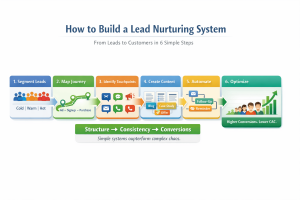
How to Build a Simple Lead Nurturing System (Step-by-Step)

A simple lead nurturing system for small businesses doesn’t need to be complex—it just needs to be consistent, targeted, and aligned with how customers actually make decisions.

Let’s simplify this.

You don’t need complex tools.
You need a structured system.

Step 1: Segment Your Leads

Group leads into:

  • Cold (just discovered you)
  • Warm (engaged)
  • Hot (ready to buy)

Tip:

Start simple. You can refine later.

Step 2: Map Your Customer Journey

Understand:

  • Where leads enter
  • What they need at each stage

Example:

SaaS Journey:
Ad → Signup → Trial → Upgrade

Step 3: Define Key Touchpoints

Identify:

  • Email
  • WhatsApp
  • Retargeting ads
  • Calls

Insight:

More touchpoints = higher conversion probability

How to build a lead nurturing system

Step 4: Create Targeted Content

Match content to stage:

  • Awareness → Educational
  • Consideration → Case studies
  • Decision → Offers/demo

Scenario:

Service Business:

  • Blog → Awareness
  • Case study → Consideration
  • Consultation → Decision

Step 5: Set Up Automation

Use tools to automate:

  • Email sequences
  • Follow-ups
  • Alerts

Tools:

  • CRM: HubSpot, Zoho
  • Email: Mailchimp, ActiveCampaign

With the right marketing automation in place, businesses can nurture leads consistently at scale without relying on manual follow-ups.

Step 6: Track and Optimize

Measure:

  • Conversion rates
  • Engagement
  • Drop-offs

Tip:

Improve one step at a time.

Real-World System Examples

1. SME Example

Problem:

Leads come from website but don’t convert.

System:

  • Day 1: Welcome email
  • Day 3: Case study
  • Day 7: Offer/free consultation

Result: Higher conversions without more ads

2. SaaS Example

Problem:

Free trials don’t convert.

System:

  • Day 1: Setup guide
  • Day 2: Feature tutorial
  • Day 5: Case study
  • Day 7: Upgrade offer

Result: Better activation → lower CAC

3. Service Business Example

Problem:

Leads go cold.

System:

  • Follow-up email sequence
  • Testimonials
  • Problem-solving content

Result: Trust builds → more deals closed

4. D2C Example

Problem:

Cart abandonment.

System:

  • 1 hour: Reminder
  • 24 hours: Offer
  • 48 hours: Social proof

Result: Recovered revenue

Final Insight

  1. You don’t need more leads
  2. You need a better system

Key Takeaway

Lead nurturing is not about sending emails.

It’s about guiding decisions

And when done right:

✔ More conversions
✔ Lower CAC
✔ Higher ROI 

Metrics That Prove Your CAC Is Decreasing

Let’s be honest.

You can feel things are improving…
But unless you measure it, you can’t prove it.

And in business:

What you can’t prove, you can’t scale.

So instead of tracking everything, focus on a few high-impact metrics that directly show whether your lead nurturing is working.

1. Conversion Rate (Your #1 Signal)

This is the most important metric.

Formula:
Leads → Customers

Why It Matters:

If more leads convert into customers…

Your CAC automatically drops

Scenario:

You generate 100 leads.

  • Earlier → 5 customers → 5% conversion
  • Now → 10 customers → 10% conversion

Same leads. Same spend.

But CAC is cut in half.

Tip:

Track conversion at each stage:

  • Visitor → Lead
  • Lead → Qualified
  • Qualified → Customer

This shows where you’re improving.

2. Cost per Lead vs Cost per Customer

This is where many businesses get confused.

They focus only on cost per lead (CPL).

But what really matters is:

Cost per customer (CAC)

Scenario:

You spend ₹50,000 on ads.

Case A:
  • 500 leads → ₹100 per lead
  • 5 customers → CAC = ₹10,000
Case B:
  • Same 500 leads
  • 10 customers → CAC = ₹5,000

Lead cost didn’t change
Conversion improved

Insight:

Low CPL ≠ success
High conversion = success

3. Email Engagement (Early Indicator)

Before conversions improve…

Engagement improves first.

Track:

  • Open rate
  • Click-through rate (CTR)
  • Reply rate

Scenario:

SaaS Business:
  • Old emails → 12% open rate
  • New nurturing sequence → 28% open rate

More engagement → more educated leads → higher conversions

Tip:

If engagement is low:
1.Your messaging is off

2. Not your product

4. Sales Cycle Length

How long does it take to convert a lead?

Scenario:

Service Business:
  • Earlier: 30 days to close
  • After nurturing: 18 days

Why?

Because leads:

  • Already understand the value
  • Already trust you

Insight:

Shorter sales cycle = lower cost per deal

Less time → less effort → lower CAC

5. Customer Lifetime Value (LTV)

CAC is only half the story.

The real game is:

CAC vs LTV

Scenario:

D2C Brand:
  • Without nurturing → one-time buyers
  • With nurturing → repeat purchases

LTV increases

Insight:

Better nurturing doesn’t just convert…

It creates better customers

Putting It All Together

Here’s the pattern you want:

✔ Conversion rate → Up
✔ Email engagement → Up
✔ Sales cycle → Down
✔ LTV → Up
✔ CAC → Down

Core Insight

  1. If conversions increase while spend stays the same
  2. CAC will drop automatically

No hacks. No tricks.

Just better funnel efficiency.

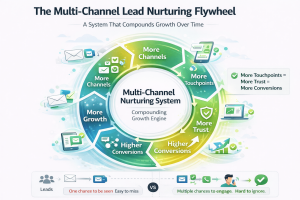
Advanced Insight: The CAC vs Conversion Flywheel

Most businesses think like this:

“We need more leads to grow”

But high-growth businesses think differently:

“We need to convert better”

That’s where the CAC vs Conversion Flywheel comes in.

The Flywheel Explained

Here’s the loop:

Better Nurturing
Higher Conversion Rate
Lower CAC
More Budget Efficiency
More Leads / Better Investment
More Growth
→ Back to Better Nurturing

Why This Changes Everything

This is not a one-time improvement.

It’s a compounding system.

Scenario:

Month 1:
  • Conversion rate = 5%
  • CAC = ₹10,000

You improve nurturing.

Month 3:
  • Conversion rate = 8%
  • CAC = ₹6,250

Now you reinvest savings into better campaigns.

Month 6:
  • More leads
  • Better conversion
  • Even lower CAC

Growth accelerates

The Real Power

Most businesses try to scale like this:

Spend more → hope for growth

But this is risky.

Smart businesses scale like this:

Improve system → then scale

Strategic Insight

Lead nurturing is not just a marketing tactic.

It’s a growth lever

Because it impacts:

  • Conversions
  • Costs
  • Revenue
  • Retention

Actionable Tip

Start small:

  1. Improve one nurture sequence
  2. Track conversion impact
  3. Reinvest gains into better campaigns

Repeat.

Final Takeaway

  1. CAC doesn’t drop randomly
  2. It drops when your system improves

And when you build this flywheel:

✔ Growth becomes predictable
✔ Marketing becomes efficient
✔ Sales becomes easier

Conclusion: Stop Chasing Leads—Start Converting Them

Let’s bring this home.

Most businesses believe their biggest problem is:
“We need more leads”

So they spend more on ads.
Try new channels.
Push harder for traffic.

But here’s the reality:

CAC is not just a cost problem. It’s a conversion problem.

If your funnel converts poorly,
even cheap leads become expensive.

If your funnel converts well,
even expensive leads become profitable.

The Real Shift

Lead nurturing is the missing link most businesses ignore.

It’s the bridge between:

Interest → Trust → Purchase

Without it:

  • Leads stay cold
  • Sales feels forced
  • CAC keeps rising

With it:

  • Leads get educated
  • Trust builds naturally
  • Conversions happen faster

Final Thought

“The businesses that win are not the ones that generate the most leads—
but the ones that convert the most from what they already have.”

That’s the difference between:

  • Constantly chasing growth
    vs
  • Building a system that creates it

Actionable Next Steps (Start Here)

Don’t overcomplicate this.

Start simple. Start practical.

1. Audit Your Current Funnel

Ask yourself:

  • Where are leads coming from?
  • What happens after they enter?

Most businesses don’t even have clarity here.

2. Identify Where Leads Drop Off

Look for leaks:

  • After signup?
  • After first visit?
  • Before purchase?

That’s where your CAC is increasing.

3. Set Up One Simple Nurturing Sequence

Start with just one:

Example:

  • Day 1: Welcome + value
  • Day 3: Insight or case study
  • Day 5: Problem-solving content
  • Day 7: Offer or CTA

Keep it simple. Consistency beats complexity.

4. Track Conversion Improvements

Watch:

  • Conversion rate
  • Engagement
  • Sales cycle

Even small improvements = big CAC reduction

Key Takeaway

Lead nurturing is not just another marketing tactic.

It’s a revenue optimization system

Because when you get it right:

✔ You convert more without spending more
✔ You reduce CAC naturally
✔ You build predictable growth


Customer Feedback – How to Collect Analyze and Use It to Improve Your Customer Journey

Customer feedback is one of the most powerful yet underused tools businesses have for understanding their customers and improving every stage of the customer journey.

If there’s one thing every successful business has in common, it’s this:

They don’t guess what customers want — they ask and listen.

Customer feedback isn’t just a box to tick or an optional survey you send at the end of a purchase. It’s the fuel that powers better experiences, smarter decisions, and stronger growth. Without it, you’re essentially flying blind — making assumptions about what your audience wants, how they behave, and what holds them back from converting.

Imagine this scenario:

You spend weeks optimizing your checkout page. You A/B test button colors, revise product descriptions, and tweak pricing layouts — all based on instinct.

But sales still don’t budge.

Why?

Because none of those changes were based on what your customers actually care about.

Now imagine another scenario:

You collect simple feedback at critical touchpoints — after onboarding, following a purchase, or after a support interaction. You discover that users abandon their carts not because of price, but because they’re confused by your shipping options.

That insight leads you to clarify costs upfront and rework your page layout — voila, cart drop-offs decrease and conversions jump.

That’s the power of customer feedback in action.

According to industry research, companies that systematically collect and act on customer feedback are significantly more likely to grow revenue and improve retention — because they’re not guessing what customers want… they know what they want.

In this article, we’ll dive deep into what customer feedback really is (and what it isn’t), why it matters, and how you can start using it to refine every stage of the customer journey — without being overwhelmed by data.

One of the most powerful ways to build a better customer experience is learning how to use customer feedback to improve your customer journey, because your customers constantly reveal where the journey is smooth and where it breaks

Businesses often collect feedback through surveys, reviews, or support interactions. But the real advantage comes when this feedback becomes part of a structured Voice of the Customer (VoC) system that continuously improves the customer journey.


What Customer Feedback Really Is (And Isn’t)

What Customer Feedback Is

At its core, customer feedback is simply what your customers tell you about their experience with your product, service, or brand. It’s their honest opinion about what worked, what didn’t, and how they felt during each interaction.

This can come in many forms:

  • A brief rating after a support chat
  • A written response on a post-purchase survey
  • A comment on social media
  • A review on a third-party platform
  • Behavioral signals, like abandoning a cart or revisiting a pricing page multiple times

In other words, feedback isn’t just words — it’s data, sentiment, and behavior. And when organized correctly, it becomes a rich source of insights that shows why people behave the way they do, not just what they did.

Here’s a simple example:

A customer completes a purchase and is then prompted with a quick 1–5 star rating plus an optional comment:
“How was your checkout experience?”

That short 30-second input can tell you:

  • Whether the process feels smooth or confusing
  • What might be blocking people from checking out
  • What language or UX elements delight your most loyal buyers

The smart part isn’t just collecting feedback — it’s acting on it.


What Customer Feedback Isn’t

This is where many businesses stumble.

Customer feedback is not:

❌ Just review scores on a product page
❌ A vanity metric you look at once a month
❌ A “set it and forget it” survey buried in an email
❌ A reason to argue with customers (“They don’t understand our pricing!”)

If feedback is collected but never acted on, it becomes noise — something that provides “information” but not insight.

Here’s a common misconception:

Sending an NPS survey and seeing your score go up or down — without connecting that feedback to the customer journey — is like glancing at your dashboard without checking the fuel gauge.

You have numbers, but you don’t know what to change.

Customer feedback only becomes useful when it’s timely, contextual, and tied to actions you can take.


Direct Feedback vs. Indirect Feedback

Not all feedback comes directly from customers’ mouths — and that’s important.

Direct feedback includes:

  • Survey responses
  • Reviews
  • Support tickets
  • Interview transcripts

Indirect feedback includes:

  • Analytics behavior (clicks, time on page)
  • Cart abandonment rates
  • Repeat vs. one-time purchases
  • Social media sentiment

For example, if analytics show that 60% of users leave during checkout, that’s indirect feedback — an outcome that signals friction. But customer comments explain why this is happening.

Good companies use both — the numbers point you to the problem, and customer feedback tells you what to fix.


Why Quality Feedback Beats Quantity

A common mistake is thinking more feedback is always better. But this isn’t true.

You want relevant, actionable feedback, not just noise.

A thousand generic ratings with no context are less useful than 100 targeted insights that tell you:

  • Where in the experience customers struggled
  • What motivated their decisions
  • What specific changes would improve satisfaction or conversions

In fact, research shows that focusing on structured feedback that ties directly into the customer experience — like CSAT, NPS, and behavior-linked triggers — delivers better business results than broad, unfocused surveys.


Quick Tip: Feedback Is a Conversation, Not a Report Card

Imagine if feedback was a face-to-face conversation:

  • You ask a question
  • Someone tells you their honest experience
  • You thank them
  • You take action
  • You report back

That’s the mindset that makes feedback truly effective — instead of treating it like a metric to check once a quarter.


Key Takeaways (So Far)

✔ Customer feedback is more than star ratings — it’s insight into customer behavior, expectations, and emotions.
✔ Feedback is most valuable when it’s contextual, timely, and tied to specific experiences.
✔ The real power of customer feedback comes from acting on it — not just collecting it.
✔ Quality feedback beats raw quantity every time.

Understanding why customer feedback is important for customer experience helps businesses move from guesswork to data-driven decisions that directly improve satisfaction and retention

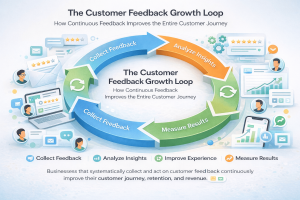
Customer feed back growth loop

Where Feedback Fits in the Customer Journey

Customer feedback becomes truly powerful when it is collected at the right moments in the customer journey.

Many businesses make the mistake of collecting feedback randomly — perhaps sending a survey once in a while or asking customers for reviews only after a purchase. But the most successful companies collect feedback strategically at key customer touchpoints throughout the journey.

These moments are often called “feedback touchpoints.”

By listening to customers at these critical stages, businesses can understand exactly where customers feel delighted, confused, or frustrated.

Let’s look at where feedback fits across the typical customer journey.

  1. Awareness Stage

At this stage, potential customers are just discovering your brand. They might land on your website through search, social media, or a blog article.

This is a great opportunity to understand whether your content is answering their questions.

For example, you might ask a simple on-page question like:

“Did this article help you solve your problem?”

Tools such as heatmaps and quick polls can reveal whether visitors are finding value in your content or leaving with unanswered questions.

Example scenario:

A SaaS company noticed many visitors leaving their pricing page quickly. After adding a small feedback poll, they discovered that customers were confused about the pricing tiers. By clarifying the page, they increased conversions by 18%.


  1. Consideration Stage

In the consideration stage, prospects are evaluating your solution. They may download a guide, request a demo, or subscribe to your email list.

This is the stage where feedback helps you understand what problems customers are trying to solve.

For example, after a demo signup you could ask:

“What challenge are you hoping to solve with our solution?”

These responses often reveal valuable insights about customer priorities and buying motivations.

Research by the Harvard Business Review shows that companies that actively collect and analyze customer insights during the evaluation phase are 60% more likely to improve their sales conversion rates.


  1. Purchase Stage

The purchase stage is one of the most important moments to gather feedback.

Customers have just experienced your sales process — from browsing products to completing payment.

A simple post-purchase question such as:

“Was there anything that almost stopped you from completing your purchase today?”

can uncover hidden friction in your buying process.

For example:

An eCommerce store discovered through feedback that customers were abandoning purchases because the shipping cost was shown too late in the checkout process. By displaying it earlier, they reduced cart abandonment significantly.


  1. Post-Purchase and Retention Stage

After customers start using your product or service, feedback becomes even more valuable.

This is where you can measure satisfaction and long-term loyalty using surveys such as:

These insights help identify whether customers are happy, frustrated, or at risk of leaving.

According to research by Bain & Company, companies that systematically measure and act on customer feedback grow 4–8% faster than their competitors.


Why This Matters

When businesses intentionally collect customer feedback across the customer journey, they gain a clearer picture of the entire customer experience — not just isolated moments.

As customer experience expert Jeanne Bliss explains:

“Customer experience improvement begins when organizations listen to customers at the moments that matter most.”

The key insight is simple:

Feedback should follow the customer journey — not the company’s internal process.


Practical Tip

Start by identifying 3–5 key feedback touchpoints in your customer journey, such as:

  • Website visits
  • Demo requests
  • Purchases
  • Customer support interactions
  • Product usage milestones

Collecting feedback at these points gives you a continuous stream of insight to improve the entire experience.

When businesses intentionally collect customer feedback in the customer journey, they gain visibility into the exact moments where customers feel delighted, confused, or frustrated.


Where to Collect Customer Feedback in the Journey

Here’s where most businesses go wrong:

They collect feedback at the end.

After the sale.
After the support ticket.
After the damage is done.

But customer experience doesn’t happen at one point.
It happens across the entire journey.

If you only measure at the finish line, you miss the friction that happens along the way.

Let’s walk through each stage.


1. At the Awareness Stage: Are You Attracting the Right People?

This is where customers first discover you — through ads, search, social media, or referrals.

At this stage, feedback helps answer a crucial question:

Does your messaging match customer expectations?

Scenario:

You’re running Google Ads promising “Affordable CRM for SMEs.”

People click.

But they bounce.

Is it price?
Is it confusion?
Is it mismatch in expectations?

Instead of guessing, add a simple landing page poll:

“What were you hoping to find today?”

That one question can tell you whether your positioning is aligned.

Tools:

  • Social listening (monitor comments, brand mentions)
  • Landing page polls
  • Short website exit pop-ups

According to research by Microsoft, 90% of consumers consider customer service when deciding whether to do business with a brand. That decision often starts at awareness. If expectations are misaligned here, everything downstream suffers.

Pro Tip:

If your bounce rate is high, that’s indirect feedback. Pair it with a quick poll to understand why.

Collecting customer feed back in the customer journey

2. During Onboarding: First Impressions Matter More Than You Think

You never get a second chance at a first impression.

Onboarding is where customers decide:

“Was this a good decision?”

For SaaS or service businesses, this is critical.

According to Wyzowl, 63% of customers say onboarding influences their decision to continue using a product.

Scenario:

A user signs up for your platform.

They log in once.

They don’t return.

Was the interface confusing?
Were next steps unclear?
Did they get stuck?

Instead of assuming, ask:

“What almost stopped you from getting started today?”

That question reveals friction instantly.

Tools:

  • In-app surveys
  • Onboarding email check-ins
  • Guided setup feedback prompts

Valuable Insight:

Don’t wait 30 days to send a survey.

Ask within the first 24–72 hours while the experience is fresh.


3. In-Product or Post-Purchase: Did You Deliver on Your Promise?

This is where expectations meet reality.

Now the question shifts from:

“Will I try this?”
To:
“Was it worth it?”

This is where CSAT and NPS come into play.

What to Measure:

  • Satisfaction (CSAT)
  • Likelihood to recommend (NPS)
  • Ease of use
  • Outcome achieved

According to Bain & Company (creators of NPS), companies with high Net Promoter Scores grow more than twice as fast as competitors in many industries.

Scenario:

You sell an online course.

Completion rates are low.

Instead of reworking the entire course blindly, ask:

“What made it difficult to continue?”

Sometimes it’s not content quality — it’s time commitment or unclear structure.

Tools:

  • Automated post-purchase emails
  • CSAT surveys
  • NPS prompts
  • In-product feedback widgets


4. Post-Support: How Did We Handle the Problem?

Support interactions are emotional moments.

They can either build loyalty — or destroy it.

Zendesk reports that a majority of customers will switch brands after multiple poor service experiences.

Here’s the truth:

Customers don’t expect perfection.

They expect responsiveness and empathy.

Scenario:

A customer contacts support because of a billing issue.

The issue is resolved.

But how do they feel about the interaction?

Add a simple thumbs up/down at the end of live chat.

If thumbs down → follow up with:

“What could we have done better?”

Short. Direct. Actionable.

Tools:

  • Ticket surveys
  • Live chat rating prompts
  • Email follow-ups after resolution


5. At Churn or Exit: The Most Honest Feedback You’ll Ever Get

This is the goldmine most businesses ignore.

When customers leave, they’re often brutally honest.

Instead of asking:

“Why are you cancelling?”

Try asking:

“What didn’t work for you?”

The difference is subtle — but powerful.

The first feels defensive.
The second invites honesty.

Scenario:

A subscription business notices rising churn.

Exit surveys reveal:

“Too complex.”
“Didn’t use enough.”
“Found alternative.”

That insight can reshape onboarding, pricing tiers, or product simplicity.

According to Harvard Business Review, reducing customer churn by just 5% can increase profits by 25% to 95%.

Feedback at churn is not about saving that customer.

It’s about preventing the next 100 from leaving.


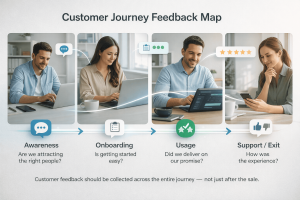
Visual Concept: Customer Journey Feedback Map

Imagine a simple journey map:

Awareness → Onboarding → Usage → Support → Renewal or Exit

Now mark feedback collection points at each stage.

That’s how modern businesses design feedback systems.

Not randomly.
Strategically.


Key Takeaway

Customer feedback works best when it’s contextual.

Not generic.
Not delayed.
Not disconnected.

Tie feedback to specific actions, specific touchpoints, and specific experiences.

That’s when it becomes powerful.

A well-designed customer feedback strategy for business growth turns everyday customer conversations into insights that guide product/service improvements and marketing decisions.


How to Ask Questions That Get Actionable Answers

Let’s be honest.

Most surveys fail not because customers don’t care…

…but because the questions are vague.

If you ask weak questions, you get weak answers.

Closed vs Open Questions: When to Use Which


Closed Questions (Quantitative)

These give you measurable data.

Example:

  • “Rate your experience from 1–5.”
  • “Would you recommend us?”

Best for:

  • Spotting trends
  • Benchmarking performance
  • Tracking improvements over time

Open Questions (Qualitative)

These tell you why.

Example:

  • “What almost stopped you from completing your purchase?”
  • “What could we improve?”

Best for:

  • Discovering friction
  • Understanding emotions
  • Finding unexpected issues

Pro Insight:

Use both together.

First ask a rating.
Then ask why they gave that rating.

That’s where real insight happens.

Proven Feedback Frameworks That Work

1. Likert Scale

“How satisfied are you?” (1–5)

Great for tracking improvement over time.

2. NPS (Net Promoter Score)

“How likely are you to recommend us?”

Segment customers into:

  • Promoters
  • Passives
  • Detractors

Then follow up with:

“What’s the main reason for your score?”

That’s the real value.

3. The Friction Question

“What stopped you from…?”

This question is gold.

It identifies blockers instantly.


Avoiding Survey Fatigue

Customers are overwhelmed.

If every interaction triggers a survey, they’ll ignore all of them.

Research shows response rates drop significantly when customers are surveyed too frequently.

Best Practices:

  • Limit surveys to key journey moments.
  • Keep surveys under 60 seconds.
  • Don’t ask 10 questions when 1 will do.


How to Survey Without Annoying Customers

✔ Use conversational language
✔ Ask one clear question
✔ Be transparent about why you’re asking
✔ Thank customers for their input
✔ Share when changes are made because of feedback

People respond when they feel heard.


High-Impact Questions by Stage


Awareness:
“What were you hoping to find today?”


Onboarding:
“What felt confusing during setup?”


Post-Purchase:
“What nearly stopped you from buying?”


Support:
“Did we fully resolve your issue?”


Churn:
“What didn’t meet your expectations?”

Each question targets a specific moment.

That’s intentional design.

Actionable Tip

Use conversational language and ask one clear question per survey.

Not:
“Please provide detailed feedback about your overall experience with our platform and services.”

Instead:
“What could we improve?”

Simple wins.

Key Takeaway

The quality of your questions determines the quality of your feedback.

Better questions → clearer insights → smarter decisions → better customer journeys.


Tools & Platforms for Collecting Feedback

Let’s address a common mistake right away:

Most businesses don’t fail at feedback because they lack tools.

They fail because:

  • Tools are disconnected
  • Data sits in silos
  • Nobody acts on it

The right tool doesn’t just collect feedback.

It makes feedback visible, organized, and actionable.

Today there are several affordable customer feedback tools for small businesses that make it easy to collect surveys, reviews, and behavioral insights.

Let’s break this down by use case.


1. Website & In-App Feedback Tools

These tools capture feedback in the moment — while the experience is happening.

🔸 Hotjar

Best known for heatmaps and session recordings, Hotjar shows you how users interact with your site.

But here’s where it gets powerful:

You can trigger on-page surveys like:

“What stopped you from completing your purchase today?”

That combines behavioral data with direct feedback.


🔸 Qualaroo

Qualaroo specializes in targeted micro-surveys based on user behavior.

For example:

  • Show a survey only if someone visits pricing twice.
  • Ask different questions to new vs returning visitors.

That’s contextual feedback — not random polling.


🔸 Intercom

Intercom blends chat, onboarding flows, and product feedback inside apps.

You can:

  • Send onboarding check-ins
  • Trigger feedback based on feature usage
  • Collect quick NPS inside the platform


🔸 Drift

Drift (now part of Salesloft) focuses on conversational feedback via chatbots and live chat.

Instead of formal surveys, you gather feedback conversationally.

That often increases response rates because it feels human.

2. Email Feedback Tools

Sometimes, simple works best.

🔸 Typeform

Typeform makes surveys feel like conversations.

Higher engagement. Cleaner UX. Better completion rates.

🔸 Google Forms

Google offers free, simple surveys.

Perfect for:

  • SMEs starting out
  • Internal testing
  • Early-stage feedback systems

🔸 SurveyMonkey

SurveyMonkey is more advanced — good for segmentation and structured analysis.

According to SurveyMonkey’s own data, shorter surveys (under 5 questions) significantly improve response rates.

That’s a reminder:
Keep it tight.


3. Product Analytics Tools (Indirect Feedback Goldmine)

Sometimes customers don’t tell you what’s wrong.

They show you.

🔸 Mixpanel

Mixpanel tracks user behavior events.

You can identify:

  • Drop-off points
  • Feature adoption patterns
  • Retention cohorts


🔸 Heap

Heap automatically captures user interactions without manual tagging.

That reduces tracking blind spots.


🔸 FullStory

FullStory lets you replay sessions to see exactly where users struggle.

Pair that with direct survey feedback and you get a powerful combination.

Behavior tells you what happened.

Feedback tells you why it happened.


4. Support Feedback Systems

Support is one of the richest feedback channels.

🔸 Zendesk

Zendesk allows post-ticket CSAT ratings.

Zendesk research consistently shows that customers who rate support highly are more likely to remain loyal.


🔸 Freshdesk

Freshdesk (by Freshworks) offers automated ticket surveys.


🔸 Help Scout

Help Scout focuses on personalized support experiences and lightweight satisfaction tracking.


5. CRM Integrations: The Real Game-Changer

Here’s where advanced businesses win:

They don’t leave feedback in separate tools.

They sync it into their CRM.

Platforms like:

  • HubSpot
  • Zoho
  • Salesforce

Allow you to attach feedback scores to individual customer profiles.

Now imagine this:

A lead in your CRM shows:

  • NPS: 3
  • Multiple support complaints
  • High churn risk

That’s actionable intelligence.

Not just data.

✅ Actionable Checklist: How to Choose the Right Tool

Before you sign up for anything, ask:

✔ Is this tool easy for customers to use?
✔ Does it integrate with my CRM?
✔ Can it trigger feedback based on behavior?
✔ Does it support automation?
✔ Can I export data easily?
✔ Is it scalable for growth?

If the answer is “no” to most of these — keep looking.

Key Takeaway

The best feedback system is:

Integrated.
Automated.
Simple for customers.

Because feedback only works when it’s frictionless.

When integrated together, these tools can form the foundation of a Voice of the Customer (VoC) system that captures insights across the entire customer journey.


Turning Feedback Into Insight: Analysis Techniques

Many successful brands grow faster by using customer feedback to improve products and services, ensuring their offerings evolve with real customer needs.

Collecting feedback is step one.

Understanding it is where real growth happens.

Raw data doesn’t drive decisions.

Patterns do.

1. Qualitative Feedback Analysis

When customers write open-ended responses, you’ll see recurring themes.

That’s where thematic coding comes in.

What Is Thematic Coding?

You group responses into themes.

Example:

50 customers mention:

  • “Confusing navigation”
  • “Hard to find pricing”
  • “Too many steps”

Theme = Navigation friction

Now it’s not random comments.

It’s a pattern.

2. Sentiment Analysis

Modern tools use AI to detect whether feedback is:

Positive
Neutral
Negative

Even simple tagging (manual or AI-based) helps prioritize emotional pain points.

According to McKinsey, companies that leverage customer analytics outperform competitors in profit growth.

Why?

Because they turn emotion into measurable insight.

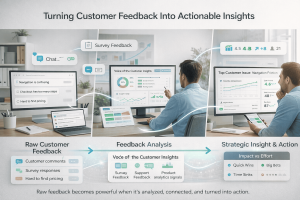
Turning customer feed back into insights

3. Quantitative Analysis

Numbers show trends.

Trend Lines

Are CSAT scores improving or declining month over month?

One bad week is noise.

A three-month decline is a signal.

CSAT / NPS Benchmarking

Track:

  • Your current score
  • Industry average
  • Historical trend

But remember:

Benchmarking without context is meaningless.

If NPS drops, ask:
What changed?


4. Heatmaps & Funnel Analytics

Tools like Hotjar or Mixpanel show:

  • Where users click
  • Where they stop
  • Where they exit

If 65% drop at checkout step 2 — that’s friction.

Pair it with:
“What stopped you from completing your purchase?”

Now you know why.

5. Dashboards: Make Feedback Visible

Feedback hidden in spreadsheets doesn’t drive action.

Create a simple dashboard that shows:

  • Top 5 recurring issues
  • CSAT trend
  • NPS trend
  • Churn-related feedback themes
  • Most requested feature

This creates clarity.

6. Prioritizing Feedback Based on Impact

Not all feedback deserves equal action.

Use a simple Impact vs Effort matrix:

High Impact + Low Effort = Quick wins
High Impact + High Effort = Strategic priority
Low Impact + High Effort = Ignore (for now)

According to research by Bain & Company, improving customer retention by just 5% can increase profits by 25–95%.

So prioritize feedback that impacts retention.

7. Voice of the Customer (VoC): Turning Feedback Into Strategic Insight

When businesses start collecting feedback across multiple touchpoints, they often reach a point where simple surveys are no longer enough. That’s where a Voice of the Customer (VoC) program becomes valuable.

The Voice of the Customer (VoC) refers to a structured process for collecting, analyzing, and acting on customer feedback across the entire customer journey.

Instead of looking at feedback in isolated pieces, a VoC system connects signals from different sources, such as:

  • Surveys and feedback forms
  • Customer support conversations
  • Product usage behavior
  • Social media comments
  • Online reviews

The goal is to create a single, unified view of what customers are experiencing and saying about your business.

According to research from Qualtrics, companies that implement structured VoC programs are able to identify customer experience issues up to 2–3 times faster than organizations relying on ad-hoc feedback.

Example Scenario

Imagine a SaaS company receiving the following signals:

  • NPS survey comments mention slow onboarding
  • Support tickets show repeated login issues
  • Product analytics reveal high drop-off during account setup

Individually, these insights might look unrelated.

But a VoC system connects them and reveals the real problem:

👉 The onboarding process is confusing and causing frustration.

Once identified, the company can redesign onboarding and improve the overall experience.

Why VoC Matters for Growing Businesses

A strong Voice of the Customer program helps businesses:

  • Detect customer pain points early
  • Prioritize improvements based on real feedback
  • Align product, marketing, and support teams
  • Build customer trust by acting on feedback

Customer experience expert Jeanne Bliss explains:

“Voice of the Customer isn’t just about collecting feedback — it’s about creating an organization that listens and responds.”

Practical Tip

If you are just starting, your VoC program does not need to be complex.

Start with three core feedback sources:

  1. Customer surveys (NPS or CSAT)
  2. Support ticket feedback
  3. Website or product behavior analytics

Over time, you can expand your VoC system to include reviews, social listening, and customer interviews.

Key Insight

Customer feedback gives you data points.

A Voice of the Customer program connects those data points into a clear story about the customer experience.

Voice of the Customer (VoC): Turning Feedback Into Strategic Insight

When businesses start collecting feedback across multiple touchpoints, they often reach a point where simple surveys are no longer enough. That’s where a Voice of the Customer (VoC) program becomes valuable.

The Voice of the Customer (VoC) refers to a structured process for collecting, analyzing, and acting on customer feedback across the entire customer journey.

Instead of looking at feedback in isolated pieces, a VoC system connects signals from different sources, such as:

  • Surveys and feedback forms
  • Customer support conversations
  • Product usage behavior
  • Social media comments
  • Online reviews

The goal is to create a single, unified view of what customers are experiencing and saying about your business.

According to research from Qualtrics, companies that implement structured VoC programs are able to identify customer experience issues up to 2–3 times faster than organizations relying on ad-hoc feedback.

Example Scenario

Imagine a SaaS company receiving the following signals:

  • NPS survey comments mention slow onboarding
  • Support tickets show repeated login issues
  • Product analytics reveal high drop-off during account setup

Individually, these insights might look unrelated.

But a VoC system connects them and reveals the real problem:

👉 The onboarding process is confusing and causing frustration.

Once identified, the company can redesign onboarding and improve the overall experience.

Why VoC Matters for Growing Businesses

A strong Voice of the Customer program helps businesses:

  • Detect customer pain points early
  • Prioritize improvements based on real feedback
  • Align product, marketing, and support teams
  • Build customer trust by acting on feedback

Customer experience expert Jeanne Bliss explains:

“Voice of the Customer isn’t just about collecting feedback — it’s about creating an organization that listens and responds.”

Practical Tip

If you are just starting, your VoC program does not need to be complex.

Start with three core feedback sources:

  1. Customer surveys (NPS or CSAT)
  2. Support ticket feedback
  3. Website or product behavior analytics

Over time, you can expand your VoC system to include reviews, social listening, and customer interviews.

Key Insight

Customer feedback gives you data points.

A Voice of the Customer program connects those data points into a clear story about the customer experience.

✅ Actionable Tip: Build a Frequency vs Impact Dashboard

Create two columns:

Frequency (How often does this issue appear?)
Impact (How much revenue or retention does it affect?)

Now score each issue 1–5.

The ones scoring highest?
That’s where you focus.

Key Takeaway

Analysis turns raw feedback into patterns.

Patterns create clarity.

Clarity drives confident decisions.

Without analysis, feedback is noise.

With analysis, feedback becomes a competitive advantage.

Knowing how to analyze customer feedback effectively helps businesses identify patterns, prioritize improvements, and avoid reacting to isolated opinions


Acting on Feedback: How to Make Improvements That Stick

Collecting feedback feels productive.

Analyzing feedback feels strategic.

But acting on feedback?

That’s where most businesses quietly struggle.

You’ve probably seen it happen:
Customers share suggestions.
Teams discuss them in meetings.
Someone says, “Yes, this is important.”

And then… nothing changes.

Let’s fix that.

1. Triage Feedback: Quick Wins vs Strategic Reforms

Not all feedback deserves the same response time.

If you treat every suggestion like a product overhaul, you’ll overwhelm your team.
If you ignore patterns because they seem “small,” you’ll slowly erode trust.

The smarter way? Triage.

Think in two buckets:

✅ Quick Wins (Low Effort, High Impact)

  • Confusing button label
  • Broken checkout link
  • Missing FAQ answer
  • Slow response time from support

These are friction points. They directly affect experience and conversions.

Example:
A SaaS company notices 15 customers mention “I couldn’t find pricing easily.”
They move pricing to the main menu.
Conversion rate improves within weeks.

That’s a quick win.

Strategic Reforms (High Effort, High Impact)

  • Product feature gaps
  • Onboarding redesign
  • Pricing model changes
  • Customer support restructuring

These require planning, resources, and stakeholder buy-in.

According to research by Harvard Business Review, companies that systematically act on customer feedback outperform competitors in revenue growth by prioritizing improvements based on impact, not noise.

Practical Tip:
Create a simple 2×2 grid:

  • High impact / Low effort → Do now
  • High impact / High effort → Plan roadmap
  • Low impact / Low effort → Optional
  • Low impact / High effort → Reconsider

This prevents emotional decisions.

2. How to Communicate Changes to Customers

One of the most underrated growth strategies?

Tell customers you listened.

When you implement feedback and stay silent, you miss a trust-building opportunity.

💬 Example:
“Based on your feedback, we’ve simplified our onboarding steps.”

That single sentence builds credibility.

According to a report by Microsoft, 77% of consumers view brands more favorably if they proactively seek and act on customer feedback.

Notice the key word: act.


3. Closing the Loop With Feedback Providers

Closing the loop means:

You don’t just collect feedback.
You respond to the person who gave it.

Imagine this scenario:

A customer submits feedback saying your mobile dashboard is hard to use.
Three months later, you improve it.

You send them a short message:

“Hi Sarah, you mentioned issues with our mobile dashboard. We’ve redesigned it based on feedback like yours. Would love to hear what you think.”

That creates loyalty.

This approach turns passive users into advocates.

According to research from Bain & Company, companies that excel at customer experience grow revenues 4–8% above market average.

Closing the loop is a big reason why.


4. Feedback Governance: Ownership and Accountability

Here’s where many SMEs struggle:

Who owns feedback?

Marketing collects it.
Support hears it.
Product discusses it.
Sales complains about it.

But no one owns it.

Feedback without ownership becomes a shared responsibility — which usually means no responsibility.

Best practice:

  • Assign one feedback owner (CX lead, Product Manager, or Founder in SMEs)
  • Define a monthly review process
  • Create clear action categories (Fix, Improve, Monitor, Decline)

This turns feedback into a structured system — not random conversations.


5. Real-World Example: Feedback Turning Into Growth

Let’s look at a well-known example.

Slack built much of its product refinement through user feedback loops. Early users constantly reported friction in notifications and integrations. Instead of ignoring them, Slack iterated aggressively — weekly improvements based on usage feedback.

The result?
A product customers felt they co-created.

Even smaller companies can replicate this at scale.

💡 Scenario for SMEs:

An e-commerce brand notices repeated feedback:
“Delivery tracking updates are unclear.”

They:

  • Simplify tracking emails
  • Add WhatsApp notifications
  • Clarify delivery timelines

Customer anxiety drops.
Support tickets decrease.
Repeat purchases increase.

Feedback → Action → Retention.


Actionable Tip: Use a Feedback Loop Board

Create a simple board in:

  • Trello
  • Notion
  • ClickUp

Columns:

  1. Feedback Received
  2. Category
  3. Impact Score
  4. Action Planned
  5. In Progress
  6. Implemented
  7. Customer Notified

This visual workflow prevents feedback from disappearing into Slack chats or email threads.


✅ Key Takeaway

Feedback is not valuable because it’s collected.

It’s valuable because it drives change.

Action is the currency of feedback — without it, insights are just noise.

Feedback Metrics That Matter

Now let’s talk measurement.

Because here’s the truth:

If you improve customer experience but can’t measure it,
you can’t prove ROI.

And if you can’t prove ROI,
improvements get deprioritized.

Let’s focus on metrics that actually matter.

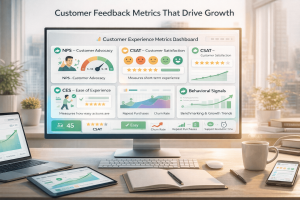
Customer feed back metrics that drive growth

1. Net Promoter Score (NPS) — Why It Matters

NPS asks one simple question:

“How likely are you to recommend us to a friend or colleague?”

Respondents are grouped into:

  • Promoters (9–10)
  • Passives (7–8)
  • Detractors (0–6)

It measures advocacy — not just satisfaction.

According to Bain & Company, creators of the NPS framework, companies with higher NPS grow more consistently because promoters drive referrals and repeat purchases.

💡 Why SMEs should care:
High NPS = lower acquisition cost.

But remember:
NPS alone isn’t enough. It tells you what people feel — not why.

Always add:
“What’s the primary reason for your score?”


2. Customer Satisfaction Score (CSAT)

CSAT measures short-term satisfaction.

Example:
“How satisfied were you with your recent support interaction?”

Usually measured on a 1–5 scale.

This metric is powerful for:

  • Post-support surveys
  • Post-purchase check-ins
  • Onboarding completion

It’s immediate and tactical.

💡 Scenario:
If your CSAT drops after onboarding changes, you know something broke.


3. Customer Effort Score (CES)

CES measures how easy it was for customers to complete an action.

Example:
“How easy was it to resolve your issue?”

Research published in Harvard Business Review suggests reducing customer effort is a stronger predictor of loyalty than delighting customers.

In other words:
Make it easy. Not flashy.

For SMEs, lowering friction often delivers better ROI than adding new features.


4. Behavioral Signals (Often More Honest Than Surveys)

Customers don’t always tell you the full story.

But their behavior does.

Track:

  • Repeat purchase rate
  • Churn rate
  • Time to close support tickets
  • Product usage frequency
  • Feature adoption rate

Example:
If NPS is high but churn is increasing, something deeper is wrong.

Feedback + behavior = full picture.


5. Benchmarking Your Scores

Don’t obsess over industry averages.

Instead:

  • Benchmark against your past performance.
  • Aim for month-over-month improvement.
  • Set realistic improvement goals (2–5% per quarter).

Consistency beats dramatic spikes.

Actionable Tip: Build a Monthly Metrics Scoreboard

Create a simple dashboard that tracks:

  • NPS
  • CSAT
  • CES
  • Churn Rate
  • Repeat Purchase Rate
  • Support Resolution Time

Review it monthly.

Tie each metric back to:
Revenue
Retention
Customer Lifetime Value

When leadership sees how CX metrics affect business KPIs, feedback becomes strategic — not optional.

✅ Key Takeaway

Metrics measure impact.

Without them, feedback feels subjective.

With them, feedback becomes a growth lever.


Common Feedback Pitfalls and How to Avoid Them

Let’s be honest.

Collecting feedback feels good. Acting on it feels productive.

But mismanaging feedback?
That can quietly hurt your growth.

SMEs make the same mistakes again and again. The good news? They’re avoidable.

Let’s break them down.


❌ 1. Focusing Only on Positive Feedback

It’s natural.

You receive five-star reviews and glowing testimonials — and you feel validated.

But here’s the danger:
If you only amplify praise and ignore criticism, you stop improving.

Positive feedback tells you what to keep doing.
Negative feedback tells you what to fix.

And the second one drives growth.

According to research by Harvard Business Review, companies that actively analyze negative feedback improve retention more effectively than those that only track satisfaction.

Scenario:
An online service receives multiple reviews saying, “Great service, but onboarding was confusing.”

If they only highlight the “Great service” part, they miss the friction hurting conversions.

Smart move: Create a monthly “Top 5 Complaints” review. Treat complaints like improvement opportunities.


❌ 2. Ignoring Low-Frequency but High-Impact Issues

Some problems don’t happen often — but when they do, they’re catastrophic.

Example:

  • Payment gateway failure for a few users
  • Account lockouts
  • Data privacy concerns
  • Severe shipping delays

These might represent only 2–3% of feedback.
But they destroy trust.

Research from PwC shows that 32% of customers will stop doing business with a brand they love after just one bad experience.

One.

So don’t just track frequency. Track impact.

Ask:

  • Does this issue directly affect revenue?
  • Does it affect trust?
  • Does it create churn risk?

Sometimes, the loudest growth lever isn’t the most frequent complaint — it’s the most damaging one.


❌ 3. Over-Surveying Your Customers

Feedback is powerful.

But too much feedback collection becomes annoying.

We’ve all experienced it:

  • “Rate your experience.”
  • “Tell us how we did.”
  • “Quick 30-second survey.”
  • “One more question…”

Survey fatigue is real.

According to data from SurveyMonkey, response rates drop significantly when customers are surveyed too frequently.

And worse — over-surveying reduces goodwill.

Rule of thumb:

  • Trigger feedback at meaningful moments.
  • Keep surveys short (1–3 questions).
  • Space them appropriately.

Ask yourself:
Is this survey necessary? Or are we asking because we can?


❌ 4. Reacting to Feedback Without Strategic Alignment

This one is subtle — and dangerous.

A customer requests a feature.
Another requests a completely opposite feature.
You try to satisfy both.

Suddenly your product becomes cluttered. Your messaging becomes unclear. Your roadmap loses direction.

Not all feedback should be implemented.

It must align with:

  • Your positioning
  • Your ideal customer profile
  • Your long-term strategy

As Steve Jobs famously said,
“It’s not the customer’s job to know what they want.”

Customers describe pain.
It’s your job to interpret and solve it strategically.


Actionable Tip: Use a Decision Matrix

Before acting on any feedback, evaluate it through:

Impact vs Effort Matrix

  • High Impact / Low Effort → Implement immediately
  • High Impact / High Effort → Add to roadmap
  • Low Impact / Low Effort → Optional
  • Low Impact / High Effort → Decline

This protects your team from emotional, reactive decisions.


✅ Key Takeaway

A feedback system isn’t powerful because it collects data.

It’s powerful because it stays focused, strategic, and sustainable.

Avoiding these mistakes ensures your feedback engine doesn’t become noise.


Scaling Your Feedback System for Growth

When you’re small, feedback is simple.

You check emails.
You read reviews.
You track comments in a spreadsheet.

But as your business grows, that approach breaks.

If your feedback system doesn’t scale with you, you lose visibility — and eventually, customers.

Let’s talk about scaling intelligently.


1. When to Move From Spreadsheets to Automation

Spreadsheets work when:

  • You get fewer than 50 feedback inputs per month.
  • You have one product or service.
  • You have a small team.

You need automation when:

  • Feedback is coming from multiple channels.
  • Support tickets exceed 100+ per month.
  • You have multiple teams involved.
  • Patterns are hard to detect manually.

At this stage, manual tracking creates blind spots.

Automation helps:

  • Categorize feedback automatically
  • Tag sentiment
  • Assign ownership
  • Track resolution time

If analysis feels overwhelming, it’s time to upgrade.


2. Predictive Feedback With Behavior Scoring

This is where modern businesses get smarter.

Instead of waiting for customers to complain, you predict dissatisfaction through behavior.

For example:

  • Reduced product usage
  • Slower login frequency
  • Abandoned carts
  • Increased support tickets

Companies using behavior analytics tools often integrate this with churn prediction models.

Research by Gartner suggests that businesses using predictive analytics significantly improve customer retention compared to reactive models.

Feedback isn’t just what customers say.
It’s what their behavior signals.


3. Using AI for Sentiment and Topic Analysis

As feedback volume grows, manual analysis becomes impossible.

AI tools can:

  • Detect emotional tone
  • Group similar complaints
  • Identify emerging patterns
  • Highlight urgent risk signals

For example:
If 200 comments mention “slow” or “delay,” AI clusters them automatically.

This allows you to:

  • Identify root causes faster
  • Detect reputation risks early
  • Make data-backed decisions

Even SMEs today can leverage affordable AI-powered analytics built into modern platforms.


4. Cross-Team Feedback Sharing

Feedback trapped in one department loses power.

Support hears complaints.
Sales hears objections.
Marketing hears expectations.
Product hears feature requests.

But if these insights don’t connect — strategy suffers.

High-performing companies build structured feedback sharing loops.

According to research from McKinsey & Company, organizations that break silos and share customer insights across teams outperform peers in customer satisfaction and operational efficiency.

Practical move:
Hold a monthly “Customer Insight Review” meeting:

  • Top 5 complaints
  • Top 5 feature requests
  • Top churn reasons
  • Support trends

Make feedback visible. Not hidden.


5. Connecting Feedback to Revenue and Retention Metrics

Here’s where scaling becomes strategic.

Early-stage businesses collect feedback to improve experience.

Growth-stage businesses connect feedback to money.

Start asking:

  • Does improving CSAT reduce churn?
  • Do promoters (high NPS) spend more?
  • Does faster support resolution increase repeat purchase rate?

According to research from Bain & Company, increasing customer retention rates by just 5% can increase profits by 25% to 95%.

That’s not a small lever.

Scenario:
You discover that customers who rate onboarding 8/10 or higher have:

  • 30% higher retention
  • 20% higher lifetime value

Now onboarding feedback becomes a revenue lever — not just a UX improvement metric.

When feedback is tied to revenue dashboards, leadership pays attention.


6. Segmenting Feedback by Customer Type

As you grow, one mistake becomes common:

Treating all feedback equally.

But a complaint from your ideal high-value customer is not the same as feedback from a one-time bargain buyer.

Segment feedback by:

  • Customer lifetime value
  • Industry (for B2B)
  • Subscription tier
  • Geography
  • New vs long-term customers

Why?

Because patterns differ across segments.

Research from McKinsey & Company shows that personalization and segmentation significantly improve retention and engagement outcomes.

Example:
Enterprise customers complain about integrations.
Small customers complain about pricing.

If you mix both together, strategy becomes confusing.

Segmentation gives clarity.


7. Building a Continuous Feedback Culture (Not Just a System)

Tools scale.
Processes scale.

But culture determines whether feedback actually drives growth.

In high-performing companies:

  • Feedback isn’t owned by one department.
  • Product decisions reference customer insights.
  • Sales objections feed product roadmap.
  • Support trends influence onboarding changes.

Feedback becomes part of decision-making DNA.

According to Gartner, organizations that embed customer insights into strategic planning outperform competitors in customer retention and operational performance.

Practical move:
Add one slide in every monthly leadership meeting:
“Voice of the Customer Highlights.”

Make it non-negotiable.


8. Creating Feedback-to-Innovation Loops

At scale, feedback shouldn’t just fix problems.

It should spark innovation.

Look at companies like Amazon. Their “working backwards from the customer” approach starts with customer pain and builds solutions around it.

Instead of asking:
“What should we build next?”

Ask:
“What are customers struggling with repeatedly?”

Example for SMEs:
If customers frequently ask:
“Can you integrate with WhatsApp?”

Instead of answering manually every time,
build the integration and promote it as a feature.

Recurring feedback patterns often reveal product expansion opportunities.

That’s how feedback fuels growth — not just damage control.

Quick Recap of All 8 Scaling Levers

As your business grows, your feedback system should evolve to include:

  1. Automation beyond spreadsheets
  2. Predictive behavior scoring
  3. AI-powered sentiment analysis
  4. Cross-team feedback sharing
  5. Revenue-linked insight tracking
  6. Segmented feedback analysis
  7. Cultural embedding of customer insights
  8. Innovation loops driven by recurring pain points


Actionable Tip: Scaling Checklist

Here’s a simple progression model:

Beginner Level

  • Manual surveys
  • Spreadsheet tracking
  • Basic CSAT tracking

Intermediate Level

  • Integrated survey tools
  • Automated tagging
  • Dashboard reporting
  • Monthly review meetings

Advanced Level

  • Predictive behavior scoring
  • AI sentiment analysis
  • Cross-team data integration
  • Feedback tied to revenue KPIs

Ask yourself:
Where are we today?
What’s the next logical upgrade?


✅ Key Takeaway

Feedback systems evolve.

What works at 100 customers won’t work at 10,000.

The best feedback systems are:

  • Integrated
  • Automated
  • Strategic
  • Scalable

And most importantly — aligned with growth.

Conclusion

Let’s bring this full circle.

Customer journeys don’t improve because we assume what customers want.

They improve because we listen intentionally, analyze intelligently, and act consistently.

If there’s one thing you should take away from this entire guide, it’s this:

Customer feedback is not a survey tool.
It’s a journey enhancement system.


🔁 Feedback Is a Continual Loop — Not a One-Time Activity

Many businesses treat feedback like a campaign.

They:

  • Run a survey.
  • Review results.
  • Make a few changes.
  • Move on.

That’s not a system. That’s an event.

The companies that win long-term treat feedback as a loop:

  1. Collect
  2. Analyze
  3. Act
  4. Communicate
  5. Measure
  6. Repeat

According to research from Bain & Company, companies that consistently close the feedback loop see stronger customer loyalty and long-term revenue growth compared to those that don’t.

Feedback isn’t a checkbox.
It’s an operating rhythm.

And when embedded into your journey touchpoints — awareness, onboarding, purchase, support, retention — it becomes a growth engine.


Why Feedback Is a Journey Enhancer

Let’s simplify this.

Without feedback:
You guess.

With feedback:
You prioritize.

Without feedback:
You build based on assumptions.

With feedback:
You build based on real friction, real needs, real expectations.

That’s the difference between reactive growth and intentional growth.

Research from PwC shows that customer experience is a key driver of loyalty, yet many businesses misjudge what matters most to customers. Feedback corrects that misalignment.

In simple terms:
Feedback aligns perception with reality.

And that alignment improves:

  • Conversion rates
  • Retention
  • Lifetime value
  • Referrals


A Simple 3-Step Action Plan (Start This Week)

Let’s make this practical.

You don’t need complex tools to begin. You need clarity.


✅ Step 1: Map Out Your Feedback Touchpoints

Open a blank page and write down:

  • Where do customers first interact with us?
  • Where do they make decisions?
  • Where do they experience friction?
  • Where do they leave?

Mark 5–7 key touchpoints across your journey:

  • Landing page
  • Onboarding
  • Checkout
  • Product usage
  • Support interaction
  • Renewal / repurchase

Now ask:
Where are we currently collecting feedback?
Where are we blind?

Clarity creates opportunity.


✅ Step 2: Build Your First Focused Feedback Survey

Don’t overcomplicate it.

Start with one clear objective.

Examples:

  • Improve onboarding
  • Reduce churn
  • Improve support experience

Then build a short survey (1–3 questions max).

For example:

  1. On a scale of 1–10, how satisfied are you with your onboarding experience?
  2. What was the most confusing part?

That’s it.

Keep it conversational.
Keep it specific.
Keep it actionable.

Remember:
The quality of your questions determines the quality of your feedback.

✅ Step 3: Set One KPI to Measure Success

Feedback without measurement becomes opinion.

Choose one KPI tied to your objective:

  • Reduce churn by 5%
  • Improve CSAT by 10%
  • Increase repeat purchases
  • Improve onboarding completion rate

Track it monthly.

According to Gartner, organizations that align customer experience metrics with business KPIs are significantly more likely to achieve growth targets.

Measurement turns feedback into ROI.


Final Perspective

Feedback isn’t about pleasing everyone.

It’s about understanding patterns.

It’s about identifying friction before it becomes churn.

It’s about creating experiences that feel intuitive because they are built on real insight.

The businesses that scale sustainably aren’t the ones with the loudest marketing.

They’re the ones with the clearest understanding of their customers.

And that clarity comes from a structured, evolving feedback system.

Businesses that consistently improve their customer journey don’t rely on occasional surveys. They build a continuous Voice of the Customer system that listens, analyzes, and acts on feedback at every stage.


Key Takeaway

Feedback isn’t a destination.
It’s not a one-time project.
It’s not a survey tool.

Customer feedback is your strategic advantage — when you turn it into action.


Customer Experience Audit for Fixing Broken Touchpoints Across Channels

Customer experience audit is the fastest way to uncover where customers feel friction, confusion, or frustration—often in places businesses don’t realize are costing them conversions, retention, and trust.

Let’s get one thing straight.

Customer experience is no longer a “nice-to-have.”
It’s not a branding bonus.
And it’s definitely not just a support team problem.

Customer experience is a growth lever.

Today, customers don’t just compare prices.
They compare how easy, fast, and reassuring it feels to do business with you.

Two brands can sell the same product at the same price—
and the one with the smoother experience wins.

Where Most Businesses Get It Wrong

Here’s the uncomfortable truth:

Most businesses believe they’re delivering a great customer experience.
But very few actually audit it.

They assume:

  • “Our product is good.”
  • “Our support replies eventually.”
  • “Our website looks fine.”

Meanwhile, revenue quietly leaks through broken touchpoints:

  • A slow checkout
  • Confusing pricing pages
  • Cold automated emails
  • Late or robotic support responses

No alarms go off.
No angry emails come in.

Customers don’t complain.
They just… leave.

That’s what makes CX problems so dangerous.
They create silent churn.

What a CX Audit Really Uncovers

A proper customer experience audit doesn’t just tell you what’s broken.
It shows you where trust is being lost without you noticing.

Specifically, it uncovers:

  • Silent churn risks
    Customers who stop engaging long before they cancel or disappear.
  • Conversion friction
    Moments where customers hesitate, abandon carts, or delay decisions.
  • Trust-breaking moments
    Inconsistent messaging, slow responses, or confusing handoffs between channels.

According to PwC, 32% of customers will walk away from a brand they love after just one bad experience.
That’s how unforgiving modern CX has become.

Why This Guide Exists

The good news?

You don’t need to:

  • Rebuild your website
  • Change your entire tech stack
  • Hire a CX consultant immediately

A CX audit helps you:

  • Identify the biggest experience gaps
  • Prioritize fixes that actually impact revenue
  • Improve retention and conversions step by step

Small changes at the right touchpoints compound fast.

Think of this guide as a flashlight—not a bulldozer.
It helps you see what’s leaking before you try to fix everything.

Customer Experience Explained to Boost Retention, Revenue & Loyalty

What Is a Customer Experience Audit? (Simple, Practical Definition)

Let’s simplify this—because CX jargon often overcomplicates things.

Simple Definition

A customer experience audit is a structured review of every interaction a customer has with your brand, to identify:

  • Friction
  • Inconsistency
  • Missed opportunities

That’s it.

No buzzwords.
No complicated frameworks.

It’s about seeing your business through your customer’s eyes.

What a CX Audit Is Not

This part matters, because many businesses think they’re auditing CX—but they’re not.

A CX audit is not:

  • ❌ A one-time customer survey
  • ❌ Just checking your NPS score
  • ❌ Limited to customer support interactions

Surveys and scores are signals, not the full picture.

Example:
A customer might give you a “7/10” on NPS.
But:

  • They struggled at checkout
  • Got confused after purchase
  • Never came back

The score didn’t show the story.
The journey did.

What a CX Audit Actually Includes

A real CX audit looks at how customers feel and move, not just what they say.

It evaluates:

  • Emotional experience
    Do customers feel confident or anxious?
  • Speed & clarity
    Are responses fast? Are next steps obvious?
  • Consistency across channels
    Does WhatsApp say one thing while the website says another?

Tip: Customers don’t experience departments.
They experience one brand.

If marketing sounds friendly but support sounds cold, CX breaks.

When Should You Run a CX Audit?

You don’t need to wait for a crisis.

Strong signals it’s time to audit your CX:

  • Falling conversions
  • Rising churn or drop-offs
  • Increasing support complaints
  • Growth that has plateaued despite traffic

Scenario:
A SaaS company sees strong trial sign-ups—but low trial-to-paid conversions.
The product isn’t the issue.
The experience during onboarding is.

A CX audit reveals:

  • Confusing setup steps
  • No follow-up guidance
  • Slow support replies during trial

Problem found.
Revenue saved.

Key takeaway so far:
Customer experience problems rarely scream.
They whisper—until revenue disappears.

A CX audit helps you listen before it’s too late.

Before You Start: Set Clear Goals for Your CX Audit

Before you map journeys.
Before you analyze touchpoints.
Before you open spreadsheets.

You need to answer one question:

“What are we actually trying to fix?”

Because auditing customer experience without clear goals is how businesses fall into analysis paralysis.

Why Auditing Without Goals Backfires

When there’s no clear outcome, teams:

  • Audit everything
  • Fix nothing
  • Argue over priorities
  • Drown in data

You end up with:

  • 50 screenshots
  • 20 observations
  • 0 real improvements

A CX audit isn’t about perfection.
It’s about progress in the right direction.

Common CX Audit Goals (Pick What Matters Most)

Most CX audits usually aim to improve one (or two) of these outcomes:

  • Improve conversion rate
    (More visitors → buyers)
  • Reduce churn
    (Fewer customers leaving quietly)
  • Shorten response time
    (Especially on WhatsApp, chat, or email)
  • Increase repeat purchases
    (Turning one-time buyers into loyal customers)

According to Bain & Company, increasing customer retention by just 5% can boost profits by 25–95%.
That’s why clarity matters.

Choose 1–2 Primary Outcomes (Not Everything at Once)

This is critical.

Trying to fix:

  • Conversions
  • Retention
  • Support
  • Mobile UX
  • Personalization
  • Automation
    …all in one audit is a recipe for burnout.

Instead, choose one main goal and one supporting goal.

Practical Examples

SaaS

  • Primary goal: Reduce trial drop-offs
  • Supporting goal: Improve onboarding clarity

eCommerce

  • Primary goal: Lower cart abandonment
  • Supporting goal: Improve checkout trust signals

SME / Local Business

  • Primary goal: Improve WhatsApp response experience
  • Supporting goal: Reduce missed inquiries

Tip:
Write your audit goal as a sentence, not a keyword.

Bad: “Improve CX”
Good: “Reduce trial drop-offs by identifying friction in onboarding and support touchpoints.”

That sentence becomes your decision filter.

If a finding doesn’t support that goal?
Park it for later.

Step 1: Map Your Real Customer Journey (Not the Ideal One)

This is where most CX audits go wrong.

Businesses map the journey they wish customers followed.
Not the one they actually do.

Why Customer Journeys Are No Longer Linear

The old model looked neat:

Awareness → Consideration → Purchase → Done

Reality looks like this:

Social → Website → WhatsApp → Exit → Email → Pricing → Exit → SMS → Checkout → Support → Repeat Purchase

Messy.
Looping.
Unpredictable.

And completely normal.

Today’s customers:

  • Switch devices
  • Jump channels
  • Pause decisions
  • Re-enter weeks later

Google reports that over 90% of users switch between devices to complete a task.
Your CX must survive those switches.

Mapping customer journey

Map How Customers Actually Move

Start by mapping real behavior, not assumptions.

Ask:

  • Where do customers enter from?
  • Where do they leave?
  • Where do they come back?

Example Journey

A real-world SaaS journey might look like:

  1. Sees a LinkedIn post (mobile)
  2. Visits website (desktop)
  3. Clicks pricing
  4. Leaves
  5. Receives email nurture
  6. Books demo
  7. Asks question on WhatsApp
  8. Converts days later

That’s not chaotic.
That’s modern CX.

How to Create a Realistic Journey Map

You don’t need a fancy framework.
You need honesty.

Step 1: Identify Entry Points

  • Social media posts or ads
  • Blog content
  • Referrals
  • WhatsApp inquiries
  • Google search

Step 2: Identify Exit Points

  • Pricing page
  • Checkout page
  • Long forms
  • Slow-loading pages
  • No-response moments

Exits aren’t failures.
They’re signals.

Step 3: Identify Re-Entry Loops

  • Email follow-ups
  • Retargeting ads
  • WhatsApp reminders
  • Promotional SMS
  • Support conversations

Many conversions happen on the second or third loop.

Include These 3 Critical Layers

Most journey maps miss this—and it costs them.

1️⃣ Devices

  • Mobile vs desktop vs tablet
  • Where does friction increase?

2️⃣ Channels

  • Website
  • WhatsApp
  • Email
  • SMS
  • Support chat

Does the conversation continue—or restart every time?

3️⃣ Time Gaps

  • Same-day actions
  • 3–7 day pauses
  • Weeks of silence before re-engagement

Tip:
Time gaps often hide the biggest CX opportunities.

Tools You Can Use (Simple to Advanced)

You don’t need enterprise software to start.

  • Whiteboard or sticky notes
    Great for team alignment
  • Miro / FigJam
    Visual, collaborative, easy to iterate
  • CRM journey data
    Actual behavior beats opinions

Start rough.
Refine later.

The Modern Customer Journey Is Not Linear

Key takeaway:
You can’t improve customer experience if you don’t see the journey clearly.

Map the real path.
Not the pretty one.

Step 2: List and Categorize All Customer Touchpoints

Once you’ve mapped the real customer journey, the next step is simple—but powerful:

List every place where a customer interacts with your brand.

This is where most CX problems hide in plain sight.

What Are Customer Touchpoints? (Simple Definition)

Customer touchpoints are every interaction between your business and your customer.

Not just:

  • Support chats
  • Sales calls

But also:

  • Ads
  • Emails
  • Checkout pages
  • Follow-up messages
  • Delivery updates
  • Even silence

If a customer sees, reads, clicks, or waits—that’s a touchpoint.

And customers don’t separate departments.
They experience one brand.

mapping all customer touchpoints

The 4 Core Categories of Customer Touchpoints

To keep things organized, group your touchpoints into these four buckets:

1️⃣ Marketing Touchpoints (First Impressions Live Here)

These shape expectations before customers ever talk to you.

Examples:

  • Social media posts
  • Paid ads
  • Blog content
  • Landing pages
  • Email newsletters

Risk:
Over-promising here creates disappointment later.

2️⃣ Sales Touchpoints (Decision Moments)

These help customers decide whether to trust you.

Examples:

  • Pricing pages
  • Demo booking pages
  • WhatsApp sales conversations
  • Proposal emails
  • Trial onboarding

Risk:
Confusion or slow responses kill momentum.

3️⃣ Product Experience Touchpoints (Reality Check)

This is where customers experience what they paid for.

Examples:

  • App onboarding
  • Feature walkthroughs
  • In-product messages
  • Setup emails
  • Usage reminders

Risk:
A great sales experience followed by a confusing product = churn.

4️⃣ Support & Post-Purchase Touchpoints (Trust Builders)

This is where loyalty is earned—or lost.

Examples:

  • Order confirmation emails
  • Delivery updates
  • WhatsApp support chats
  • Help center articles
  • Renewal reminders

Risk:
Silence after purchase creates anxiety.

High-Risk vs Low-Risk Touchpoints

Not all touchpoints carry the same weight.

High-risk touchpoints (small issues = big damage):

  • First interaction
  • Checkout
  • Support response
  • Post-purchase communication
  • Renewals or cancellations

Low-risk touchpoints (important, but less critical):

  • Social likes
  • Blog comments
  • Passive content consumption

During a CX audit, prioritize high-risk touchpoints first.

Example CX Audit Touchpoint Checklist

Here’s a simple starter list you can adapt:

  • Ads (message vs landing page match)
  • Landing pages (speed + clarity)
  • Pricing page (transparency)
  • Checkout (steps, fees, trust)
  • Emails (tone, timing, relevance)
  • WhatsApp messages (speed + personalization)
  • Support replies (response time + empathy)
  • Post-purchase updates (confirmation, tracking, onboarding)

Tip:
If it touches revenue or trust, it goes on the list.

Customer Touchpoints Where CX Is Won or Lost

Step 3: Evaluate Each Touchpoint for Friction, Clarity, and Emotion

Now comes the most important part of your CX audit:

Put yourself in the customer’s shoes—at every touchpoint.

Don’t ask, “Does this work?”
Ask, “How does this feel?”

The 5 Questions to Ask at Every Touchpoint

For each touchpoint, ask:

  1. Is it fast?
  2. Is it clear?
  3. Is it consistent?
  4. Is it human?
  5. Does it build confidence—or doubt?

If you hesitate on any answer, you’ve found friction.

A Practical CX Evaluation Framework

Use this simple framework to audit each interaction:

Speed

  • Page load time
  • Response time on WhatsApp/email
  • Time to resolution

Studies show that customers expect replies within minutes on messaging channels—not hours.

Clarity

  • Is the next step obvious?
  • Are prices, actions, and outcomes clear?
  • Are expectations set properly?

Confusion = hesitation = drop-off.

 Tone

  • Does it sound human or robotic?
  • Is the language warm or transactional?
  • Does it match your brand voice?

Customers can feel scripted responses.

Effort

  • Is it easy to complete the task?
  • Too many steps?
  • Too many fields?
  • Too many clicks?

High effort = high abandonment.

Emotion

  • Does this touchpoint reassure the customer?
  • Or does it create anxiety?

Emotion decides loyalty more than logic.

Evaluating customer touchpoints

Real-World Examples of CX Breakdown

Checkout Page with Hidden Fees

  • Customer feels tricked
  • Trust drops instantly
  • Abandonment skyrockets

✔ Fix:
Show full pricing early. Transparency beats persuasion.

Slow WhatsApp Replies

  • Customer is ready to buy
  • Waits hours for a response
  • Buys from a competitor instead

✔ Fix:
Use auto-acknowledgments + response SLAs.

Cold Post-Purchase Email
“Your order has been processed.”

✔ Fix:
Add reassurance:
“What happens next,” delivery timelines, and support access.

Tip: Score Each Touchpoint

Give each touchpoint a simple score (1–5) for:

  • Speed
  • Clarity
  • Tone
  • Effort
  • Emotion

Anything scoring 3 or below becomes a priority fix.

Key takeaway:
CX isn’t improved by guesswork.
It’s improved by systematically removing friction and anxiety.

Step 4: Audit Omnichannel Consistency (Where CX Often Breaks)

Customers don’t think in channels.
They think in conversations.

If they talk to you on Instagram today and WhatsApp tomorrow, they expect:
The conversation to continue—not restart.

This is where CX often quietly breaks.

Why Omnichannel Consistency Matters

Today’s customers:

  • Discover you on social media
  • Research on your website
  • Ask questions on WhatsApp
  • Buy later from email or SMS

And they expect:

  • The same tone
  • The same pricing
  • The same promises

When that doesn’t happen, trust erodes—even if your product is good.

According to Salesforce, 76% of customers expect consistent interactions across departments and channels—but most businesses still fail here.

Common CX Gaps That Hurt Trust

These inconsistencies don’t just confuse customers—they slow conversions.

Website says one thing, WhatsApp says another

  • Website: “Free shipping on all orders”
  • WhatsApp: “Free shipping above ₹999 only”

Customer reaction:
“Which one is true?”

Marketing tone ≠ Support tone

  • Instagram: friendly, fun, conversational
  • Support email: stiff, robotic, cold

Customer reaction:
“This doesn’t feel like the same brand.”

Different answers from different people

  • Sales says refunds are easy
  • Support says refunds take 14 days and approvals

Customer reaction:
“I was misled.”

What to Audit for Omnichannel Consistency

Use this checklist across every channel:

Brand Voice

  • Is the tone consistent?
  • Friendly vs formal
  • Helpful vs transactional

Tip:
Create a simple brand voice guide—1 page is enough.

Pricing Consistency

  • Same prices everywhere?
  • Same discounts?
  • Same shipping and tax rules?

Hidden differences = broken trust.

Policy Clarity

  • Refund policy
  • Cancellation rules
  • Delivery timelines
  • SLA commitments

Customers shouldn’t have to “hunt” for clarity.

Real-World Example

Instagram Ad:
“Start in 5 minutes. No setup fees.”

Landing Page:
Long form. Complex setup. Pricing hidden.

Result:
High ad clicks → low conversions.

Fix:
Align ad promises with landing page reality.

Quick Self-Test

Ask yourself:
“If a customer screenshots a message from one channel and shares it on another—would it still make sense?”

If not, CX is breaking.

Key takeaway:
Consistency isn’t about perfection.
It’s about removing contradictions.

Step 5: Review Support Experience Like a Customer Would

Support isn’t a cost center.
It’s where trust is tested under pressure.

Customers usually contact support when:

  • Something broke
  • Something is unclear
  • Something feels risky

How you respond decides:

  • Retention
  • Reviews
  • Referrals

What to Audit in Your Support Experience

Look beyond “ticket closed.”
Focus on how it felt.

First Response Time

Speed signals respect.

Example:

  • 2-minute reply = “They care”
  • 2-day reply = “They don’t value me”

Studies show fast first response increases customer satisfaction by over 30%, even if resolution takes longer.

Resolution Clarity

Does the customer know:

  • What happened?
  • What was fixed?
  • What happens next?

Vague answers create anxiety.

Tone & Empathy

This matters more than policies.

Compare:

  • “As per our policy, refunds are not allowed.”
    vs
  • “I understand how frustrating this is. Let me explain the best option available.”

Same outcome. Very different experience.

Test Your Own Support (This Is Powerful)

Don’t assume.
Experience it yourself.

Step-by-step test:

  1. Send a real query (email, WhatsApp, chat)
  2. Track response time
  3. Read the tone
  4. Check clarity
  5. Ask: “Would I feel reassured?”

Tip:
Test at different times—working hours, evenings, weekends.

Real Scenario Comparison

Cold Experience

  • Response after 48 hours
  • Generic template
  • No name
  • No empathy

Customer thinks:
“They don’t care. I’ll leave.”

Great Experience

  • Response in 2 minutes
  • Uses customer name
  • Acknowledges frustration
  • Clear next steps

Customer thinks:
“Mistakes happen. I trust them.”

Support Audit Red Flags

Watch out for:

  • No auto-acknowledgment
  • Long silences
  • Copy-paste replies
  • Passing customers between agents
  • Asking for the same info repeatedly

Each one chips away at loyalty.

Key takeaway:
Customers don’t remember perfect products.
They remember how you helped when it mattered.

Step 6: Analyze Post-Purchase and Retention Touchpoints

Most businesses treat conversion as the finish line.

It’s not.

It’s the starting line for retention.

This is where CX quietly decides whether:

  • Customers come back
  • Customers refer others
  • Or customers disappear after one purchase

Why CX Doesn’t End at Conversion

After a customer pays, emotions peak.

They feel:

  • Excited
  • Anxious
  • Hopeful
  • Curious

If you go silent at this moment, doubt creeps in.

According to PwC, 32% of customers leave a brand after just one bad experience—and many of those experiences happen after purchase.

What to Audit in Post-Purchase CX

Review these touchpoints as if you were the customer:

Order Confirmations

Ask:

  • Is it instant?
  • Is it clear?
  • Does it confirm what they bought and what happens next?

❌ Weak CX:
“Thanks for your order.” (No details)

✔ Strong CX:
“Thanks, Sarah! Your order #4567 is confirmed. Here’s what happens next…”

Delivery Updates

Silence creates anxiety.

Customers want to know:

  • Has it shipped?
  • When will it arrive?
  • Who do I contact if there’s an issue?

Tip:
Proactive updates reduce “Where is my order?” tickets dramatically.

Onboarding Emails (Critical for SaaS & Services)

Buying doesn’t equal understanding.

Audit:

  • Do customers know how to start?
  • Is there a simple “first win” guide?

❌ Example:
SaaS tool sends login credentials only.

✔ Better:
“Welcome! Here’s how to get value in your first 10 minutes.”

No onboarding = churn risk.

Follow-Ups and Check-Ins

This is where relationships form.

Examples:

  • “How’s it going so far?”
  • “Need help setting this up?”
  • “Here’s a tip to get more value.”

These small moments create loyalty.

Signs of Weak Post-Purchase CX

Watch for these red flags:

  • Long silence after payment
  • Customers asking basic “what next?” questions
  • High refund or cancellation rates
  • Support tickets asking for clarity, not issues

Example:
A customer buys software and hears nothing for a week.
They assume it’s complicated—or not worth it.

Result:
Churn before real usage.

Quick Post-Purchase CX Checklist

Ask:

  • Do we communicate immediately?
  • Do we reduce anxiety?
  • Do we guide next steps?
  • Do we stay present after payment?

Key takeaway:
Retention is built after the sale, not before it.

Step 7: Use Data and Feedback to Validate Your CX Audit

CX audits shouldn’t rely on gut feelings.

Opinions lie.
Patterns don’t.

This step helps you validate what’s actually broken—using data.

Quantitative Data: What Customers Do

Start with numbers.

Conversion Rates

  • Which pages convert?
  • Where do customers drop off?

Example:
High traffic, low checkout conversion = friction problem.

Drop-Off Points

Look for:

  • Pricing page exits
  • Checkout abandonment
  • Trial signup drop-offs

Each drop-off is a CX signal.

Response Times

Audit:

  • Average first response time
  • Resolution time by channel (email vs WhatsApp vs chat)

Slow = frustrating.
Fast = confidence.

Qualitative Feedback: What Customers Say

Numbers show where.
Feedback explains why.

CSAT (Customer Satisfaction Score)

Best for:

  • Support interactions
  • Post-purchase experiences

Ask:
“How satisfied were you with this interaction?”

NPS (Net Promoter Score)

Best for:

  • Overall experience
  • Loyalty and advocacy

Follow up with:
“What’s the main reason for your score?”

That answer is gold.

Support Transcripts & Chat Logs

Often overlooked—and incredibly valuable.

Read:

  • Common complaints
  • Repeated confusion
  • Emotional language

Tip:
Look for phrases like:

  • “I’m confused”
  • “I didn’t know”
  • “No one told me”

Those point directly to broken touchpoints.

Tools That Make CX Audits Easier

You don’t need fancy tools—just the right ones.

  • Google Analytics → Behavior flows, exits, conversions
  • Hotjar / Clarity → Heatmaps, session recordings
  • CRM → Customer history, lifecycle stages
  • Survey tools → CSAT, NPS, feedback forms

What to Look For (This Matters)

Don’t chase single complaints.

Look for:

  • Repeated issues
  • Recurring drop-offs
  • Consistent delays
  • Patterns across channels

Example:
If 30% of users abandon checkout and support chats mention “pricing confusion”—you’ve found a real CX issue.

Key takeaway:
Great CX decisions come from patterns, not opinions.

Step 8: Identify CX Gaps That Hurt Revenue the Most

After auditing touchpoints, many teams feel overwhelmed.

You’ll find:

  • Dozens of small issues
  • Conflicting opinions
  • Limited time and resources

Here’s the truth:
Not all CX problems deserve equal attention.

Your job now is to find the few issues that are quietly draining revenue.

Why Prioritization Matters

Trying to fix everything at once leads to:

  • No real progress
  • Team fatigue
  • Endless CX decks that never turn into action

Great CX teams focus on impact, not perfection.

The Simple CX Prioritization Framework

Use this lens:

High Impact × High Frequency

Ask two questions for every issue:

  1. How many customers does this affect? (frequency)
  2. How much revenue or trust does it impact? (impact)

Issues that score high on both go to the top.

High-Impact CX Gaps to Watch For

Checkout Friction

One of the biggest revenue killers.

Common issues:

  • Hidden fees
  • Too many steps
  • Forced sign-ups
  • Slow page load

Impact:
High intent + high abandonment = lost revenue.

Example:
If 1,000 people reach checkout and 400 abandon due to friction, even a 10% improvement can unlock serious growth.

Slow Lead Follow-Up

Speed matters more than polish.

Studies show leads contacted within 5 minutes are 9x more likely to convert than those contacted after 30 minutes.

Common CX gap:

  • WhatsApp messages unanswered for hours
  • Demo requests followed up next day

Impact:
Lost deals, not lost leads.

Confusing Pricing Pages

Pricing confusion = trust erosion.

Signs:

  • High pricing page exits
  • Support tickets asking “What’s included?”
  • Customers shocked at checkout

Example:
A SaaS pricing page lists features but hides usage limits.
Customers churn later due to “unexpected charges.”

Create a Simple CX Gap List (This Is Powerful)

Keep it brutally simple:

CX Problem

Impact

Fix

Hidden checkout fees

High cart abandonment

Show total cost upfront

Slow WhatsApp replies

Lost leads

Auto-acknowledge + SLA

Confusing onboarding

Trial drop-offs

Add first-use checklist

This list becomes your CX action roadmap.

Tip: If You Fix Just 3 Things…

Focus on:

  1. First interaction
  2. Checkout or conversion moment
  3. Post-purchase clarity

These three touchpoints influence most revenue outcomes.

Step 9: Fix, Test, and Improve (CX Is Iterative)

A CX audit without action is just a report.

Real CX improvement happens when:

  • You test
  • You learn
  • You improve continuously

CX is not a one-time project.
It’s an ongoing system.

Why CX Audits Must Lead to Action

Customers don’t feel your intentions.
They feel your execution.

Even:

  • 1 confusing page
  • 1 slow reply
  • 1 unclear message

can undo months of marketing.

Fixing CX is about momentum, not massive overhauls.

Start Small (This Is Key)

You don’t need a full redesign.

Start with:

  • One checkout improvement
  • One response-time fix
  • One onboarding clarification

Example:
Instead of redesigning checkout:

  • Add a progress bar
  • Remove one unnecessary field
  • Show delivery cost earlier

Small fixes compound fast.

Test Improvements Before Rolling Out

CX improvements should be tested—not guessed.

A/B Testing

Test:

  • Two checkout versions
  • Two onboarding emails
  • Two CTA messages

Measure:

  • Conversion
  • Completion
  • Drop-offs

Pilot Flows

Before changing everything:

  • Test with a small user group
  • Try it for one week
  • Measure impact

Example:
Send proactive WhatsApp delivery updates to 20% of customers.
Compare support tickets vs control group.

Measure Improvement Over Time

Track before vs after:

  • Conversion rates
  • Response times
  • Support volume
  • Retention or repeat purchase rate

If metrics move in the right direction—double down.

If not—adjust and test again.

CX Improvement Loop (Simple Formula)

Audit → Prioritize → Fix → Test → Measure → Improve → Repeat

This loop is how:

  • Retention grows
  • Revenue stabilizes
  • CX becomes a competitive advantage

Final Thought for This Section

You don’t win CX by being perfect.

You win by being:

  • Intentional
  • Consistent
  • Customer-first—every iteration

Step 10: How AI Can Accelerate CX Audits (Smartly)

AI doesn’t replace good customer experience.
It reveals where your experience is breaking—faster than humans alone ever could.

Used well, AI turns CX audits from:

  • Slow
  • Manual
  • Opinion-driven

into:

  • Fast
  • Insight-led
  • Actionable

The key is using AI as an assistant, not a decision-maker.

How AI Helps During a CX Audit

Conversation Analysis at Scale

AI can analyze:

  • WhatsApp chats
  • Email threads
  • Support tickets
  • Live chat transcripts

And instantly surface patterns like:

  • Repeated complaints
  • Confusing product questions
  • Emotional spikes (frustration, confusion, urgency)

Scenario:
You think customers are upset about pricing.
AI analysis shows most complaints are actually about delivery delays.

That’s a CX blind spot uncovered.

Tip:
Look for repeating phrases, not isolated complaints.

Response-Time Monitoring (Where Trust Is Won or Lost)

Customers equate speed with care.

AI can track:

  • First response time
  • Resolution time
  • Channel-wise delays (email vs WhatsApp vs SMS)

Example:
Email replies average 18 hours.
WhatsApp replies average 4 minutes.

That insight tells you:

  • WhatsApp is a trust-builder.
  • Email is a CX risk zone.

Tip:
Set response-time benchmarks per channel—and monitor deviations automatically.

Behavioral Triggers That Reveal CX Gaps

AI identifies behaviors humans miss:

  • Cart abandonment patterns
  • Trial inactivity
  • Drop-offs after specific pages
  • Silent churn signals

Scenario:
Customers abandon checkout only after selecting shipping.
AI flags that moment repeatedly.

You discover:

  • Confusing delivery messaging
  • Unexpected fees

Tip:
Don’t just fix the symptom (abandonment).
Fix the trigger moment.

Where AI Delivers the Most Value

AI is excellent at:

  • Speed (analyzing thousands of interactions)
  • Pattern detection (spotting trends humans miss)
  • Objectivity (data over opinions)

This makes CX audits:

  • Faster
  • More accurate
  • Less biased

Where Humans Still Matter (Deeply)

AI cannot replace:

  • Empathy
  • Contextual judgment
  • Emotional intelligence
  • Nuanced problem-solving

Scenario:
AI flags a negative sentiment spike.
A human review reveals:
Customers are anxious—not angry—due to lack of updates.

Only a human can interpret that emotional nuance correctly.

The Right Balance: Automation + Experience Quality

The winning formula:

  • AI handles detection
  • Humans handle decisions

Use AI to:

  • Surface issues
  • Prioritize problems
  • Monitor improvements

Use humans to:

  • Rewrite messages
  • Redesign flows
  • Handle sensitive moments

Automation supports CX.
Humans create loyalty.

CX Metrics to Track After Your Audit

A CX audit without measurement is guesswork.

Once you fix touchpoints, these metrics tell you:

  • What’s improving
  • What’s still broken
  • Where to double down

CX metrics to track after customer experience audit

1. Customer Retention Rate

Retention tells you if CX changes are working long-term.

Why it matters:

  • Retention is cheaper than acquisition
  • Loyal customers forgive small mistakes

Example:
You improve onboarding clarity.
Retention rises from 70% to 78%.

That’s CX paying dividends.

Tip:
Track retention before vs after CX fixes—not in isolation.

2. Repeat Purchase Rate

Repeat purchases signal:

  • Trust
  • Convenience
  • Satisfaction

Scenario:
After adding proactive delivery updates, repeat purchases increase.

Customers aren’t buying more because of discounts.
They’re buying because they feel confident.

Tip:
CX improvements often raise repeat purchases quietly—watch this metric closely.

3. Customer Effort Score (CES)

CES answers one question:
“How easy was it to get what you wanted?”

Low effort = high loyalty.

Example:
Customers struggle to find support.
You add WhatsApp quick replies.
CES improves dramatically.

Tip:
High effort drives churn—even when customers like your product.

4. Response Time Across Channels

Speed is perceived as care.

Track:

  • First response time
  • Resolution time
  • Channel-wise differences

Scenario:
WhatsApp replies in minutes.
Email replies in hours.

That tells you:

  • Which channels build trust
  • Which need fixing

Tip:
Customers expect different speeds per channel—set realistic SLAs.

5. Engagement Across WhatsApp, Email, and SMS

Engagement shows relevance.

Track:

  • Open rates
  • Clicks
  • Replies
  • Completion actions

Example:
WhatsApp messages get 5x replies vs email.
That’s not a coincidence—that’s preference.

Tip:
Let engagement guide channel strategy—not assumptions.

Final Insight for This Section

CX metrics aren’t vanity numbers.
They’re signals of trust.

When:

  • Retention rises
  • Effort drops
  • Response time improves

Your customer experience is working—even before revenue spikes.

Common CX Audit Mistakes to Avoid

A CX audit can unlock growth—or waste time.
The difference comes down to how you approach it.

Here are the most common mistakes businesses make—and how to avoid them.

❌ 1. Auditing Once and Forgetting

Many teams treat CX audits like:

  • A one-time project
  • A quarterly checkbox
  • A “we’ll revisit this later” task

But customer expectations change constantly.

Scenario:
You audit CX in January.
By June, you add new channels, run new campaigns, and launch new offers.
Your CX map is already outdated.

Fix:
Turn CX audits into a routine:

  • Light audits monthly
  • Deep audits quarterly
  • Micro-checks after major changes

CX is a living system—not a static report.

❌ 2. Fixing Symptoms, Not Root Causes

It’s easy to react to visible problems:

  • Low conversions
  • High churn
  • Poor NPS

But those are outcomes, not causes.

Example:
Problem: High cart abandonment
Quick fix: Add discounts

Real cause:

  • Hidden fees
  • Confusing checkout
  • No delivery clarity

Fix:
Always ask “Why did this happen?” before fixing anything.

Solve friction, not just metrics.

common customer experience audit mistakes


❌ 3. Over-Automating the Experience

Automation feels efficient.
But over-automation feels cold.

Scenario:

  • Chatbot answers everything
  • No human option
  • Generic responses during emotional moments

Customers feel processed—not cared for.

Fix:
Use automation for:

  • Speed
  • Repetitive tasks
  • Information retrieval

Use humans for:

  • Objections
  • Complaints
  • Emotional or complex issues

Automation supports CX. Humans create trust.

❌ 4. Ignoring the Mobile Experience

Most CX audits are done on desktops.
Most customers are not.

Scenario:
Your website looks perfect on a laptop.
On mobile:

  • Buttons are hard to tap
  • Checkout fields misalign
  • Pages load slowly

That’s silent conversion loss.

Fix:
Audit CX on:

  • Mobile phones
  • Tablets
  • Different screen sizes

Especially:

  • Checkout
  • Forms
  • CTAs
  • WhatsApp flows

If mobile CX breaks, the journey ends.

❌ 5. Measuring Vanity Metrics Only

High traffic.
High impressions.
Low complaints.

None of these guarantee good CX.

Example:
Your ads get clicks.
Your site gets visits.
But conversions stay flat.

The problem isn’t visibility—it’s experience.

Fix:
Focus on experience metrics, not surface metrics:

  • Retention
  • Repeat purchases
  • Effort score
  • Response time
  • Engagement depth

What customers do matters more than what they see.

Final Takeaway: 

Most customers won’t complain when something feels off—they simply disengage and leave.
A customer experience audit uncovers this silent friction hiding across touchpoints, journeys, and channels.
When you fix the right gaps, small improvements compound into higher retention, stronger trust, and better conversions.
In today’s competitive market, the businesses that listen beyond words—and act on experience—are the ones that win.

Here’s the uncomfortable truth:
Most unhappy customers never complain.

They:

  • Leave
  • Stop engaging
  • Quietly choose a competitor

No angry email.
No bad review.
Just silence.

CX Audits Expose Silent Friction

A CX audit helps you see:

  • Where customers hesitate
  • Where trust breaks
  • Where effort increases
  • Where clarity disappears

These moments don’t show up in dashboards easily—but they destroy growth quietly.

Example:
Customers drop off after pricing.
No feedback.
No complaints.

A CX audit reveals:

  • Confusing plans
  • Unclear value
  • No reassurance at the decision point

Small Improvements Compound Into Big Wins

CX isn’t about perfection.
It’s about progress.

Even small fixes can lead to:

  • Higher retention
  • Better conversions
  • Stronger loyalty
  • More referrals

Scenario:

  • Faster WhatsApp replies
  • Clearer checkout steps
  • Better post-purchase communication

Together, these changes transform how customers feel—without rebuilding your business.

Final Thought

CX audits don’t just fix problems.
They reveal opportunities.

They help you:

  • See your business through your customer’s eyes
  • Prioritize what truly matters
  • Build trust at every touchpoint

Customers won’t always tell you what’s wrong.
A CX audit will.


Customer Experience Explained to Boost Retention, Revenue & Loyalty

Customer experience is no longer a “nice-to-have.” It’s the deciding factor between growth and churn.

A few years ago, businesses competed mainly on product features and price. Today, that’s not enough. Customers have endless choices, and most products look similar on paper. What truly sets brands apart now is how they make customers feel at every interaction.

The Shift from Product-First to Experience-First

In the past, businesses focused on:

  • Better features
  • Lower prices
  • Bigger promotions

Now, customers expect:

  • Faster responses
  • Easier journeys
  • Personal, human communication

A great product with a poor experience will lose to a decent product with a smooth, thoughtful experience—every time.

A strong customer experience strategy aligns every touchpoint—from marketing to support—around the customer’s expectations.

Customers Compare Experiences, Not Just Prices

Customers don’t just ask:

“Is this cheaper?”

They ask:

  • “Was it easy to buy?”
  • “Did they respond quickly?”
  • “Did they remember me?”
  • “Did I feel valued?”

If your competitor replies instantly on WhatsApp, sends clear updates, and follows up after purchase—while you take days to respond—price won’t save you.

How Customer Experience Directly Impacts Business Growth

Retention
Customers stay longer when interactions feel effortless and personal. Fewer frustrations = fewer drop-offs.

Customer Lifetime Value (LTV)
Happy customers don’t just buy once. They:

  • Buy again
  • Upgrade
  • Refer others

Brand Trust
Trust is built through consistency. When customers know they’ll always get timely replies, clear updates, and helpful support, loyalty follows.

The Role of AI, Automation, and Omnichannel Expectations

Today’s customers expect:

  • Instant replies (even outside business hours)
  • Seamless conversations across WhatsApp, email, and SMS
  • Personalized communication, not generic blasts

AI, automation, and omnichannel messaging are no longer “advanced tools.” They are basic expectations shaping modern customer experience.

What Is Customer Experience (CX)? (Simple Definition)

Customer Experience (CX) is the sum of every interaction a customer has with your business, from the first time they hear about you to long after they make a purchase.

It’s not one moment.
It’s the entire journey.

A Simple Way to Think About CX

If a customer remembers your brand as:

  • Easy to deal with
  • Fast to respond
  • Helpful and human

You’ve delivered good CX.

If they remember:

  • Slow replies
  • Confusing processes
  • Feeling ignored

Your CX needs work—no matter how good your product is.

This explains why customer experience matters for business growth more than short-term marketing tactics.

CX vs Customer Service vs User Experience (UX)

Many businesses confuse these terms. Here’s the difference:

Customer Experience (CX)

  • The big picture
  • Includes marketing, sales, support, onboarding, and follow-ups
  • Covers emotions, convenience, and trust

Customer Service

  • A part of CX
  • Focuses on support and issue resolution
  • Usually reactive (when something goes wrong)

User Experience (UX)

  • Focuses on product or website usability
  • Navigation, design, and interface
  • One component of CX, not the whole thing

CX = Everything.
Customer service and UX are just pieces of the puzzle.


Why CX Is End-to-End (Not a Single Interaction)

Many businesses make this mistake:

“Our support team is great, so our CX must be great.”

Not true.

CX starts long before support and continues long after purchase.

Example Scenario: E-commerce Brand

  • Ad looks great ✔️
  • Website is slow ❌
  • Checkout is confusing ❌
  • Order confirmation email is delayed ❌
  • No delivery updates ❌

Even if the product is good, the experience feels frustrating.

Example Scenario: SaaS Business

  • Blog content is helpful ✔️
  • Signup form is long and confusing ❌
  • No onboarding guidance ❌
  • Support replies after 48 hours ❌

The customer leaves—not because the tool is bad, but because the experience is.


Practical Tips to Improve CX from Day One

  1. Think in journeys, not touchpoints
    Ask: “What happens before and after this interaction?”

2. Remove friction at critical moments
Focus on checkout, onboarding, and support response times.

3. Be consistent across channels
Your WhatsApp, email, website, and support tone should feel like the same brand.

4. Use automation to enhance—not replace—human touch
Let chatbots handle FAQs. Let humans handle empathy and complex needs.

Key Takeaway

Customer Experience isn’t about doing one thing perfectly.
It’s about making every interaction easier, faster, and more human.

When you get CX right, customers don’t just buy from you—they stay, trust, and advocate for your brand.

The Modern Customer Journey- CX Is Not Linear Anymore

If you’re still imagining the customer journey as:
Awareness → Consideration → Purchase → Done,
you’re already behind.

Today’s customer journey is messy, fast, and unpredictable.

How Today’s Customer Journeys Really Look

Multi-device
A customer might:

  • Discover you on Instagram (phone)
  • Research on your website (laptop)
  • Ask a question on WhatsApp (phone)
  • Complete the purchase later (tablet)

Multi-channel
Customers don’t stick to one channel. They jump between:

  • Social media
  • Email
  • WhatsApp
  • SMS
  • Website chat

They expect the conversation to continue—not restart—every time.

Non-linear (Looping, Pausing, Restarting)
Customers:

  • Browse, leave, and come back days later
  • Check pricing, disappear, then return via a retargeting ad
  • Ask questions, pause, and re-engage after weeks

If your CX only works in a straight line, you’ll lose them.


Where CX Touchpoints Actually Happen

Every customer journey includes multiple touchpoints, such as:

  • Social media → discovery, trust-building
  • Website → research, validation, conversion
  • WhatsApp / SMS / Email → real-time communication, reminders, reassurance
  • Support & post-purchase → loyalty, retention, advocacy

Each touchpoint either:

  • Builds confidence
  • Or creates friction

There’s no neutral experience.

Customer Touchpoints Explained
This is where understanding and optimizing each interaction becomes critical.

Key Takeaway

Customers don’t move forward in a straight line.
Your CX must be:

  • Flexible
  • Connected
  • Consistent across channels

If one touchpoint breaks the flow, the entire journey suffers.

Why Customer Experience Is the Real Growth Engine

Growth doesn’t come only from more ads or more leads.
It comes from making every customer interaction work harder for you.

Customer Experience fuels growth in ways most businesses underestimate.

  1. CX and Retention

Retention is cheaper than acquisition—by far.

Winning a new customer costs significantly more than keeping an existing one. Yet many businesses obsess over leads and ignore experience.

Why CX improves retention:

  • Customers remember how you made them feel
  • Emotional experiences create habits
  • Trust reduces the urge to “shop around”

Example:
A customer receives:

  • Fast WhatsApp updates
  • Clear delivery notifications
  • A helpful post-purchase follow-up

They don’t just come back—they stop looking elsewhere.

Improving customer retention becomes easier when businesses focus on consistent, friction-free experiences instead of one-off campaigns.

Understanding how customer experience improves retention helps businesses design journeys that keep customers coming back naturally.

Emotion drives repeat purchases. Convenience keeps them coming back.

  1. CX and Revenue Growth

Better CX doesn’t just retain customers—it increases what they spend.

How great CX drives revenue:

  • Higher conversions → fewer drop-offs during checkout
  • Upsells and cross-sells → personalized recommendations feel helpful, not pushy
  • Convenience = loyalty → easy experiences remove buying hesitation

Scenario:
A customer gets a reorder reminder via WhatsApp at the right time.
No searching. No friction. One tap. Purchase complete.

That’s CX turning into revenue.

  1. CX and Brand Differentiation

This is where SMBs win.

Big brands are often:

  • Polished
  • Scripted
  • Slow to adapt

Small businesses can be:

  • Fast
  • Personal
  • Human

Personal beats “polished.” Always.

A quick, friendly WhatsApp reply beats a perfectly designed but slow support ticket system.

CX is how SMBs:

  • Compete without massive budgets
  • Build real relationships
  • Stay memorable
  1. CX Reduces Churn Silently

Most customers don’t complain.
They just leave.

Great CX:

  • Removes frustration before it turns into churn
  • Fixes small issues before they become deal-breakers

No exit survey required—because they never leave.

Customer experience the growth engine

  1. CX Lowers Support Costs

Clear communication = fewer tickets.

When customers get:

  • Proactive updates
  • Self-serve answers
  • Clear onboarding

Your team spends less time answering the same questions repeatedly.

Good CX saves money.

  1. CX Increases Word-of-Mouth Marketing

People don’t share “average” experiences.

They share:

  • Fast responses
  • Thoughtful follow-ups
  • Brands that feel human

Your happiest customers become your best marketers—without ad spend.

  1. CX Builds Long-Term Brand Trust

Trust compounds over time.

When customers know:

  • You respond quickly
  • You communicate clearly
  • You don’t disappear after payment

They stick with you—even when competitors offer discounts.

  1. CX Creates Predictable Growth

Ads are unpredictable. Algorithms change.

Customer experience is stable.

When CX is strong:

  • Retention improves
  • Repeat revenue increases
  • Forecasting becomes easier

That’s sustainable growth.

Final Takeaway

Customer Experience isn’t a “soft” metric.
It’s a growth system.

When CX is intentional:

  • Retention rises
  • Revenue grows
  • Support costs drop
  • Trust deepens

And the best part?
You don’t need to be a big brand to win—just a better experience.

Key Elements of Great Customer Experience Today

Modern CX best practices focus on speed, personalization, and consistency across every channel. Great customer experience today isn’t about doing everything.
It’s about doing the right things consistently, at the moments that matter most.

Here are the core elements that define winning CX in today’s world.

  1. Speed and Responsiveness

Speed is no longer a bonus—it’s an expectation.

Customers assume:

  • Messages will be acknowledged quickly
  • Questions won’t sit unanswered for hours (or days)
  • Issues won’t require repeated follow-ups

Scenario:
A customer messages a business on WhatsApp asking about product availability.

  • A reply in 2 minutes feels professional
  • A reply after 6 hours feels careless—even if the answer is the same

Tips to improve speed:

  • Use auto-replies to acknowledge messages instantly
  • Set response-time SLAs for your team
  • Use chatbots for FAQs and after-hours support

Fast replies protect momentum. Slow replies kill intent.

  1. Consistency Across Channels

Inconsistent experiences break trust instantly.

The problem:
Your Instagram sounds friendly.
Your website sounds corporate.
Your emails sound robotic.

Customers feel like they’re dealing with three different companies.

Scenario:
A customer clicks from a warm Instagram post to a cold, jargon-heavy landing page.
That emotional disconnect creates hesitation.

Tips to fix it:

  • Define a clear brand voice (tone, language, style)
  • Use the same messaging principles across:
    • Website
    • Email
    • WhatsApp
    • Social media
  • Train teams to follow the same communication standards

Consistency builds familiarity. Familiarity builds trust.

  1. Personalization (Without Being Creepy)

Customers want relevance—not surveillance.

Personalization works when it:

  • Feels helpful
  • Matches intent
  • Respects boundaries

Good personalization:

  • “Hey Alex, here’s a refill reminder for what you bought last month.”
  • “Based on your last order, you might like this.”

Bad personalization:

  • Overly invasive references
  • Irrelevant recommendations
  • Generic “Dear Customer” messages

Tips to personalize well:

  • Use first names
  • Reference recent actions (not old ones)
  • Segment customers by behavior, not assumptions

A customer-centric approach ensures decisions are driven by real user needs, not internal assumptions.

Personalization should feel like good service—not data stalking.

Key elements of great customer experience

  1. Frictionless Journeys

Every extra step loses customers.

Friction shows up as:

  • Long forms
  • Forced account creation
  • Hidden fees
  • Confusing navigation

Scenario:
A customer is ready to buy—but your checkout:

  • Has 6 steps
  • Requires signup
  • Doesn’t show shipping costs upfront

They leave. Not because they dislike your product—but because it’s exhausting.

Tips to remove friction:

  • Offer guest checkout
  • Use progress indicators
  • Minimize form fields
  • Be transparent about pricing

The easier it is to buy, the more people will buy.

5.Proactive Communication (Don’t Make Customers Chase You)

Great CX anticipates questions before customers ask them.

Customers hate:

  • Wondering where their order is
  • Chasing support for updates
  • Feeling left in the dark

Scenario:
Instead of waiting for “Where is my order?” messages, you send:

  • Order confirmation email
  • WhatsApp update when shipped
  • SMS alert before delivery

Now the customer feels reassured—not anxious.

Tips:

  • Send proactive updates at key moments
  • Automate status notifications
  • Communicate delays early and honestly

Silence creates anxiety. Updates create confidence.

  1. Smart Use of Automation and AI

Automation should support humans, not replace them entirely.

When used right, AI:

  • Speeds up responses
  • Reduces repetitive work
  • Improves consistency

Examples of smart automation:

  • Chatbots answering FAQs instantly
  • Automated reminders for renewals or reorders
  • AI-powered routing of high-intent leads to sales teams

What to avoid:

  • Endless bot loops
  • No human handoff option
  • Cold, robotic language

The goal is efficiency with empathy.

  1. Seamless Post-Purchase Experience

The sale isn’t the finish line—it’s the starting point of loyalty.

Many businesses disappear after payment. That’s a mistake.

Great post-purchase CX includes:

  • Thank-you messages
  • Clear next steps
  • Usage tips or onboarding
  • Easy access to support

Scenario:
A customer buys software and immediately receives:

  • A welcome message
  • A short setup guide
  • A support contact link

They feel supported—not abandoned.

Loyalty is built after the purchase, not before it.

  1. Mobile-First Experience

Most customer journeys start—and continue—on mobile.

If your mobile experience is broken, your CX is broken.

Common mobile CX killers:

  • Slow load times
  • Tiny buttons
  • Hard-to-fill forms
  • Non-responsive layouts

Tips to optimize mobile CX:

  • Test every key flow on your phone
  • Keep buttons thumb-friendly
  • Optimize page speed (under 3 seconds)
  • Reduce scrolling and typing

If it’s hard on mobile, customers won’t try harder—they’ll leave.

Final Takeaway

Great customer experience today is:

  • Fast
  • Consistent
  • Personal
  • Frictionless
  • Proactive
  • Human + automated
  • Strong after the sale
  • Designed for mobile

You don’t need perfection.
You need intentional improvement at the moments that matter most.

How AI Is Redefining Customer Experience

AI isn’t changing customer experience by being flashy.
It’s changing it by being faster, smarter, and more consistent—when used the right way.

The brands winning today aren’t “fully automated.”
They’re intelligently assisted.

AI-Powered Chatbots for Instant Support

Customers don’t message businesses to wait.

AI chatbots solve one big CX problem immediately: response time.

What chatbots handle well:

  • Store hours
  • Order status
  • Pricing basics
  • Delivery locations
  • FAQs

Scenario:
A customer messages at 11:30 PM asking, “Do you deliver to my area?”
Instead of waiting until morning, a chatbot replies instantly with the answer—and captures the lead.

Tips:

  • Use bots for repetitive questions
  • Always include a “Talk to a human” option
  • Keep bot language conversational, not robotic

Speed builds confidence. Silence breaks it.


Predictive Personalization

AI doesn’t just react—it anticipates.

By analyzing behavior, AI helps you show customers what they’re likely to want before they ask.

Examples:

  • Recommending products based on past purchases
  • Sending reminders before a product runs out
  • Suggesting upgrades based on usage patterns

Scenario:
A skincare brand notices a customer reorders moisturizer every 45 days.
AI triggers a WhatsApp reminder on day 40—with a small loyalty discount.

That feels thoughtful, not pushy.

Tip:
Personalization works best when it’s:

  • Timely
  • Relevant
  • Useful

Predictive CX feels like great service—not marketing.


Behavioral Triggers That Act at the Right Moment

This is where AI becomes a CX powerhouse.

Behavioral triggers respond to intent, not guesswork.

Common triggers:

  • Cart abandonment
  • Price page visits
  • Trial inactivity
  • Subscription renewal dates

Scenario:
A customer abandons a cart.
Instead of losing the sale, they receive:

  • A WhatsApp reminder
  • A product image
  • A limited-time incentive

Many sales are saved simply because someone followed up at the right moment.

Tip:
Start with one trigger. Test it. Improve it. Then scale.


AI as an Experience Enhancer (Not a Human Replacement)

Customers still want empathy—especially during complex or emotional moments.

AI should:

  • Handle speed
  • Remove friction
  • Gather context

Humans should:

  • Solve nuanced problems
  • Build trust
  • Handle objections
  • Close deals

Scenario:
A chatbot qualifies a lead by asking budget and needs.
When intent is high, the conversation is handed to a human—already informed.

That’s efficient and human.

AI supports humans. Humans create loyalty.


The Balance Between Automation and Human Touch

Too much automation feels cold.
Too little automation feels slow.

The sweet spot:

  • Automate the predictable
  • Humanize the important

Rule of thumb:
If it requires empathy, judgment, or persuasion—bring in a human.


Customer Touchpoints Where CX Is Won or Lost

Customer experience doesn’t live in strategy decks.
It lives in touchpoints.

Every interaction is a moment where trust is either built—or broken.

What Are Customer Touchpoints?

Customer touchpoints are every point of interaction between your brand and your customer.

This includes:

  • Marketing
  • Sales
  • Product
  • Support
  • Communication

Customers don’t separate departments.
They experience one brand.

High-Impact Customer Touchpoints (Where CX Really Matters)

Simple examples of great customer experience include proactive delivery updates, fast WhatsApp support, and personalized follow-up messages.

Below are 7 touchpoints that have the biggest impact on trust, retention, and loyalty.


  1. First Interaction (First Impressions Are Permanent)

This is where expectations are set.

Examples:

  • First ad
  • Website visit
  • First WhatsApp message
  • First email

Scenario:
A customer clicks your ad and lands on a slow, confusing page.
They leave—before they ever meet your product.

Tips:

  • Ensure fast load times
  • Use clear messaging
  • Make next steps obvious

First impressions decide whether the journey continues.


  1. Checkout Experience

This is where money meets trust.

Even small friction can kill conversions.

Common issues:

  • Hidden fees
  • Too many steps
  • Forced account creation

Scenario:
A customer is ready to buy—but abandons the cart because shipping costs appear at the last step.

Tips:

  • Be transparent
  • Show progress indicators
  • Offer guest checkout

Checkout should feel easy, not risky.


  1. Support Response (Speed + Tone Matter)

Support is not a cost center—it’s a trust center.

Scenario:
Two businesses give the same solution:

  • One replies in 2 minutes, warmly
  • The other replies in 2 days, coldly

Customers remember how you made them feel.

Tips:

  • Set response time expectations
  • Use auto-acknowledgments
  • Keep tone human

How you help matters more than what you say.


  1. Post-Purchase Communication

Silence after purchase creates doubt.

Good post-purchase CX includes:

  • Order confirmation
  • Delivery updates
  • Onboarding help
  • Thank-you messages

Scenario:
A customer buys online and receives no updates for days.
Anxiety replaces excitement.

Tip:
Over-communicate clarity. Under-communicate noise.


  1. Re-engagement Touchpoints (Don’t Let Customers Fade Away)

Not all customers leave because they’re unhappy.
Many just forget.

Examples:

  • Reorder reminders
  • Win-back campaigns
  • Inactivity nudges

Scenario:
A café sends a “We miss you” WhatsApp message with a free add-on offer.
The customer returns.

Tip:
Relevance brings people back—not discounts alone.


  1. Feedback & Review Moments

This is where customers feel heard—or ignored.

Examples:

  • Post-support CSAT surveys
  • NPS emails
  • Review requests

Scenario:
A customer resolves an issue and is immediately asked, “How did we do?”
That signals care and accountability.

Tip:
Ask for feedback when emotions are fresh—not weeks later.


  1. Renewal, Upgrade, or Repeat Purchase Touchpoints

This is where loyalty turns into lifetime value.

Scenario:
A subscription is about to renew.
The business sends:

  • A reminder
  • Usage summary
  • Value reinforcement

Instead of cancellations, renewals increase.

Tip:
Reinforce value before asking for commitment.


Why Broken Touchpoints Damage Trust

Customers forgive mistakes.
They don’t forgive confusion, silence, or inconsistency.

One broken touchpoint can undo:

  • Months of marketing
  • Great products
  • Strong pricing

That’s why CX isn’t about perfection—it’s about alignment.

Internal link opportunity: Optimizing Customer Touchpoints for Retention

Key Takeaway

AI helps scale experience.
Touchpoints define experience.

When you:

  • Use AI thoughtfully
  • Design intentional touchpoints
  • Balance automation with empathy

You don’t just serve customers—you keep them.

Common CX Mistakes Businesses Still Make

Most businesses say customer experience matters.
But in execution, the same mistakes keep showing up—quietly hurting trust, conversions, and retention.

The good news?
Once you spot these mistakes, fixing them is often easier than you think.

  1. Treating CX as a One-Time Project

What happens:
A business redesigns its website, updates emails, or launches a chatbot—and considers CX “done.”

Why it’s a problem:
Customer expectations don’t stand still. What felt great last year may feel slow or outdated today.

Scenario:
A company revamps its checkout once, but never revisits it. Mobile users later struggle with new payment methods—and conversions drop.

Fix:
Think of CX as an ongoing process, not a checklist.

  • Review journeys quarterly
  • Update flows based on behavior
  • Continuously test and refine

CX is a system, not a sprint.

  1. Over-Automating Without Context

What happens:
Automation is added everywhere—but without understanding intent or emotion.

Why it’s a problem:
Customers feel like they’re talking to a machine, not a brand.

Scenario:
A frustrated customer complains about a delayed delivery and receives an automated “Thanks for your interest!” reply. Trust evaporates.

Fix:
Automate wisely:

  • Use bots for FAQs and routing
  • Escalate emotional or complex issues to humans
  • Personalize automated messages with context

Automation should remove friction—not empathy.

  1. Ignoring the Post-Purchase Experience

What happens:
The business celebrates the sale… and then goes silent.

Why it’s a problem:
Customers feel abandoned, unsure, and less likely to return.

Scenario:
A customer buys software but receives no onboarding email, no next steps, and no support guidance. They churn within weeks.

Fix:
Build post-purchase journeys:

  • Thank-you messages
  • Setup or usage tips
  • Delivery or activation updates
  • Follow-up check-ins

Retention begins after the purchase, not before it.

Common customer experience mistakes to avoid

  1. Not Optimizing for Mobile-First Users

What happens:
Experiences look fine on desktop—but break on mobile.

Why it’s a problem:
Most journeys today start (and often end) on a phone.

Scenario:
A customer tries to complete checkout on mobile, but buttons are tiny and forms are endless. They abandon the purchase.

Fix:
Audit mobile experiences first:

  • Simplify forms
  • Improve load speed
  • Test all key flows on real devices

If it’s painful on mobile, it’s broken—period.

  1. Measuring Vanity Metrics Instead of Experience Quality

What happens:
Teams celebrate high traffic, impressions, or clicks—but ignore drop-offs and dissatisfaction.

Why it’s a problem:
Vanity metrics look good but don’t reflect real progress.

Scenario:
A campaign drives 20,000 visitors—but only 0.2% convert. The real issue goes unnoticed.

Fix:
Track experience-driven metrics:

  • Time to response
  • Conversion between stages
  • Repeat purchases
  • Retention rates
  • Customer feedback scores

Growth happens when customers move forward—not when numbers just look big.

  1. Inconsistent Experiences Across Teams and Channels (New)

What happens:
Marketing, sales, and support operate in silos.

Why it’s a problem:
Customers get mixed messages and lose confidence.

Scenario:
Marketing promises “instant support,” but emails take days to get replies. The experience feels dishonest.

Fix:
Align teams around the customer journey:

  • Share customer context in one system
  • Standardize tone and response expectations
  • Review CX together—not separately

Customers experience one brand, not departments.

  1. Not Listening to Customer Feedback (New)

What happens:
Feedback is collected—or worse, ignored.

Why it’s a problem:
You miss signals that tell you what’s broken.

Scenario:
Customers repeatedly mention checkout confusion in surveys—but no changes are made.

Fix:
Close the feedback loop:

  • Act on insights
  • Communicate improvements
  • Show customers they’re heard

Listening without action is worse than not asking.

8.Assuming Customers Follow a Straight Line (New)

What happens:
Journeys are designed as Awareness → Consideration → Purchase—once.

Why it’s a problem:
Real journeys loop, pause, restart, and bounce.

Scenario:
A customer reads a blog, checks pricing, leaves, and returns weeks later via WhatsApp. If you don’t plan for re-entry, you lose them.

Fix:
Design for flexibility:

  • Retarget thoughtfully
  • Keep nurturing alive
  • Recognize returning intent

CX must support how customers actually behave—not how we wish they did.

How to Start Improving Customer Experience (Practical Steps)

Improving CX doesn’t require a massive overhaul.
It requires clarity, focus, and consistency.

Here’s how to start—today.

  1. Map Your Customer Journey

Customer journey optimization starts by identifying friction points and fixing the moments that cause drop-offs

You can’t improve what you don’t see.

Action:
List every touchpoint:

  • Ads
  • Website
  • Checkout
  • Emails
  • WhatsApp/SMS
  • Support
  • Post-purchase

Tip:
Map from the customer’s perspective—not internal processes.


  1. Identify Friction Points

Ask:

  • Where do customers drop off?
  • Where do they complain?
  • Where do they hesitate?

Scenario:
If many users abandon carts, checkout is your friction point—not traffic.

Tip:
Look for:

  • Repeated support questions
  • Long response times
  • Sudden engagement drops


  1. Prioritize High-Impact Improvements

Don’t fix everything at once.

Focus on:

  • First interaction
  • Checkout
  • Support speed
  • Post-purchase communication

Rule:
Fix what affects money, trust, or emotion first.


  1. Use Feedback Loops (CSAT, NPS, Surveys)

Your customers will tell you what’s broken—if you ask.

Tools:

  • CSAT after support
  • NPS post-purchase
  • Quick thumbs-up/down in chats

Tip:
Keep feedback short and timely.


  1. Start Small, Iterate, and Improve Continuously

CX improvement is cumulative.

Example:

  • Improve response time by 10%
  • Simplify one form
  • Personalize one message

Small wins compound into big loyalty gains.

CX excellence is built step by step—not overnight.

Final Thought

Great customer experience isn’t about doing more.
It’s about doing the right things, consistently.

Avoid the common mistakes.
Fix the high-impact moments.
Listen, adapt, and evolve.

That’s how customer experience turns into retention, growth, and long-term success.

CX Metrics That Actually Matter

Now customer experience isn’t measured by how many messages you send—it’s measured by how customers feel, respond, and return.

Here are the CX metrics that truly reflect experience quality and business health.


  1. Customer Retention Rate

What it tells you:
How many customers choose to stay with your brand over time.

Why it matters:
Retention is the clearest signal of a good experience. If customers leave, something in the journey is broken.

Scenario:
Two SaaS tools have the same acquisition numbers. One retains 70% of users after 6 months; the other retains 30%.
The winner isn’t marketing—it’s experience.

Tip:
Track retention by:

  • Channel
  • Product
  • Customer segment
    This helps you identify where CX shines—or fails.


  1. Repeat Purchase Rate

What it tells you:
Whether customers find it easy and worthwhile to come back.

Why it matters:
Repeat purchases signal trust, convenience, and satisfaction.

Scenario:
A local bakery sends WhatsApp order reminders and delivery updates. Customers reorder weekly—without discounts.

Tip:
If repeat purchase rate is low:

  • Improve post-purchase communication
  • Reduce friction in reordering
  • Personalize reminders based on behavior


  1. Response Time Across Channels

What it tells you:
How quickly customers feel acknowledged and supported.

Why it matters:
Speed = respect. Slow replies break momentum and trust.

Scenario:
A customer asks a pricing question on WhatsApp and gets a reply in 30 seconds. They convert.
Another waits 12 hours via email—and disappears.

Tip:
Track response times separately for:

  • WhatsApp
  • SMS
  • Email
  • Live chat

Optimize the slowest channel first.


  1. Customer Effort Score (CES)

What it tells you:
How easy it is for customers to get what they want.

Why it matters:
Customers don’t remember “amazing” experiences as much as they remember effortless ones.

Scenario:
A customer cancels a subscription in two clicks vs. filling a long form. Guess which brand they’ll return to later?

Tip:
Ask one simple question:

“How easy was it to complete your task today?”

Lower effort = higher loyalty.


  1. Engagement Across WhatsApp, Email, and SMS

What it tells you:
Where your customers actually respond—and where they ignore you.

Why it matters:
High engagement shows relevance, timing, and channel fit.

Scenario:
An SMB finds:

  • WhatsApp messages get 90% opens
  • SMS gets quick clicks
  • Email works best for long updates

They adapt their strategy—and engagement jumps.

Tip:
Compare engagement across channels, not in isolation.
CX lives where customers respond.

The Future of Customer Experience

Customer experience is evolving fast—and businesses that don’t adapt will feel outdated overnight.

Here’s what CX is becoming—and how to prepare.

1.Conversational Commerce

What’s changing:
Customers don’t want funnels. They want conversations.

Example:
A customer asks about a product on WhatsApp, gets recommendations, receives a payment link, and completes the purchase—all in chat.

Tip:
Enable:

  • Chat-based browsing
  • In-chat payments
  • Order confirmations inside conversations

Selling now happens inside conversations—not websites alone.


  1. Messaging-First Experiences

Enhancing customer satisfaction today requires faster responses, clearer communication, and empathy at every interaction.

What’s changing:
Messaging is becoming the primary interface—not email or phone.

Example:
A salon sends booking confirmations, reminders, and feedback requests via WhatsApp instead of calls.

Tip:
Design CX around:

  • WhatsApp
  • SMS
  • In-app messaging

Email becomes support—not the center.


  1. Hyper-Personalization with Ethical AI

What’s changing:
Customers expect personalization—but not at the cost of privacy.

Example:
An e-commerce store recommends products based on past purchases—without creepy tracking or overreach.

Tip:
Use AI to:

  • Predict needs
  • Personalize timing
  • Respect consent and data boundaries

Ethical personalization builds trust—not fear.


  1. CX as a Company-Wide Responsibility

What’s changing:
CX is no longer “marketing’s job.”

Example:
Support, sales, product, and marketing share customer insights in one system—creating consistency.

Tip:
Make CX metrics visible to all teams.
What gets shared gets improved.


  1. Experience as the New Competitive Moat

What’s changing:
Features can be copied. Prices can be matched. Experience cannot.

Example:
Two brands sell the same product. One replies instantly, personalizes follow-ups, and supports customers post-sale. The other doesn’t.

Tip:
Invest where competitors cut corners:

  • Speed
  • Clarity
  • Empathy
  • Consistency


  1. Predictive CX: Solving Problems Before They Happen (New)

What’s coming:
CX will shift from reactive to proactive.

Example:
A system detects delayed delivery and automatically sends an apology and update—before the customer complains.

Tip:
Use AI and triggers to anticipate friction, not just respond to it.


  1. Seamless Online-to-Offline Experiences (New)

What’s coming:
Customers move between digital and physical worlds effortlessly.

Example:
A retail customer:

  • Browses online
  • Gets WhatsApp updates
  • Picks up in-store
  • Receives post-purchase support digitally

Tip:
Unify customer data across offline and online touchpoints.


  1. Trust, Transparency, and Control as CX Pillars (New)

What’s coming:
Customers care deeply about:

  • How their data is used
  • How often they’re contacted
  • How easily they can opt out

Example:
A brand clearly explains why it’s messaging—and gives control over preferences. Customers stay loyal.

Tip:
Trust will outperform tactics in the long run.

Closing Thought

In 2025 and beyond, customer experience isn’t about delighting people with flashy features.

It’s about:

  • Being easy to do business with
  • Showing up at the right moment
  • Respecting time, attention, and trust

Businesses that get this right won’t just retain customers—they’ll build relationships that competitors can’t replace.

Final Takeaway

CX Is Not a Department—It’s a Strategy

Customer experience isn’t something you “assign” to a team or fix with a single tool.
It’s the sum of every interaction a customer has with your brand—before, during, and after they buy.

CX Is Built Through Everyday Interactions

Every message you send, every page that loads (or doesn’t), every response time, and every follow-up shapes how customers feel about you.

  • A fast WhatsApp reply builds confidence
  • A clear checkout reduces anxiety
  • A thoughtful post-purchase message creates trust

CX lives in the small moments—and customers remember them.


Small Improvements Compound Into Big Loyalty Wins

You don’t need a massive CX overhaul to see results.

One improvement at a time:

  • Faster response times
  • Fewer checkout steps
  • More relevant messages
  • Clearer post-purchase communication

These small optimizations compound. Over time, they turn:

  • First-time buyers into repeat customers
  • Transactions into relationships
  • Brands into habits

Consistency beats perfection every time.


Businesses That Invest in CX Today Will Dominate Tomorrow

Products can be copied. Prices can be undercut.
But great experiences are hard to replicate.

The businesses that win tomorrow are the ones that:

  • Meet customers where they are
  • Respect their time and attention
  • Use technology to remove friction—not add complexity
  • Treat experience as a growth lever, not a side project

In a crowded, competitive market, customer experience becomes your unfair advantage.

Want to optimize every customer touchpoint?
Start with understanding your customer journey—and design experiences that guide, support, and convert at every stage.

Because great customer experience isn’t built by accident. It’s built by strategy.


Customer Journey Stages to Improve Retention

Think about this: when someone stumbles across your business for the first time, they’re not ready to buy right away. They might just be curious, comparing options, or even unaware of what problem they’re trying to solve. That’s where the customer journey comes in.

The customer journey is simply the path people take from the moment they discover your brand all the way to becoming loyal, repeat customers. It’s not always a straight line, and every step is an opportunity to either win trust—or lose it.

Now, why break this journey into stages? Because treating every customer the same rarely works. Someone just discovering you doesn’t need a sales pitch, while someone who’s ready to buy doesn’t need more “awareness” content. By understanding the stages, you can:

  • Reduce churn by addressing pain points at the right time.
  • Personalize experiences so customers feel understood instead of bombarded.
  • Build loyalty by continuing to deliver value after the purchase.

Example scenario:
A SaaS company ran ads and sent the same sales-heavy emails to everyone who signed up for their newsletter. Problem? Half the subscribers were still in the “just exploring” stage. They weren’t ready to buy, so they unsubscribed. The company lost potential customers—not because the product was bad, but because the messaging didn’t match the stage of the journey.

That’s why understanding customer journey stages isn’t just theory—it’s the difference between nurturing a long-term customer relationship and watching people slip through the cracks.

Understanding the buyer journey isn’t just about leads—it’s about mapping customer journey stages so you can engage the right way at the right time.

What Are Customer Journey Stages?

At its core, customer journey stages are simply milestones in the buyer’s decision-making process. Each stage represents where your customer’s head is at: are they just discovering you, considering their options, or ready to make a decision?

The catch: each stage needs a different approach. What works at the “awareness” stage won’t work at the “decision” stage. If you show a first-time visitor a “Buy Now” button without context, they’ll probably bounce. But if you nurture them with the right content—like helpful guides or success stories—they’re far more likely to move to the next step.

Here’s the key takeaway:
Retention starts with knowing where your customer is in the journey.

If you don’t know what stage your customer is in, you’ll either push too hard (and scare them away) or not do enough (and lose their attention).

Quick example:
Imagine you own a gym. A first-time visitor to your website may just be looking for “at-home workout ideas.” That’s an awareness-stage customer. Compare that to someone who clicks “Book a Free Trial Session”—that’s a decision-stage customer. See the difference? The touchpoints, tone, and offers you use with each should be completely different.

 The 5 Core Stages of the Customer Journey

Now that we know why customer journey stages matter, let’s break down the five core stages every customer passes through. Think of it as a roadmap—if you know where someone is, you’ll know exactly what they need from you at that moment.

1. Awareness Stage – “I just found you.”

This is where people first discover your brand. They may not even realize they have a problem yet, or they’re just starting to research solutions.

Your job here: Educate, don’t sell. Build visibility and trust.

Tactics that work:

  • Helpful blogs or guides (SEO-driven content).
  • Social media posts that highlight common pain points.
  • Ads that spark curiosity without being pushy.

Scenario:
Imagine a small skincare brand running Instagram ads. Instead of pushing “Buy our serum now,” they create a reel about “5 signs your skin barrier needs repair.” People engage, learn, and naturally become curious about the brand.

Actionable Tip: At this stage, focus on content that answers questions. Think “how-to” blogs, infographics, or explainer videos. Don’t pitch—just help.

2. Consideration Stage – “I’m comparing my options.”

Now customers know they have a need, and they’re weighing different solutions. This is where trust-building really kicks in.

Your job here: Position yourself as the best choice.

Tactics that work:

  • Comparison guides (“Why choose X over Y”).
  • Free resources like eBooks or checklists.
  • Case studies and customer testimonials.

Scenario:
A gym offers a free 5-day home workout plan in exchange for an email. This positions the gym as a helpful expert while nurturing the lead toward booking a trial.

Actionable Tip: Map out your customer’s objections. If time is the barrier, highlight convenience. If price is the issue, show value.

3. Decision Stage – “I’m ready to buy, but convince me.”

This is crunch time. Your prospect is warmed up, but they need that final nudge.

Your job here: Remove friction and make the decision easy.

Tactics that work:

  • Free trials, product demos, or samples.
  • Strong social proof (testimonials, reviews).
  • Clear CTAs like “Start your free 14-day trial.”

Scenario:
A SaaS company offers “Try all premium features free for 14 days.” Instead of just explaining benefits, they let the customer experience the value firsthand.

Actionable Tip: Review your checkout or sign-up flow. If it feels clunky, fix it. At this stage, even a slow-loading page can cost you a conversion.

4. Purchase Stage – “Let’s do this.”

Your customer has decided to buy. But here’s the catch: a poor purchase experience can still lose them.

Your job here: Make buying seamless and reassuring.

Tactics that work:

Scenario:
An eCommerce store adds “guest checkout” so first-time buyers don’t need to create an account. Fewer steps = fewer abandoned carts.

Actionable Tip: Think of your purchase stage as part of marketing. Every extra click or confusing form field is a potential lost sale.

5. Loyalty & Retention Stage – “Will I come back?”

The journey doesn’t end at purchase. In fact, this is where long-term profits are made. Happy customers become repeat buyers and even promoters.

Your job here: Deliver ongoing value and keep them engaged.

Tactics that work:

  • Loyalty programs and referral rewards.
  • Personalized product recommendations.
  • Educational content (“How to use your new product effectively”).

Scenario:
A skincare brand emails new customers with “How to get the best results from your serum” followed by a referral offer. Customers feel supported and valued, increasing the chance of repeat purchases.

Actionable Tip: Always ask yourself, “What’s next for my customer?” Whether it’s support, an upgrade, or a reward, the post-purchase stage is your golden ticket to retention.

Key Takeaway:
Each stage of the journey requires a unique approach. Awareness isn’t about selling, Decision isn’t about educating, and Loyalty isn’t about convincing—it’s about keeping. By breaking down the customer lifecycle, you can clearly see examples of customer touchpoints in each stage—from ads in awareness to loyalty rewards in retention. The businesses that master this balance are the ones that keep customers around for the long haul.

How to Identify Which Stage Your Customer Is In

Here’s the tricky part: not all customers raise their hand and say, “Hey, I’m in the consideration stage!” You’ve got to look at their behavior, questions, and interactions to figure it out. Once you know where they are, you can meet them with the right message at the right time.

Let’s break it down.

1. Awareness Stage Cues

Customers here are browsing casually, often asking broad questions. They’re not ready to buy—they’re just learning.

What you’ll see:

  • Blog or resource page visits.
  • Social media follows or likes on general posts.
  • Questions like: “What is marketing automation?”

Scenario:
A SaaS company notices a lot of traffic on their “What is marketing automation?” blog post. These visitors are awareness stage prospects. If they immediately get bombarded with “Start your free trial now” popups, they’ll likely bounce.

Actionable Tip: Offer low-commitment next steps like a newsletter signup or a free guide.

2. Consideration Stage Cues

These customers are digging deeper. They know their problem and are exploring possible solutions.

What you’ll see:

  • Downloading a comparison guide.
  • Signing up for a webinar.
  • Questions like: “Which tool is better for small businesses?”

Scenario:
That same SaaS company sees visitors downloading their “Top 5 Marketing Automation Tools Compared” eBook. Clearly, these prospects are in the consideration stage. Sending them a helpful case study at this point makes sense.

Actionable Tip: Watch for engagement with gated resources. That’s your signal to nurture with deeper, solution-oriented content.

3. Decision Stage Cues

Prospects here are warmed up and nearly ready to purchase—but they want reassurance before committing.

What you’ll see:

  • Requesting demos or free trials.
  • Checking pricing pages multiple times.
  • Questions like: “Do you offer a refund guarantee?”

Scenario:
A prospect books a demo with the SaaS company after reading a case study. They’re asking questions about integrations and pricing. This is a clear decision-stage signal. Now’s the time to offer a limited-time discount or emphasize testimonials.

Actionable Tip: Pay close attention to repeat visits to pricing or demo request pages. Those visitors are hot leads.

4. Purchase Stage Cues

These customers have their wallets out. The only thing that can stop them now? Friction in the buying process.

What you’ll see:

  • Adding products to cart.
  • Clicking “Start Free Trial” or “Buy Now.”
  • Dropping off at checkout (ouch).

Scenario:
An eCommerce store notices 50% of carts get abandoned at the payment stage. That’s a red flag in the purchase stage—something in the checkout process (like too many steps or unclear shipping info) is pushing people away.

Actionable Tip: Test your own checkout as if you’re a customer. If it feels clunky, your customers are definitely feeling it too.

5. Loyalty & Retention Cues

These customers already bought from you, but the question is—will they come back?

What you’ll see:

  • Engaging with post-purchase emails.
  • Responding to surveys or leaving reviews.
  • Referring friends or using loyalty points.

Scenario:
The SaaS company sends a “How to get the most from your first 30 days” email. Customers who engage with it and then open future upsell campaigns are showing retention cues—they’re likely to upgrade.

Actionable Tip: Don’t stop tracking after the purchase. Loyalty data (like repeat purchases or referral program participation) tells you who your champions are.

Key Takeaway:
Customers don’t all live in the same stage. Some are window-shopping, some are comparing, and some are ready to swipe their card. By watching behaviors and questions, you’ll know exactly where they stand—and how to respond without pushing too hard or too little. Your conversion funnel only works when each stage is supported by the best strategies to improve customer retention, like personalized follow-ups and proactive support.

Common Mistakes Businesses Make with Journey Stages

Here’s the truth: most businesses know the customer journey matters… but when it comes to applying it, mistakes creep in. And the scary part? These mistakes don’t just hurt conversions—they damage trust.

Let’s look at the biggest pitfalls (and how to avoid them).

1. Treating All Customers the Same

What happens:
Everyone gets the same message—whether they just discovered you yesterday or are ready to buy today.

Example:
A SaaS company sends “Sign up for a demo now!” emails to new blog subscribers. Problem? Most subscribers are still in the awareness stage, so they hit unsubscribe.

Fix: Segment your audience. Awareness-stage prospects get educational content. Decision-stage leads get offers and demos.

2. Pushing for Sales Too Early

What happens:
You scare people away by asking for the sale before trust is built.

Example:
A gym runs ads saying “Buy Our Annual Membership Today!” targeting people who just Googled “beginner workout routines.” That mismatch kills conversions.

Fix: Match your ads and offers to stage-specific intent. Awareness = tips, Consideration = comparisons, Decision = sales.

3. Ignoring Post-Purchase Stages

What happens:
You celebrate when someone buys, but then go silent. Customers feel abandoned and don’t return.

Example:
An eCommerce brand ships an order but never sends a thank-you email or follow-up care guide. Customers forget about them quickly.

Fix: Build loyalty touchpoints—tutorials, follow-ups, loyalty rewards, or referral programs.

Customer Journey Stages mistakes

4. Overloading Customers with Too Many Touchpoints

What happens:
Instead of guiding customers, you overwhelm them with emails, ads, and notifications.

Example:
A SaaS prospect signs up for a free trial and immediately gets five emails in two days. They cancel because it feels pushy.

Fix: Focus on quality, not quantity. A well-timed touchpoint beats a flood of spammy ones.

5. Skipping Customer Journey Mapping

What happens:
Without mapping, your touchpoints are random. You have no idea where customers are or what they need.

Example:
An eCommerce store notices high cart abandonment but never maps out the journey to see checkout friction. Sales slip away silently.

Fix: Take time to map pain points, objections, and touchpoints at each stage. Even a simple flowchart can reveal big gaps.

6. Using the Wrong Metrics

What happens:
You measure vanity metrics (like clicks) instead of real progress (like stage-to-stage movement).

Example:
A business brags about 10,000 ad impressions but ignores the fact that almost no one is moving from awareness → consideration.

Fix: Track metrics that matter: demo requests, repeat purchases, retention rates—not just traffic spikes.

7. Forgetting Mobile Touchpoints

What happens:
Your desktop journey looks smooth, but mobile customers get stuck with clunky forms or slow-loading pages.

Example:
A retailer’s checkout works perfectly on desktop, but mobile users abandon carts because the form requires endless scrolling.

Fix: Audit every touchpoint on mobile. Most journeys today start on a phone, not a desktop.

8. Not Training Teams on Journey Stages

What happens:
Marketing, sales, and support don’t align. Customers get mixed messages.

Example:
A lead requests a demo (decision stage), but the sales rep treats them like a cold lead and starts explaining basics. Frustrating!

Fix: Train your team to recognize journey stages. Use CRM tools to log and share customer behavior data.

9. Neglecting Emotional Triggers

What happens:
You focus only on facts and features, ignoring how customers feel at each stage.

Example:
A software company lists 50 features in a trial signup page but never addresses the customer’s biggest fear: “Will this save me time?”

Fix: Map emotional drivers alongside touchpoints. Confidence, trust, reassurance, excitement—all matter as much as logic.

10. Treating the Journey as Linear Only

What happens:
You assume customers move Awareness → Consideration → Decision in a straight line. Spoiler: they don’t.

Example:
A customer reads your blog, checks your pricing, then leaves… only to come back weeks later via a social ad. If you only plan for a straight path, you lose them.

Fix: Plan for loops and re-entries. Retargeting, remarketing, and nurturing campaigns keep you in the game when customers circle back.

Key Takeaway:
Mistakes in customer journey stages aren’t just tactical errors—they break trust. The good news? Most of these are easy fixes once you align stages, touchpoints, and strategy.

Measuring Success Across Journey Stages

Here’s the deal: you can’t improve what you don’t measure. A lot of businesses look at high-level numbers—like total sales or website traffic—but that only tells you part of the story. To really understand if your customer journey is working, you need to track how people move from one stage to the next.

Let’s break down what to measure at each stage (with real-world cues).

1. Awareness Stage Metrics

At this stage, success is about visibility—are people finding you?

What to track:

  • Website traffic (especially new visitors).
  • Social media reach and engagement.
  • Ad impressions and click-through rates.

Scenario:
A SaaS brand runs LinkedIn ads. They notice ad impressions are high, but clicks are low. That means awareness touchpoints (the ads) aren’t resonating.

Tip: Don’t just measure reach—measure if people are curious enough to engage.

2. Consideration Stage Metrics

Here, success means people are interested enough to dig deeper.

What to track:

  • Downloads of guides or checklists.
  • Webinar sign-ups.
  • Email open and click rates.

Scenario:
A gym tracks downloads of their “Free 5-Day Home Workout Plan.” If lots of people download but don’t open the follow-up emails, the touchpoint sequence needs work.

Tip: Use metrics to spot drop-offs. Are people engaging once but not moving forward?

3. Decision Stage Metrics

Now it’s all about conversion signals.

What to track:

  • Demo requests or trial sign-ups.
  • Pricing page visits.
  • Conversion rates from retargeting campaigns.

Scenario:
A SaaS sees hundreds of visits to the pricing page but only a handful of trial sign-ups. The issue? Their CTAs are buried halfway down the page.

Tip: Always tie decision-stage metrics back to conversion friction. Where do people hesitate?

4. Purchase Stage Metrics

Here, success is about completing the transaction smoothly.

What to track:

  • Cart abandonment rate.
  • Checkout completion time.
  • Payment failure rates.

Scenario:
An eCommerce store notices 40% of carts are abandoned. A closer look shows most drop-offs happen at the payment page. Adding “Pay with Google/Apple Pay” reduces abandonment by 15%.

Tip: Small fixes in purchase flow can mean big revenue gains.

5. Loyalty & Retention Stage Metrics

The goal here is repeat business and advocacy.

What to track:

  • Repeat purchase rate.
  • Net Promoter Score (NPS).
  • Referral or loyalty program participation.

Scenario:
A skincare brand tracks repeat purchases. Customers who get a “How to use your product effectively” email reorder 2x more often than those who don’t engage.

Tip: Retention metrics often show long-term ROI. Don’t ignore them just because they take longer to measure.

Key Takeaway:
Every stage has its own “success signals.” If you’re only measuring end results (like total sales), you’re missing the leaks in your funnel. The real power comes from tracking stage-to-stage movement—because that’s where the fixes and growth opportunities live.

Action Plan: How to Improve Retention Using Customer Journey Stages

Retention doesn’t happen by accident—it’s the result of guiding customers through the journey with intention. Here’s a practical action plan you can apply right away:

Step 1: Map Your Customer Journey from Awareness to Loyalty

Action: Sketch out the 5 stages—Awareness, Consideration, Decision, Purchase, and Loyalty—and list your touchpoints for each.

  • Ads, blogs, and social media (Awareness).
  • Free resources and case studies (Consideration).
  • Demos, pricing, testimonials (Decision).
  • Checkout flow and onboarding (Purchase).
  • Loyalty rewards and post-purchase emails (Loyalty).

Scenario:
An eCommerce brand mapped their journey and realized they had strong ads and checkout flow—but zero touchpoints after purchase. Customers weren’t coming back because they felt forgotten.

Tip: Use a simple whiteboard or digital tool like Miro or Figma. Visualizing the journey reveals blind spots instantly.

Step 2: Match the Right Message to Each Stage

Action: Align your content and offers with the customer’s mindset.

  • Awareness = Educate, don’t sell.
  • Consideration = Answer objections and compare options.
  • Decision = Offer proof and clear CTAs.
  • Purchase = Keep it seamless and safe.
  • Loyalty = Deliver ongoing value and rewards.

Scenario:
A SaaS company discovered their awareness emails were too sales-heavy. By switching to educational guides like “How to Save 5 Hours Weekly with Automation,” they nurtured leads into trial sign-ups.

Tip: Review your current emails and ads. Are they matched to the right stage, or are you pushing too hard, too early?

Step 3: Remove Friction at High-Impact Touchpoints

Action: Audit your checkout, sign-up flow, and onboarding process. These are “make-or-break” moments for retention.

Scenario:
An online course platform noticed 30% drop-offs during account creation. Fix? They simplified signup by adding “Continue with Google/LinkedIn” login. Drop-offs dropped, retention went up.

Tip: Pretend you’re a customer—go through your funnel step by step. Any point that feels clunky or confusing is where you’re losing people.

Improving retention using customer journey stages

Step 4: Keep Talking After the Purchase

Action: Don’t let the relationship go cold after the first transaction. Stay connected with post-purchase value.

  • Send onboarding or “how-to” guides.
  • Share exclusive offers or tips.
  • Launch referral or loyalty rewards.

Scenario:
A skincare brand started sending “How to use your new serum effectively” guides after each order. Result? Customers reordered twice as often within 60 days.

Tip: Use automated email flows or WhatsApp messages to deliver post-purchase touchpoints consistently.

Step 5: Measure Retention-Specific KPIs

Action: Track metrics that show whether customers are staying with you.

  • Repeat purchase rate.
  • Subscription renewal rate.
  • Net Promoter Score (NPS).
  • Engagement with post-purchase content.

Scenario:
A SaaS tracked churn and noticed most cancellations happened after 30 days. By adding a “30-Day Success Checklist” email, they reduced churn by 12%.

Tip: Don’t stop measuring after the sale. Retention metrics are often the hidden goldmine for long-term growth.

Step 6: Personalize the Journey with Data

Action: Use customer data (past purchases, browsing behavior, demographics) to tailor messages and offers at each stage.

Scenario:
An online bookstore noticed many customers bought “Book 1” of a trilogy but never came back for “Book 2.” They started sending personalized reminders and discounts for sequels based on purchase history. Retention improved because customers felt understood.

Tip: Start small—segment emails by purchase type or stage. Even simple personalization like using a customer’s first name or product recommendation boosts engagement.

Step 7: Build Feedback Loops Into Every Stage

Action: Ask for feedback during the journey, not just at the end. Use quick surveys, polls, or ratings to spot friction points early.

Scenario:
A subscription box brand sent a one-question survey after the first box delivery: “How satisfied are you with your first box?” By collecting feedback early, they quickly fixed shipping delays and kept new subscribers engaged longer.

Tip: Don’t wait for churn to ask “what went wrong.” Add micro-feedback touchpoints in onboarding, mid-journey, and after purchase. Think of this as your action plan for reducing churn through journey mapping—churn prevention is much easier when you know what customers need at every stage.
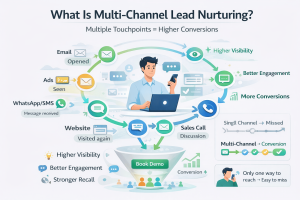
Step 8: Reward Loyalty Proactively

Action: Don’t just reward customers after they’ve stayed with you—surprise them with early perks that encourage them to stick around.

Scenario:
A SaaS tool offered users a free bonus feature unlock after their second month instead of waiting until the 12-month anniversary. Customers felt valued early, reducing cancellations.

Tip: Think beyond points systems. Personalized thank-you notes, exclusive sneak peeks, or small surprise bonuses can spark loyalty faster than waiting for long-term milestones.

Key Takeaway:

Improving retention isn’t about adding one loyalty program or a referral discount—it’s about guiding customers stage by stage, reducing friction, and delivering value long after the sale. When you consistently align your journey stages with the right touchpoints, retention becomes a natural outcome.

Conclusion: Turning Journey Insights Into Retention Wins

Understanding customer journey stages isn’t just a marketing exercise—it’s your blueprint for building trust, reducing churn, and increasing lifetime value. When you know exactly where your customer is in their journey, you can give them the right message, at the right time, through the right touchpoint.

Think about it: a prospect in the awareness stage doesn’t need a hard sell, they need education. A loyal customer doesn’t just want another discount, they want to feel valued. This alignment is what separates businesses that constantly scramble for new customers from those that build lasting relationships and predictable revenue. From customer onboarding to long-term engagement, a strong customer engagement strategy ensures every interaction builds trust and loyalty.

Your next step? Map your journey stages, audit your touchpoints, and start improving retention one stage at a time. Even small fixes—like simplifying checkout or sending a follow-up guide—can have a massive impact on loyalty.

How to Map Your Customer Journey for Better Conversions

If your website is getting traffic but not conversions, your emails are opened but not clicked, or your leads vanish after that first contact—there’s a good chance your customer journey is broken.

But here’s the kicker: most businesses don’t have a product/service problem. They have a clarity problem.

A customer journey map helps you fix that. It shows you exactly how a customer moves from discovering your brand to becoming a loyal fan—and where that journey stalls, detours, or drops off completely.

Whether you’re a SaaS startup, an eCommerce brand, or a B2B service provider, journey mapping gives you visibility. And with visibility, you gain control.

In this guide, you’ll learn:

  • What customer journey mapping is (and what it isn’t)
  • How to break the journey down into actionable stages
  • How to map your own journey using simple steps and tools
  • Real examples from companies who’ve done it well

Because once you can see the journey, you can fix the experience—and that’s where conversions start improving.

Customer journey mapping is the foundation for touchpoint optimization, helping you identify exactly where customers drop off and improve those areas.

What Is Customer Journey Mapping?

Customer journey mapping is a simple (but powerful) way to visualize how a customer interacts with your brand across every touchpoint—website, email, ads, chatbots, checkout pages, support calls, and everything in between.

Also referred to as user journey mapping, the process tracks what users do, feel, and experience at each stage of engagement.

A customer experience map visually captures how users interact with your brand across channels—highlighting friction and delight points.

Think of it as a “day-in-the-life” map for your customer.

It includes:

  • What they do (behaviors)
  • What they want (goals)
  • What they feel (emotions)
  • Where they struggle (friction points)

Why it’s different from a sales funnel:

A lead funnel focuses on your internal view (awareness → conversion). A journey map flips that and looks through the customer’s eyes.

Example 1 – SaaS Company

  • Imagine a new lead signs up for a free trial.
  • They don’t get a welcome email.
  • The UI feels overwhelming.
  • By Day 3, they’ve stopped logging in.

With journey mapping, you’d catch the missing onboarding email, improve the initial dashboard view, and add a triggered support check-in.

Example 2 – eCommerce Store

A shopper sees your Instagram ad and clicks through.

  • They land on a product page that loads slowly.
  • No reviews are visible.
  • The shipping info is buried at the bottom.

You lose the sale—not because of price or product, but because the journey was clunky.

Example 3 – B2B Consultant

A prospect fills out your “Book a Free Call” form.

  • The confirmation page doesn’t clarify next steps.
  • The calendar invite never arrives.
  • They ghost.

Mapping this journey shows you where to close the gap with clear messaging and automation.

Why Mapping the Customer Journey Matters

Let’s be honest—customers don’t wake up thinking about your brand. They’re focused on solving their own problems.

So if your emails confuse them, your site loads slowly, or your demo signup has too many steps… they’re gone.

That’s where customer journey mapping makes a difference.

It doesn’t just help your marketing team. It makes your entire business more customer-focused.

Here’s why it matters

1. It Identifies Drop-Off Points (Before You Lose Revenue)

Most businesses focus on “final-stage” metrics like conversion rate or CAC. But often, the problem starts way earlier.

Scenario:
A lead clicks a Facebook ad → lands on a product page → scrolls → leaves.
Why? Because the sizing guide was hard to find.

Without mapping the journey, you’d assume the ad or product was to blame.

Tip:
Use session recordings (like Hotjar or Clarity) to spot where users rage-click, hover, or abandon. Then plug that data into your journey map.

2. It Aligns Marketing, Sales, and Support

Most customer pain points fall between silos.

Sales promises one thing, marketing communicates another, and support doesn’t know what was said.

Example:
A SaaS brand advertises “30-minute setup” on their homepage.
→ Sales echoes this promise in demos.
→ But onboarding emails say it’ll take 7 days.

Now your customer is frustrated, and trust is lost—before they even use the product.

Tip:
Have all teams review the journey map quarterly. That way, messaging, tone, and expectations stay aligned across touchpoints.

3. It Builds Empathy (and Stronger CX)

When you see the journey from your customer’s perspective, things change.

Instead of asking, “Why didn’t they convert?” you start asking, “What friction did they feel?”

Example:
A customer tries to cancel a subscription. The “cancel” link is buried, and they need to contact support.

End result? They leave frustrated and tell their peers about it.

Tip:
For each touchpoint, ask: Is this helping or hindering the customer? Use this to color-code your map (green = smooth, red = pain point).

4. It Makes Personalization Easier (and More Relevant)

When you know what someone has done—and what they’re trying to do—you can personalize your customer touchpoints with purpose.

Scenario:
A user downloaded your eBook last week and visited the pricing page twice.

A journey map helps you trigger a well-timed email:
“Want help choosing the right plan? Here’s a quick 2-minute quiz to guide you.”

Tip:
Overlay your journey map with behavioral data from your CRM or marketing platform (HubSpot, ActiveCampaign, etc.).

When you combine conversion funnel mapping with journey mapping, you uncover exactly where prospects fall out before converting.

Consider conducting a customer journey audit to spot mismatched messaging, slow-loading pages, or friction in your sales funnel.

Bottom line? Journey mapping gives you visibility. And once you can see the full picture, you can start fixing it—one touchpoint at a time.

The 5 Key Stages in a Customer Journey (And What to Map)

Every customer journey follows a predictable path—even if the details vary.

When mapping, the goal is to understand what your customer is doing, feeling, and needing at each stage.

Let’s break down the five stages:

1️. Awareness Stage

“I have a problem—what are my options?”

This is where your customer first discovers you exist. They’re not ready to buy yet—they’re just figuring things out.

Scenario:
Sarah searches “how to reduce customer churn.” She lands on your blog post about retention tactics. This is her first encounter with your brand.

What to Map:

  • Search queries or keywords that lead to you
  • Social content that drives discovery
  • First impressions (headline clarity, load time, visual design)

Tip: Use Google Search Console or your SEO tool to find top entry pages—these are your real awareness-stage assets.

2️. Consideration Stage

“Which product or service is right for me?”

Now they’re evaluating options. This is where you win or lose trust.

Example:
Ben downloads your comparison guide after clicking an email:
“HubSpot vs. Salesforce: Which Is Right for Small Teams?”

What to Map:

Tip: Include empathy checkpoints in your journey—like FAQs that answer real concerns.

3️. Decision Stage

“Let’s do this. But… is it worth it?”

Here’s where the rubber meets the road. They’re ready to act—but they may hesitate.

Scenario:
Lena adds a product to cart but doesn’t complete checkout. She’s unsure about the return policy.

What to Map:

  • Checkout flow
  • CTA clarity
  • Live chat or sales rep follow-ups
  • Friction points (like form length or unclear shipping costs)

Tip: Review drop-off data in your analytics or heatmaps. Even a small UX tweak can lift conversions.

Customer touchpoint mapping techniques for ecommerce such as exit click analysis and abandoned-cart touchpoint mapping reveal exactly when prospects drop off.

4️. Post-Purchase Stage

“I bought it. Now what?”

Most businesses go silent here. Big mistake.

Your post-purchase experience can make or break retention, referrals, and lifetime value.

Example:
After purchasing, your customer gets a personalized email:
“Thanks, John! Here’s a quick 2-minute video to get started.”

What to Map:

  • Confirmation emails
  • Onboarding sequences
  • Customer support interactions
  • Loyalty or referral prompts

Tip: Set up post-purchase surveys to catch customer concerns early.

Mapping the customer onboarding journey helps improve activation and adoption rates after a purchase or trial sign-up.

5️. Loyalty & Advocacy Stage

“This brand gets me—I want to tell others.”

This is where long-term value is built. Delighted customers become promoters, but only if you give them a reason to stick around.

Scenario:
You surprise a repeat buyer with a loyalty coupon and a personalized “thank you” video from the founder.

What to Map:

  • Review requests
  • Referral programs
  • VIP offers
  • Follow-up content based on past purchases

Tip: Track Net Promoter Score (NPS) at this stage—it’s a leading indicator of brand loyalty.

Understanding the customer journey stages—awareness, consideration, decision, post-purchase, and loyalty—helps you map and target each step precisely.

Mapping these stages reveals gaps you didn’t know existed. And once you find the gaps? That’s where the opportunity lies.

Step‑by‑Step Guide to Mapping Your Customer Journey

Mapping your customer journey doesn’t have to feel overwhelming. You don’t need fancy teams or big budgets—just clarity, empathy, and a simple process you can follow.

Here’s how to map a customer journey step by step, from defining personas to identifying touchpoint friction and visualizing flow. Follow these 7 practical steps to map your journey with confidence:

Step 1: Define Your Customer Personas

Create realistic profiles for your key customer types (e.g. “Startup Marketer Maya,” “Retail Store Owner Rahul”).

Scenario:
You’re a SaaS business. Define a persona like “Agency Ash—with 5‑10 clients needing automation.” Knowing Ash’s goals and challenges sets the tone for all touchpoints.

Tip: Base personas on actual customer data, not assumptions. Interviews or CRM notes can help.

Using persona-based journey maps ensures the differences in buyer behavior—like SMB owners vs. enterprise managers—are addressed separately.

Step 2: List All Touchpoints

Capture every interaction—both online and offline.

  • Social ads, organic posts
  • Blog articles or webinars
  • Email nurture sequences
  • Checkout or trial sign‑up forms
  • Live chat, onboarding, support follow‑ups

Example:
An ecommerce brand might list customer touchpoints including Instagram ads, product zoom interactions, abandoned‑cart emails, delivery notifications, and loyalty rewards.

Tip: Use a spreadsheet or sticky notes first—map later visually in tools like Miro or Lucidchart.

Step 3: Identify Customer Goals & Pain Points

For each touchpoint, ask:

  • What is the customer trying to do?
  • What might be confusing or frustrating?

Scenario:
On a pricing page, your visitor wants clarity—but sees only vague tiers and no case studies. That confusion stalls the purchase.

Tip: Use survey tools or chat logs to find the most common questions or objections at each stage.

Customer Journey Mapping

Step 4: Choose Your Visualization Tool

Lay out everything in a visual map. Choose customer journey visualization tools based on your style and team size:

  • Google Sheets or Excel (for simplicity and collaboration)
  • Miro or Lucidchart (for deeper visual clarity)
  • Figma or Canva (if you prefer design-first aesthetics)

Tip: Use swimlanes or colored rows to separate awareness, consideration, conversion, post-purchase, and loyalty stages.

Step 5: Spot Friction & Priority Fixes

Look for stages with drop-offs, long delays, unclear messaging, or low engagement.

Example:
If leads drop off at the demo booking stage, note friction like too many form fields or lack of a calendar integration.

Tip: Highlight friction points in red, and easy wins in green—so you know where to start.

Step 6: Align Team Ownership & Actions

Map out who owns each touchpoint—marketing, sales, product, customer success—so fixes happen fast.

Scenario:
If onboarding emails are delayed, your marketing team owns the email copy, but customer success owns post-onboarding follow-up. Mark responsibility clearly.

Tip: Create a shared “action log” alongside your map that lists improvements, ownership, and deadlines.

Step 7: Launch, Monitor & Iterate Regularly

Your map isn’t “set and forget.” Schedule a refactor every quarter or after major changes.

Example:
Post a website redesign, revisit your map. Maybe your checkout flow or live chat behavior has changed—and needs fresh mapping.

Tip: Use analytics or session-recording snapshots monthly to track customer behavior trends.

You can create a visual map of customer journey for small businesses using free tools like Google Sheets or Canva, with minimal design experience required.

Once you complete this mapping process, you’ll have a clear, actionable customer journey map designed to reveal gaps and highlight where personalization really matters.

Tools to Help You Map and Analyze the Journey

Let’s face it—customer journey mapping sounds strategic, but when it comes time to actually build one, the real question is: “Which tool should I use?”

Good news: you don’t need to overthink this.

Here’s a breakdown of tools (free and paid) that’ll help you map, visualize, and optimize your customer journey without a full-time analyst on payroll.

1. Google Sheets or Excel — for Simple, Shareable Mapping

Sometimes, the best tool is the one you already use.

Scenario: You’re just starting out, your team’s lean, and you want a journey map that anyone can understand. Google Sheets lets you list touchpoints, friction points, and responsible teams in a shareable format.

Best for: Founders, marketers, or ops teams creating their first map

Tip: Use color codes to separate stages: blue for awareness, yellow for consideration, green for conversion, and so on.

2. Miro or Lucidchart — for Visual Journey Mapping

If you’re ready for a more visual layout (think swimlanes, sticky notes, arrows, etc.), these tools are excellent.

Example: You want to show how your blog post → email opt-in → welcome sequence → sales call flows. Miro gives you the visual flexibility to connect stages and add notes for each touchpoint.

Best for: Cross-functional teams who need to collaborate on mapping

Tip: Use icons to show different channels (= email = purchase page = call), which keeps your map easy to skim.

 3. Figma or Canva — for Presentation-Ready Customer Journeys

These tools are perfect if you want to showcase your customer journey in a boardroom, pitch deck, or strategy review.

Scenario: You’re presenting to stakeholders or clients. Using Figma or Canva, you can make your map look polished and brand-aligned.

Best for: Agencies, consultants, and teams who care about visual polish

Tip: Use Canva’s pre-built “customer journey map” templates and just plug in your touchpoints. Zero design skills needed.

4. Hotjar or Microsoft Clarity — for Website Behavior Insights

A map is great—but behavior data helps validate it.

Example: Your map says “checkout page is frictionless”… but Hotjar shows rage clicks and form abandonment. That’s a fix waiting to happen.

Best for: Small teams wanting quick, visual behavior data (heatmaps, scroll maps, recordings)

Tip: Install Hotjar and review session recordings weekly—especially on pages with low conversion.

5. Google Analytics or GA4 — for Funnel Drop-Off Analysis

Scenario: Your mapped journey includes a blog → lead magnet → thank-you page. GA4 helps you see where leads bounce and where they convert.

Best for: Identifying drop-off points in your customer journey

Tip: Set up conversion goals and “event tracking” so you can pinpoint stage-by-stage leaks.

6. HubSpot, ActiveCampaign or Zoho CRM — for Automating Touchpoint Flows

Journey mapping isn’t just visual—it powers automation too.

Example: If your journey shows a post-purchase touchpoint is missing, use HubSpot to add a “thank-you + upsell” email automatically.

Best for: Mapping + personalizing + automating your journey in one platform

Tip: Use workflow visualizers (like ActiveCampaign’s) to build journeys directly inside your automation.

Bonus: Journey-Specific Platforms

For larger teams or more mature CX ops, there are tools built just for journey mapping:

  • Smaply – create personas, journey maps, and stakeholder maps
  • UXPressia – real-time journey mapping with data overlay
  • Totango – customer success teams use this for post-sale journey analysis

These tools are more advanced but worth exploring as you scale.

Popular B2B customer journey mapping tools like HubSpot and Lucidchart can turn complex journeys into visual flows for sales and success teams.

Using journey analytics tools like Google Analytics and Hotjar lets you validate your map with real user behavior.

Tools like Miro and Hotjar support cross-channel journey mapping, uniting web visits, email clicks, chatbot interactions, and offline actions.”

Final Word on Tool Selection

Choosing the right tool isn’t about complexity—it’s about usability. Start simple. Use what’s easy to share and update.

If your team won’t use the tool regularly, it doesn’t matter how advanced it is.

Real-World Examples of Journey Mapping in Action

Seeing is believing. Here are four real brands that transformed their customer experience—and their results—by mapping the customer journey strategically.

Case Study 1: B2B SaaS Backup Software

Problem: Discovery stalled and website traffic wasn’t converting.
The B2B SaaS firm found leads researching their app on marketplaces and forums before ever hitting their site—but those data points weren’t captured in traditional marketing.

Journey Insight: After customer interviews and analytics, they realized their ideal users were avoiding sales calls and preferring self-research.

Outcome:

  • Redesigned personas and website messaging geared toward high-intent, self-service users
  • Website simplified onboarding flow
  • 2× increase in product installations
  • Sales and marketing alignment on ICP and positioning

Tip: Listen to forums or customer feedback—they reveal hidden stages of your actual journey.

Case Study 2: Mid-Sized SaaS

Problem: High churn among enterprise users and poor feature adoption.
This SaaS firm mapped the journey from sales to post-sale support.

Journey Insight: They discovered a weak onboarding phase: users signed up but never reached first value.

Outcome:

  • Launched a structured onboarding program with scheduled check-ins and tutorials
  • Churn dropped by 30% in 6 months
  • Expansion revenue grew by 15%
  • Customer satisfaction scores rose 25%

Tip: Map based on user persona—for example, CTOs vs day-to-day users—to tailor onboarding experiences.

Case Study 3: Ecommerce Brand

Problem: Cart abandonment trends were high, and mobile conversions lagged desktop.

Journey Insight: Session playbacks exposed search friction and slow-loading pages. Reddit users confirmed the same: slow dropdowns and hidden checkout links drove people away.

Outcome:

  • Streamlined product options (e.g., most popular sizes listed first)
  • Simplified mobile UI and faster loading times
  • Conversion rate improved by 20–30%, and average time on site increased 4×

Tip: Use heatmaps and recordings—not opinions—to identify and fix usability blockers.

Case Study 4: Amazon (Large-Scale Ecommerce Platform)

Problem: Managing millions of product views, site interactions, and cross-device experiences.

Journey Insight: Amazon’s customer journey mapping spans web, app, voice (Alexa), and more. Each persona is mapped to trigger relevant recommendations and friction-reducing features.

Outcome:

  • Seamless cross-device cart recovery (e.g. “Customers who bought this also bought”)
  • One-click checkout dramatically reducing purchase friction
  • Sophisticated post-purchase tracking and personalized follow-up messaging
  • Amazon Prime, personalized recommendations, and voice triggers improved ecommerce metrics significantly

Tip: Even a small business can borrow the principle: map your key customer types and trigger personalized experiences—whether via email, upsells, or lifecycle reminders.

Why These Examples Matter

  • They all use mapping to uncover hidden behaviors or friction points
  • They turned insight into real UX or messaging fixes
  • They linked mapping directly to measurable business improvements (conversions, retention, satisfaction)

Once you spot the opportunities on your map, that’s where personalization meets performance.

Common Mistakes to Avoid When Mapping Your Customer Journey

Mapping your customer journey can be transformative—but only if you avoid these all-too-common pitfalls. Here’s how to sidestep them and make your map practical, not just pretty.

1. Creating Generic Maps for All Customers

Mistake: Making one map and assuming it applies to every lead, regardless of persona.

Why it fails: Different users navigate differently—your enterprise buyer isn’t the same as your freelancer lead.

Scenario:
You mapped one journey for all visitors and missed understanding that your onboarding process confused agency managers.

Tip: Start with just 2–3 core personas, and map separately. Align journeys to their real goals and behaviors.

2. Ignoring Emotional or Contextual Triggers

Mistake: Focusing only on actions (like clicks or downloads) and ignoring how the customer feels.

Why it fails: Emotional friction—like feeling overwhelmed or unsure—can kill conversions before clicks trace it.

Scenario:
A SaaS trial user abandons after the first login because the interface feels complex—not tracked in analytics.

Tip: Add emotion-based notes next to each touchpoint, such as “confused,” “impressed,” or “frustrated.” Fix accordingly.

3. Leaving Out Offline or Indirect Channels

Mistake: Only mapping digital interactions; ignoring phone calls, in-person events, word-of-mouth, or chat.

Why it fails: Those offline moments hugely impact trust and perception.

Scenario:
A user watches your webinar, downloads an ebook, then calls support before purchasing. That support interaction drove the sale—but your map missed it.

Tip: List every channel—even phone, in-person meetings, or referrals—especially if they influence decisions.

Mistakes to avoid in customer journey mapping

4. Treating the Map as “One-and-Done”

Mistake: Creating a map once and never revisiting it.

Why it fails: Journeys change—new platforms, revamped pages, product updates, team changes all introduce new touchpoints.

Scenario:
Your team launches a mobile app, but the map doesn’t include how users engage post-install, so onboarding gaps remain.

Tip: Set quarterly audits to update your map after product changes, campaigns, or feedback loops.

5. Mapping Your Internal Sales Process Instead of the Customer View

Mistake: Creating the map based on your company structure rather than the customer’s experience.

Why it fails: Your internal silo may distort the real flow of the customer, leading to gaps in experience.

Scenario:
Marketing thinks “nurture ends at demo”; the customer actually drops off before interacting with sales. Your map starts too late.

Tip: Map from the first contact until advocacy—not from internal handoff stages—to stay customer-centric.

6. Overloading the Map With Too Much Detail

Mistake: Including every minor micro-interaction—pop-ups, widgets, UI animations—making the map cluttered.

Why it fails: Too much detail distracts from the big picture. Your team can’t action every tiny step.

Scenario:
Your map shows every chat bubble event, drag, and hover—your team is overwhelmed and no action comes from it.

Tip: Prioritize major touchpoints (pages, emails, calls): actionability > accuracy. Detail can live in notes, not the central map.

7. Mapping Journeys Without a Clear Purpose or Goal

Mistake: Mapping journeys without an explicit objective—like improving conversions or reducing churn.

Why it fails: Without purpose, the map becomes a decoration—not a business asset.

Scenario:
Your team creates a perfect-looking journey map, but no one knows what to do next—so it sits unused.

Tip: Anchor your map in a goal: e.g. “Increase trial-to-paid conversions by 20%” or “Reduce checkout abandonment by 15%.” That keeps mapping actionable.

Final Takeaway

A well-mapped customer journey isn’t just a diagram. It’s a roadmap to problem-solving. Avoid these mistakes, keep the perspective customer-centered, and treat your map as a living tool—not a static asset.

Conclusion: 

Most businesses don’t have a product problem—they have a customer journey blind spot.

When you map your customer’s experience from first click to loyal repeat buyer, you stop guessing what’s broken and start fixing what matters:

  • You smooth out confusing steps.
  • You spot where trust drops off.
  • You plug the leaks that cost you conversions.

Remember, a customer journey map is not a design exercise—it’s a conversion strategy. It helps align your team, personalize your touchpoints, and prioritize what actually moves the needle.

Even a simple, messy first draft will get you closer to insight than standing still.

Personalizing Customer Touchpoints To Improve Conversions

Every time a customer interacts with your brand—whether it’s opening an email, chatting with your support, or scrolling your site—you have a tiny window to make that moment feel personal.

These moments, your customer touchpoints, can be your biggest asset… or your biggest missed opportunity. This guide will walk you through how to personalize customer touchpoints in a way that feels authentic and drives measurable growth.”

Today, personalization isn’t just a nice touch; it’s an expectation. According to Epsilon, 80% of consumers are more likely to make a purchase when brands offer personalized experiences. And yet, too many businesses still push generic emails, static web pages, and cookie-cutter follow-ups.

The result? Higher bounce rates. Lower conversions. And lost loyalty.

In this guide, you’ll see why personalization should be woven into every touchpoint—and exactly how to do it in a way that’s realistic, scalable, and actually converts.

By the end, you’ll know:

  • Where personalization has the most impact.
  • How to map and apply it at every stage.
  • Real examples and tools that make it doable—no big team required.

Ready to make your touchpoints feel like they were built just for your best customers? Let’s get into it.

Why Personalization Matters Across Customer Touchpoints

Your customers crave relevance. They’re bombarded by generic ads, identical emails, and cold, transactional experiences every day.

But when you get personalization right—across all your touchpoints—you show your customer:
“Hey, we see you. We know what you care about. And we’re here to make your experience easier.”

That builds trust faster than any fancy sales pitch.

Stat to remember: A Salesforce report found that 66% of customers expect companies to understand their unique needs and expectations—yet more than half feel brands fall short.

Personalization fixes that gap.

Why does this matter so much for SMEs and B2B brands?

Because your prospects are weighing their options every minute. If your emails feel robotic, your website suggestions miss the mark, or your follow-ups sound generic… they’ll find someone who “gets them” better.

The good news? Personalization doesn’t have to be complex or creepy. A simple personalized product recommendation, a “Hey [Name], noticed you were checking this out…” email, or a chatbot that knows what page your visitor is on can be the small nudge that closes a deal—or keeps them coming back. Before launching personalization campaigns, customer journey mapping ensures you understand each interaction point that matters most to your audience.

Quick win: If you haven’t mapped your customer touchpoints yet, do that first—it’s the foundation for smart personalization.

When every touchpoint feels tailored, you don’t just boost engagement—you build loyalty that lasts.

Personalization is a key pillar of customer experience optimization, ensuring every interaction feels relevant and valuable.”

Mapping Personalization Opportunities in Your Touchpoints

Personalization isn’t about slapping a first name in an email and calling it a day. It’s about delivering relevance at every stage of your customer’s journey—without overwhelming your team or your systems.

Here’s where to start:

1. Identify Where Personalization Can Happen

Think beyond emails. You have opportunities across:

  • Website – personalized greetings, product recommendations, dynamic banners.
  • Emails – behavior-based sends, segmented offers.
  • SMS & Chatbots – quick nudges with relevance (“Hey, still thinking about [Product Name]?”).
  • Retargeting Ads – dynamic ads based on browsing or cart activity.

Example: An eCommerce brand noticing a customer viewed sneakers twice this week can show those sneakers (or similar ones) in a retargeting ad with a subtle discount.

2. Segment Using Your Data

Customized interactions thrive on data. The good news? You don’t need a massive data warehouse to start. With effective customer segmentation, you can deliver relevant messages across touchpoints, making every interaction more precise and impactful.

Segment by:

  • Behavioral (pages visited, cart abandoned, emails opened).
  • Demographic (location, age, job role).
  • Psychographic (interests, purchase drivers).

Scenario: A B2B SaaS company segments leads who have downloaded a pricing guide vs. those who attended a webinar, tailoring follow-up emails accordingly.

Tip: Use your CRM (HubSpot, ActiveCampaign) to create dynamic segments that update automatically as customers take actions.

3. Map Personalization by Customer Journey Stage

Layer your personalization efforts to match where your customer is:

  • Awareness: Recommend blog posts based on the page they entered from.
  • Consideration: Send case studies or comparison guides related to what they viewed.
  • Purchase: Personalized checkout experience (saved shipping details, relevant upsells).
  • Post-Purchase: Thank-you emails with product tips or loyalty invitations based on purchase type.

Example: A coaching business sending a post-session SMS: “Hi [Name], here’s your quick guide to keep momentum after our call.”

4. Start Small, Scale Smart

Personalization can feel big, but you don’t need to personalize everything on day one.

Start by:

  • Personalizing your welcome email sequence.
  • Adding product recommendations to your thank-you page.
  • Using dynamic retargeting ads for cart abandoners.

Once these work, expand personalization into other high-impact touchpoints.

Quick Win: Review your highest-traffic pages or most-used email sequences first—personalizing these often delivers the fastest ROI.

When you map personalization opportunities intentionally, you turn your customer touchpoints from generic moments into tailored experiences that convert and retain customers.

Personalization Strategies for Each Stage of the Customer Journey

Tailored messaging isn’t a one-size-fits-all sprint. It’s about delivering the right message, to the right person, at the right time—aligned with where your customer is in their journey. Let’s explore actionable customer journey strategies you can implement without complex setups.

Here’s how to execute personalization stage by stage:

1️. Awareness Stage: Warmly Introduce Yourself

At this stage, customers are discovering you. They’re not ready for a hard sell but need to feel seen.

How to personalize:

  • Dynamic Content on Landing Pages: Use UTM parameters to adjust copy based on ad source.
  • Personalized Blog Recommendations: “Since you’re reading about [Topic], here’s another resource you’ll find useful.”
  • Geo-based Content: Surface location-specific case studies or testimonials.

Example: If a visitor lands via a Google ad about “email marketing tips,” your blog sidebar can recommend your “Advanced Email Automation Guide.”

Tip: Use tools like OptinMonster or ConvertFlow to personalize lead magnet pop-ups by referral source or page visited.

Personalization Strategies acroos customer touchpoints

2️. Consideration Stage: Build Trust and Solve Their Specific Problems

Now your leads are evaluating options and need to know why you’re the best fit. Behavioral targeting helps align personalized offers based on real customer actions across your digital touchpoints.”

How to personalize:

  • Behavior-Based Email Sequences: If a user downloads a comparison guide, send a follow-up email with a customer success story related to that topic.
  • Retargeting with Context: Serve ads that align with what they browsed (e.g., viewed your “pricing” page → retarget with a testimonial about ROI).
  • Chatbot Personalization: If returning visitors land on your pricing page, trigger a chatbot: “Have questions about which plan is right for you?”

Scenario: A SaaS platform notices a lead downloaded a “CRM Integration Checklist.” The follow-up email offers a mini-case study of how a similar business boosted efficiency with the software.

Tip: Incorporate personalized CTAs in your blogs (e.g., “Book your free CRM audit here” for leads consuming CRM content).

3️. Purchase Stage: Personalize the Checkout and Conversion Experience

This stage is critical; even small friction can lose the sale. Personalization here builds confidence.

How to personalize:

  • Pre-Fill Forms: Use cookies to remember returning customers’ details.
  • Smart Upsells: Suggest complementary products/services based on what’s in the cart.
  • Checkout Progress Nudges: “Hi [Name], your cart is waiting—complete checkout to access your personalized onboarding.”

Example: An eCommerce brand notices a user added a camera to their cart. On checkout, they recommend an SD card and tripod with a bundle discount.

Tip: Use exit-intent popups with personalized offers (“Still thinking it over, [Name]? Here’s 10% off if you checkout today.”)


4️. Post-Purchase Stage: Retain and Delight

Your job isn’t over after the purchase; personalization here builds loyalty and turns customers into advocates.

How to personalize:

  • Personalized Thank You Emails: “Thanks for your purchase, [Name]! Here’s a quick guide to get the most out of your [Product].”
  • Usage-Based Check-ins: If using SaaS, send progress reports or personalized tips based on feature usage.
  • Feedback Requests: Tailor surveys to the product/service purchased, showing you value their input.

Scenario: A coaching service sends a personalized email post-session: “Hi [Name], here are your key takeaways and next steps from our call.”

Tip: Use birthday or anniversary emails with exclusive offers to keep customers engaged and feeling valued.

5️. Advocacy Stage: Encourage Sharing and Referrals

Happy customers can be your best marketers. Personalize your outreach to encourage referrals and UGC (User-Generated Content).

How to personalize:

  • Referral Program Invitations: “You’ve been with us for 6 months, [Name]. Want to share us with a friend and get [Reward]?”
  • Review Requests: “Hi [Name], you’re one of our top customers! We’d love your feedback on [Product].”
  • Social Engagement: Tag customers when showcasing their testimonials or UGC with their permission.

Example: A D2C skincare brand emails customers who’ve purchased twice: “We noticed you’re loving [Product]. Share your review for 15% off your next order.”

Tip: Use tools like ReferralCandy or Smile.io to automate personalized referral experiences.

Key Takeaway:

Making your customer journey relevant isn’t about complexity—it’s about connection. When your touchpoints align with where the customer is, you build trust, reduce friction, and keep them coming back..

When you layer these stage-specific personalization strategies across your mapped customer touchpoints, you move from generic interactions to moments that feel tailored, thoughtful, and conversion-driven—even with a small team.

Leverage personalized marketing automation to deliver the right message at the right time across your customer touchpoints.

Integrating personalization into your lead nurturing strategies increases engagement and moves prospects through your funnel with trust.

Tools and Platforms for Personalizing Customer Touchpoints

Tailoring the customer experience can feel overwhelming for many SMEs, but the right tools make it both practical and scalable—even for lean teams.

Here’s a breakdown of the best tools to personalize your customer journey, channel by channel:

1️. CRM Platforms: Your Personalization Brain

A CRM isn’t just a contact database; it’s where personalization starts. Using CRM for customer personalization allows you to segment effectively and deliver relevant content across your customer journey.

Recommended Tools:

  • HubSpot: Great for SMEs with robust email, segmentation, and automation.
  • Zoho CRM: Affordable with strong customization.
  • ActiveCampaign: Combines CRM with advanced email personalization.

How it helps:

  • Track lead interactions (page visits, downloads).
  • Segment customers by behavior, stage, interests.
  • Trigger personalized follow-ups automatically.

Example: A lead downloads your “Email Drip Guide.” Your CRM tags them as “Interested in Email Marketing,” triggering a tailored drip campaign with advanced email strategies.

Tip: Start simple by tagging customers by product interest or content consumed before building advanced automation.

2️. Email Marketing Platforms: Delivering Personalized Content at Scale

Email is still the workhorse of personalization. Email personalization best practices, such as dynamic content and personalized subject lines, can significantly boost your email touchpoint performance.

Recommended Tools:

  • Mailchimp: Beginner-friendly, segment-based campaigns.
  • ConvertKit: Excellent for creator and service businesses.
  • Klaviyo: Advanced personalization for eCommerce.

How it helps:

  • Send personalized product recommendations based on past purchases.
  • Trigger emails based on customer behavior (cart abandonment, page visits).
  • A/B test personalized subject lines and content.

Scenario: An eCommerce brand uses Klaviyo to automatically email customers who abandon carts with the exact products they left behind, plus a testimonial from another buyer.

Tip: Use merge tags to include first names and product references in your emails for a personal touch.

3️. On-Site Personalization Tools: Tailor the Website Experience

Your website is a core touchpoint. Personalizing it can reduce bounce rates and increase conversions.

Recommended Tools:

  • OptinMonster: Shows targeted popups based on behavior.
  • RightMessage: Personalizes headlines and CTAs based on user attributes.
  • Dynamic Yield: Advanced on-site personalization for product recommendations.

How it helps:

  • Greet returning visitors with tailored messages (“Welcome back, [Name]!”).
  • Change CTAs based on referral source or location.
  • Recommend content or products based on browsing history.

Example: A coaching website uses RightMessage to display different CTAs based on whether visitors are business owners or marketers.

Tip: Start by personalizing your homepage hero or exit-intent popups to match the visitor’s journey stage.

4️. SMS and Messaging Tools: Personalize Real-Time Engagement

Fast, direct, and personal—SMS and messaging apps increase touchpoint immediacy.

Recommended Tools:

  • Twilio / SimpleTexting: SMS campaigns with segmentation.
  • ManyChat / MobileMonkey: Personalized chatbot flows on Facebook, WhatsApp, and Instagram.

How it helps:

  • Send cart abandonment reminders.
  • Offer personalized support via chatbots.
  • Share event reminders or delivery updates with customer names and relevant details.

Scenario: A D2C brand sends a personalized SMS: “Hi Sarah, your skincare kit is ready to ship! Track your order here.”

Tip: Use SMS sparingly for high-intent moments (cart abandonment, reminders) to avoid fatigue.

5️. Analytics and Personalization Insights Tools: Measure What Matters

Personalization without measurement is guessing. Use analytics tools to see what resonates. A customer data platform (CDP) can unify your touchpoint data, helping you deliver consistent, personalized experiences across channels.

Recommended Tools:

  • Google Analytics with Segments: Track personalized campaign performance.
  • Hotjar: Session recordings and heatmaps to see behavior.
  • Segment: Unified customer data for advanced personalization.

How it helps:

  • Identify which touchpoints convert best.
  • Find where visitors drop off and tailor solutions.
  • Attribute personalization efforts to actual ROI.

Example: Hotjar reveals visitors drop off on your pricing page. You add a chatbot offering a free call, improving engagement.

Tip: Set up goals in Google Analytics for personalized campaigns to track conversions from your efforts.

Quick Personalization Stack for SMEs:

  • CRM: HubSpot or ActiveCampaign
  • Email: Mailchimp or Klaviyo
  • On-Site: OptinMonster or RightMessage
  • SMS/Chat: Twilio or ManyChat
  • Analytics: Google Analytics + Hotjar

Key Takeaway:

You don’t need 20 tools to personalize effectively. Pick 2–3 tools that integrate well, start small (name, behavior-based tags, simple automations), and expand as you see results.

When layered over your mapped customer journey, these tools transform generic customer experiences into relevant, engaging touchpoints that drive conversions and loyalty.

Real-World Examples of Personalization Across Touchpoints

Theory is great, but seeing personalization in action helps you understand how it drives conversions and loyalty. We’ll explore practical examples of personalized customer experiences across touchpoints to inspire your own strategy.

Here are real-world examples across industries to inspire your own strategy.

Example 1: SaaS Company Personalizing Onboarding Emails

Problem: Low trial-to-paid conversions due to generic onboarding emails.

What They Did:

  • Used ActiveCampaign to segment new trial users by business size.
  • Sent personalized onboarding sequences:
    • Small businesses: “5 ways to automate your workflow with [tool]”
    • Mid-size teams: “How to train your team on [tool] in 7 days”

Results:

  • Email open rates increased by 38%.
  • Trial-to-paid conversions improved by 22% in 3 months.

Takeaway:
Tailoring onboarding content to user context can accelerate activation and increase paid conversions.

Example 2: eCommerce Brand Using Dynamic Product Recommendations

Problem: High cart abandonment and low repeat purchases.

What They Did:

  • Implemented Klaviyo for personalized product recommendation emails.
  • Used on-site personalization (Dynamic Yield) to display “You might also like” based on past browsing and purchase behavior.

Results:

  • Abandoned cart recovery emails with personalized product images drove 19% more recoveries.
  • Repeat purchase rate increased by 26% within 6 months.

Takeaway:
Product personalization keeps your brand relevant and encourages customers to return and complete purchases.

Example 3: Coaching Service Leveraging Chatbot Personalization

Problem: Leads dropped off after initial interest, reducing booked consultations.

What They Did:

  • Added a ManyChat chatbot to the website with personalization flows:
    • Visitors choosing “I’m a business owner” received different questions than “I’m a marketing manager.”
    • Offered a personalized free resource based on answers before prompting for a consultation booking.

Results:

  • Chatbot engagement rates increased by 47%.
  • Consultation bookings grew by 33%.

Takeaway:
Personalized chatbot flows match customer intent and improve funnel progression.

Example 4: Retail Brand Personalizing SMS Campaigns

Problem: Low engagement with promotional SMS blasts.

What They Did:

  • Used SimpleTexting to segment customers by purchase history and location.
  • Sent personalized messages like:
    • “Hi Alex, your favorite running shoes are back in stock at [local store]. Grab them before they sell out!”

Results:

  • SMS open rates of 94%.
  • In-store purchases attributed to SMS increased by 18%.

Takeaway:
Personalizing SMS with names, past purchases, and location makes messages feel relevant, not spammy.

Example 5: B2B Company Personalizing LinkedIn Outreach

Problem: Low connection acceptance and poor engagement on cold outreach.

What They Did:

  • Sales team used LinkedIn Sales Navigator to research leads.
  • Personalized connection requests:
    • “Hi Sarah, noticed you’re leading digital strategy at [Company]. Loved your post on content funnels. Would love to connect.”

Results:

  • Connection acceptance rates improved by 44%.
  • Conversations from LinkedIn doubled within 2 months.

Takeaway:
Even manual personalization in outreach can significantly improve engagement, especially in B2B.

Personalization Doesn’t Need to Be Complex

These examples prove:

  • Use data you already have (behavior, preferences, history).
  • Start with one channel and expand as you grow.
  • Focus on relevance over volume.

Every personalized touchpoint turns a generic experience into a memorable one, driving loyalty and higher lifetime value.

Measuring the Impact of Personalization on Customer Touchpoints

Customizing your customer experience feels great—but you need to prove it’s delivering real results. Measuring impact ensures your efforts translate into revenue, retention, and loyalty gains.

Here’s how to track what matters without overcomplicating it:

1️. Define Clear KPIs for Each Touchpoint

Personalization goals differ by touchpoint:

  • Email campaigns: Open rate, CTR, conversion (e.g., purchases or demo bookings).
  • SMS campaigns: Delivery rate, click-throughs, opt-out rates.
  • Chatbots: Engagement rate, lead capture, bookings.
  • Website: Time on page, bounce rate reduction, personalized CTA clicks.
  • Social: Engagement on personalized content, DMs leading to inquiries.

Example:
If you personalize cart abandonment emails, your KPI might be “recovered cart rate” vs. generic email benchmarks.

Tip: Track baseline metrics before personalization to compare impact easily.

2️. Use Cohort and A/B Testing

Test personalized vs. non-personalized experiences to quantify results.

  • Cohort Testing: Segment customers receiving personalized touchpoints vs. a control group.
  • A/B Testing: Test personalized subject lines or product recommendations against generic ones.

Scenario:
An eCommerce brand tested personalized product recommendations in emails. Result? CTR increased by 22%, and purchase rates went up by 15% compared to the control group.

Tip: Tools like Klaviyo, HubSpot, and Google Optimize make A/B testing personalization simple.

3️. Measure Conversion Paths, Not Just Clicks

A customer might:

  • Click a personalized email ➔ visit your site ➔ leave ➔ return via retargeting ➔

Track these paths using:

  • Google Analytics (with UTM tagging).
  • HubSpot attribution reports.
  • Segment or Mixpanel for advanced event tracking.

Example:
Personalized retargeting ads led to a 17% lift in returning visitors who eventually purchased within 14 days.

Tip: Look at assisted conversions, not just last-click conversions, to understand personalization’s real impact.

4️. Track Engagement Over Time

Personalization often leads to long-term gains in loyalty, not just immediate sales.

Key metrics:

  • Repeat purchase rates.
  • Customer Lifetime Value (CLV) increases.
  • Subscription retention rates.

Scenario:
A SaaS business using personalized onboarding saw trial-to-paid conversions increase by 21% and churn drop by 13% over six months.

Tip: Use your CRM to track lead score changes and customer journey progression post-personalization.

5️. Collect Qualitative Feedback

Data tells you what happened; feedback tells you why.

Use:

  • Quick post-interaction surveys (“Was this recommendation helpful?”).
  • Feedback widgets on personalized website sections.
  • Post-purchase NPS surveys referencing personalized experiences.

Example:
A coaching service added a post-booking survey asking, “Was our personalized chatbot helpful in booking your session?” They learned customers valued instant responses, validating continued chatbot personalization investments.

Summary: Personalization Measurement Checklist

  • Define KPIs per touchpoint.
  • Run A/B or cohort tests.
  • Track full conversion paths.
  • Monitor engagement & CLV over time.
  • Collect qualitative feedback.

Final Tip:

Start with one channel or touchpoint, measure improvements, and expand gradually. Personalization measurement isn’t about tracking vanity metrics; it’s about finding what drives real business outcomes.

Common Mistakes to Avoid in Personalizing Customer Touchpoints

Tailoring the customer experience can be a game-changer—or a deal-breaker if executed poorly. Here’s what to watch out for so your efforts drive conversions, not confusion:

:1. Using Outdated or Inaccurate Data

What happens:
Sending “Hi [FirstName]” with wrong names, recommending products already purchased, or personalizing based on old interests frustrates customers.

Scenario:
An eCommerce store recommended winter jackets to a customer who had just bought one last week—leading to an unsubscribe.

Tip: Regularly clean your CRM and sync real-time data with your email/SMS platforms.

2. Over-Personalization That Feels Creepy

What happens:
Mentioning ultra-specific details (like exact browsing time or granular location) can feel invasive.

Example:
A SaaS platform once emailed users, “We saw you spent 8 minutes on our pricing page at 10:42 AM yesterday,” which felt stalkerish.

Tip: Personalize with relevance, not surveillance. Use broader behavioral cues (interests, past purchases) instead of hyper-granular data.

3. Placing Personalization at the Wrong Funnel Stage

What happens:
Offering heavy personalization (like detailed product comparisons) to cold leads who aren’t ready can overwhelm them.

Scenario:
A consultant sent personalized case studies to leads who had only visited their homepage, resulting in low replies.

Tip: Match personalization depth to funnel stages—light for TOFU (interests), moderate for MOFU (pain points), advanced for BOFU (offers).

Mistakes to avoid in persaonalizing customer touchpoints

4. Inconsistent Personalization Across Channels

What happens:
Your email says one thing, your chatbot says another, and your retargeting ads don’t align—creating a fractured experience.

Example:
A lead receives a personalized discount via email but sees a higher price on retargeting ads, leading to confusion and distrust.

Tip: Use an integrated CRM (like HubSpot or ActiveCampaign) to sync personalization logic across all touchpoints.

5. Ignoring Mobile Optimization

What happens:
Your beautifully personalized email or landing page breaks on mobile, leading to drop-offs.

Scenario:
A coaching business ran a personalized quiz funnel, but mobile users couldn’t complete the quiz due to formatting issues, losing leads.

Tip: Always preview and test personalization campaigns on mobile before launching.

6. Failing to Test and Iterate

What happens:
Assuming your personalization strategy works without testing can waste resources.

Example:
A retailer personalized product recommendations without testing them against generic recommendations, only to find later the generic ones converted better.

Tip: Use A/B testing for subject lines, personalized CTAs, and content. Let data guide refinements.

7. Over-Automation Without Human Touch

What happens:
Your personalization becomes robotic and loses emotional connection.

Scenario:
A SaaS business used automated personalized onboarding emails but didn’t provide easy human support when customers needed it, resulting in churn.

Tip: Blend automation with human touchpoints (personalized video intros, quick human replies to chatbot escalations) to keep personalization warm.

Quick Recap: Personalization Mistakes to Avoid

  • Outdated data
  • Over-personalization
  • Wrong funnel stage targeting
  • Inconsistent messaging
  • Ignoring mobile
  • No testing
  • Over-automation without human connection

Remember: The goal of Personalization is to reduce friction and increase relevance, not overwhelm, confuse, or alienate your customers.

Next Step:

Ready to turn these lessons into conversions?
Dive into How to Create a Lead Nurturing Funnel That Converts to integrate your personalization efforts seamlessly across your customer journey.

Action Plan to Personalize Your Customer Touchpoints

You’ve seen why personalization matters, where it goes wrong, and how it can transform your customer journey.

Now, let’s make it practical with a clear, repeatable action plan to personalize your customer touchpoints without overwhelm:

1. Map Your Current Touchpoints

What to do:
List every place customers interact with your brand—emails, social media DMs, checkout pages, live chat, onboarding sequences, post-purchase follow-ups.

Example:
A D2C skincare brand mapped its touchpoints and found gaps between email nurturing and website chat follow-ups.

Tip: Use a tool like Miro or Lucidchart to visualize your journey, or simply start with a Google Sheet to list and track.

2. Segment Your Audience Effectively

What to do:
Move beyond “new vs. returning customer” segmentation. Segment based on behaviors (e.g., webinar attendees), interests, purchase history, and funnel stages.

Scenario:
A SaaS company segmented leads into “Trial Users,” “Demo Completed,” and “High-Intent Visitors” to personalize onboarding flows.

Tip: Start simple. Even a 2-3 segment split can increase relevance without complexity.

3. Choose the Right Tools for Personalization

What to do:
Leverage tools like ActiveCampaign, HubSpot, or Klaviyo to automate personalized messaging across email, SMS, and chat while maintaining a human touch.

Example:
An eCommerce brand used Klaviyo to send personalized cart recovery emails based on viewed products, recovering 18% more abandoned carts.

Tip: Ensure your CRM integrates seamlessly with your email/SMS platforms for real-time personalization.

Personalizing Customer Touchpoints

4. Personalize Key Touchpoints First

What to do:
Identify high-impact touchpoints—checkout, welcome emails, onboarding sequences, post-purchase follow-ups—and prioritize personalization there.

Scenario:
A fitness coach personalized post-purchase emails with client goals captured during signup, leading to higher program completion rates.

Tip: You don’t need to personalize every touchpoint at once. Start where it will impact conversions and loyalty the most.

5. Use Behavioral Triggers

What to do:
Set up automations to send personalized content based on actions customers take (or don’t take).

Example:
“If a user downloads an eBook but doesn’t book a call in 5 days, send a case study email with a booking link.”

Tip: Tools like Zapier or Make (Integromat) can connect your forms, CRM, and email to create seamless trigger-based flows.

6. Test, Measure, and Optimize

What to do:
Track key metrics like open rates, CTR, conversion rates, and unsubscribe rates to evaluate your personalization efforts.

Scenario:
A coaching business A/B tested generic vs. personalized subject lines and found personalized lines improved open rates by 22%.

Tip: Test one element at a time—subject lines, CTAs, content blocks—to see what moves the needle.

7. Collect Feedback and Iterate

What to do:
Use surveys or quick feedback forms in emails or post-purchase flows to learn how customers feel about their experience.

Example:
A software company added a “How was this onboarding experience?” rating in their onboarding emails, identifying points of confusion to improve.

Tip: Show customers you act on feedback—it builds trust and loyalty.

Effective personalization for customer retention can turn first-time buyers into loyal brand advocates.

Ready to Personalize?

Personalizing your customer touchpoints isn’t a “one-and-done” tactic. It’s an ongoing strategy to:

  • Build trust
  • Reduce friction
  • Increase conversions and retention

Next Step:

Pick one high-impact touchpoint this week and personalize it using this action plan. Measure the impact, refine, and expand to the next.

Conclusion: 

Personalizing customer touchpoints isn’t just a “nice-to-have.” It’s how modern brands earn trust, reduce churn, and drive growth—without spending endlessly on ads or chasing cold leads.

You’ve learned:

  • Why personalization matters in every touchpoint, from first click to post-purchase.
  • How to map and segment your journey to find where personalization will convert best.
  • Actionable strategies for personalizing emails, SMS, website experiences, and support flows.
  • Real-world examples showing how small personalization changes created measurable results.
  • Mistakes to avoid, saving you time and frustration.

The best part? You don’t need a team of 20 or a giant budget to start. You just need to start with one touchpoint, personalize it, measure the results, and build from there. Personalization within an omnichannel marketing strategy ensures customers receive a seamless experience whether they’re engaging via email, chat, or social media. Improving customer loyalty through personalization is not a tactic but a strategy for sustainable business growth.

Ready to Transform Your Customer Experience?

Every personalized touchpoint is a step toward higher engagement and long-term loyalty.

Take Action Today:
Run a touchpoint audit and pick one high-impact place to personalize this week—your welcome email, checkout page, or post-purchase flow.

Personalization isn’t a one-time tactic. It’s your ongoing growth advantage.

Let’s help you turn every customer interaction into an opportunity to build trust, delight customers, and grow your business.

Customer Touchpoints That Turn Visitors Into Loyal Customers

In this article, you’ll learn what customer touchpoints are, why they matter for your business, and how you can map and optimize them for a better customer experience and higher conversions.

Whether you’re a startup, an e-commerce store owner, or a service provider, understanding your customer touchpoints will give you a clear insight into whether your customer journey is smooth, engaging, and aligned with your goals.

Customer touchpoints are the moments your customers interact with your brand, whether it’s your Instagram page, a product page on your site, or even your support chat. They shape the way customers feel about you and influence their buying decisions.

Just like how bounce rate tells you about your website’s engagement, your touchpoints tell you how your audience feels while interacting with your brand.

What Are Customer Touchpoints?

A customer touchpoint is any point of contact between your customer and your brand, online or offline, before, during, or after a purchase.

Here’s a simple way to think about it: Any moment your customer sees, reads, clicks, experiences, or talks to your brand, that’s a touchpoint.

Touchpoints could include:

  • Seeing your Instagram ad.
  • Browsing your website.
  • Talking to your customer support.
  • Reading your post-purchase emails.
  • Visiting your physical store.

Each of these moments is a chance to make a good impression—or a bad one.

Understanding the role of digital touchpoints within your customer journey is crucial for brands aiming to improve consistency and clarity in their customer interactions.

Why Customer Touchpoints Matter

You can think of customer touchpoints as small conversations between you and your customers. If these conversations are clear, pleasant, and valuable, your customers will trust you and likely buy from you again.

Here’s why they’re important:

  • They shape your customer’s perception of your brand.
  • They help you identify gaps in your customer journey.
  • They influence customer retention and loyalty.
  • They can increase conversions and revenue if optimized.

Your touchpoints can also give you insight into the “quality” of your customer journey. If your audience is dropping off after visiting your pricing page, it may mean your offer needs clarity. If people abandon carts frequently, it may signal a checkout touchpoint issue.

When you integrate customer journey mapping into your strategy, you gain a clearer view of each interaction, allowing you to align your messaging and remove friction across all customer journey stages.

Examples of Customer Touchpoints Across the Customer Journey

To keep things clear, let’s break down customer touchpoints across different stages:

Awareness Stage:

  • Social media posts and ads.
  • Blog posts and YouTube videos.
  • Google search results.

Consideration Stage:

Purchase Stage:

Post-Purchase Stage:

  • Order confirmation emails.
  • Onboarding emails for services.
  • Customer support chat.
  • Feedback surveys and review requests.

Loyalty Stage:

  • Newsletters with exclusive offers.
  • Loyalty programs.
  • Personalized recommendations.

Imagine you search for “comfortable running shoes.” You see an Instagram ad (awareness), click through to the product page (consideration), and proceed to checkout (purchase). If the shoes arrive and you receive a post-purchase email asking for a review (post-purchase), that’s a smooth touchpoint journey.

For instance, your customer service touchpoints like live chat and support calls can significantly influence how customers perceive your brand after purchase.”

How to Map Your Customer Touchpoints

Mapping customer touchpoints means visually listing out where and how your customers interact with your brand so you can spot gaps and improve the experience.

If you’re wondering how to map customer touchpoints, start by listing every interaction your customers have with your brand across awareness, consideration, purchase, and post-purchase stages.

Here’s a straightforward method:

  1. Identify your customer personas.
    Know who your customers are and what their journey looks like.
  2. List every interaction.
    From ads to checkout to follow-up emails, note all touchpoints.
  3. Group them by stages.
    Awareness, Consideration, Purchase, Post-Purchase, Loyalty.
  4. Assess each touchpoint.
    Is it clear? Easy to navigate? Does it align with customer expectations?

Visualize it.
Use a spreadsheet or whiteboard to map these stages and touchpoints.

How to Optimize Customer Touchpoints for a Better Experience

Optimizing your customer touchpoints isn’t about making everything “perfect” at once. It’s about identifying the high-impact interactions, fixing friction, and ensuring a consistent, delightful experience that nudges your customer closer to action at every step.

How to optimise customer touchpoints

Here’s how you can practically optimize your touchpoints:

1️. Ensure Consistency Across Channels

Touchpoint Example: Social Media Posts vs Website Tone

If your Instagram feels fun and human but your website sounds robotic, it creates a disconnect for your customers.

Tip to Fix:
Align your brand voice across platforms. If you use casual, friendly language on social, reflect the same warmth on your landing pages and email copy.

2️. Remove Friction at Critical Points

Touchpoint Example: Checkout Page

A confusing checkout with hidden shipping fees can send customers bouncing away, even if they love your product.

Tip to Fix:
Simplify checkout with:

  • Clear steps (progress bar)
  • Transparent shipping info
  • Guest checkout option
  • Multiple payment methods (including wallets)

3️. Personalize the Customer Journey

Touchpoint Example: Email Follow-Ups

Sending the same “Thanks for purchasing!” email to everyone ignores customer preferences.

Tip to Fix:
Use customer data to:

  • Recommend similar products based on past purchases.
  • Send birthday or milestone offers.
  • Tailor post-purchase content (e.g., “How to use your new air fryer”).

4️. Provide Clear Navigation and Calls-to-Action

Touchpoint Example: Product Pages

If your product pages are cluttered or missing clear CTAs, visitors may leave without purchasing.

Tip to Fix:
Use:

  • Clean layouts with clear images.
  • “Add to Cart” buttons above the fold.
  • Benefit-driven product descriptions.

5️. Optimize Your Customer Support Channels

Touchpoint Example: Live Chat and Contact Forms

Slow responses or hard-to-find support can frustrate customers.

Tip to Fix:

  • Use live chat with quick response triggers.
  • Add FAQs to reduce repetitive support requests.
  • Clearly display contact options on your website footer and menu.

6️. Post-Purchase Engagement

Touchpoint Example: Order Confirmation and Onboarding Emails

If your post-purchase emails are bland or absent, customers feel forgotten.

Tip to Fix:

  • Send a warm, branded “Thank You” with order details.
  • Provide delivery timelines and tracking information.
  • Share helpful onboarding resources or usage tips.

7️. Optimize Mobile Touchpoints

Touchpoint Example: Mobile Browsing Experience

If your site is clunky on mobile, users will drop off.

Tip to Fix:

  • Use a responsive design.
  • Ensure buttons are easily clickable.
  • Optimize page load speeds (aim for under 3 seconds).

8️. Use Feedback Loops at Key Touchpoints

Touchpoint Example: Post-Support Survey

After resolving an issue via chat, if you don’t collect feedback, you miss improvement opportunities.

Tip to Fix:
Add a quick CSAT or thumbs-up/thumbs-down rating at the end of chats and support emails.

Collecting customer feedback regularly will help you refine your touchpoint strategies and enhance user experience optimization across all channels.

Scenario: E-commerce Store Touchpoint Optimization

Imagine this:

Sarah searches for “eco-friendly yoga mats” and clicks on your Google Ad (awareness touchpoint). She lands on your product page, but the images are blurry, and she struggles to find reviews, so she leaves.

How to fix:

  • Use clear, high-resolution product images.
  • Display star ratings and reviews prominently.
  • Add a visible “Free Shipping” badge if applicable.

Sarah comes back later, adds the mat to her cart but hesitates at checkout due to unexpected shipping costs.

How to fix:

  • Clearly display shipping costs on the product page.
  • Offer free shipping above a threshold to encourage higher cart values.

After purchase, you send a standard “Order Confirmed” email with no brand voice or delivery estimate.

How to fix:

Send a personalized thank-you email with her name, order summary, delivery estimate, and a “How to care for your yoga mat” guide to build post-purchase engagement.

Additional Touchpoints to Optimize (with Examples & Tips)

Touchpoint

Example Issue

Tip to Fix

Search Bar

Customers can’t find products quickly

Add autocomplete suggestions and error tolerance

About Page

Generic, uninspiring content

Use storytelling to build trust

Product Packaging

Bland, no branding

Add a thank-you note or branded insert

Returns Process

Complicated, slow refunds

Create a clear, hassle-free returns policy

Invoicing

Boring, plain emails

Add your logo and friendly copy

404 Pages

Dead ends

Add helpful links and a search bar

Blog Articles

Walls of text

Use scannable headings, images, and CTAs

Testimonials

Generic, no context

Add names, photos, and use-case snippets

Loyalty Programs

Confusing structure

Create a simple, tier-based program with clear rewards

Exit-Intent Popups

Irrelevant offers

Use tailored offers based on viewed products

Key Takeaways:

  • List and map your current touchpoints.
  • Evaluate each touchpoint for friction, consistency, and clarity.
  • Use customer feedback and behavior data to guide improvements.
  • Test changes (e.g., faster checkout, clearer CTAs) and measure impact.
  • Treat each touchpoint as a conversation—make it clear, human, and valuable.

By consistently optimizing your customer touchpoints, you create a seamless customer journey that feels personal, professional, and memorable. This leads to higher customer satisfaction, lower churn, and stronger conversions, directly supporting your growth.

Mistakes to Avoid When Managing Customer Touchpoints


1. Not Mapping Your Customer Touchpoints Clearly

What happens:
You launch campaigns and add content without understanding how customers actually interact with your brand across their journey.

Example: You focus heavily on social media ads but ignore that customers often drop off during your website’s confusing checkout process.

Fix: Map out all customer touchpoints (ads, website, checkout, post-purchase emails, support) and visualize them by journey stages to identify and improve gaps.

2. Inconsistent Brand Messaging Across Channels

What happens:
Your Instagram feels fun and conversational, but your website and emails are stiff and formal, confusing customers.

Example: A customer clicks from your lively Instagram reel to a landing page with dull, corporate language.

Fix: Create a brand voice guide and train your team to use consistent tone, visuals, and messaging across all customer-facing touchpoints.

3. Ignoring Post-Purchase Touchpoints

What happens:
Customers feel abandoned after buying from you because they receive no follow-up, instructions, or engagement.

Example: A customer buys your software but receives no onboarding emails, making them unsure of the next steps.

Fix: Create a post-purchase sequence with thank-you emails, onboarding guides, delivery updates, and check-ins to nurture the customer relationship.

4. Overcomplicating Checkout or Onboarding Processes

What happens:
A confusing checkout or a complex onboarding form causes customers to abandon their purchase or fail to engage with your product.

Example: Checkout requires unnecessary account creation and multiple confirmation screens, frustrating buyers.

Fix: Simplify checkout with guest options, fewer form fields, and clear progress indicators. For onboarding, use bite-sized steps or guided walkthroughs.

5. Not Tracking Customer Behavior Across Touchpoints

What happens:
You’re unsure which touchpoints are driving engagement and which are causing drop-offs, leading to missed improvement opportunities.

Example: Customers drop off after visiting your pricing page, but you don’t notice since you aren’t tracking user flow.

Fix: Use tools like Google Analytics, Hotjar, or Microsoft Clarity to track behavior, heatmaps, and user journeys across key touchpoints.

6. Slow or Unresponsive Customer Support

What happens:
Customers who reach out via email or chat get slow responses, leading to frustration and churn.

Example: A customer with a billing question waits four days for a reply and decides to cancel their subscription.

Fix: Set SLA expectations, implement live chat with quick replies, and use automated acknowledgment emails to confirm receipt.

7. Not Optimizing for Mobile Experiences

What happens:
Customers trying to engage with your site on their phones encounter slow load times, broken layouts, and hard-to-click buttons.

Example: A customer browsing your e-commerce store on mobile struggles to complete the checkout due to misaligned payment fields.

Fix: Use responsive design, optimize for mobile speed, and test all critical touchpoints (checkout, forms, CTAs) on various devices.

8. Using Generic Calls-to-Action Everywhere

What happens:
Your CTAs are vague and repetitive, failing to guide customers effectively through your journey.

Example: Every button says “Learn More” regardless of whether it’s on a product page, pricing page, or checkout page.

Fix: Tailor CTAs to context, e.g., “Get Your Free Guide” on blog posts, “Start Free Trial” on product pages, and “Complete Your Purchase” on checkout.

9. Ignoring Customer Feedback Opportunities

What happens:
You miss insights for improvement by not asking customers for feedback after interactions or purchases.

Example: After resolving a support issue, you don’t follow up to ask if the customer is satisfied with the resolution.

Fix: Use quick CSAT surveys, post-purchase NPS prompts, and live chat thumbs-up/down ratings to capture actionable feedback.

10. Not Personalizing Customer Communication

What happens:
Your emails, recommendations, and support responses feel robotic and irrelevant, reducing engagement.

Example: A customer receives a generic “Hello Customer” email after purchase without acknowledging their specific product or needs.

Fix: Use CRM and customer data to personalize communications with names, relevant product suggestions, and behavior-based messaging.

Failing to analyze your touchpoints in customer journey stages can leave critical gaps that push customers away rather than guiding them forward.

Measuring the Effectiveness of Customer Touchpoints

Once you’ve optimized your customer touchpoints, it’s essential to measure what’s working and what needs improvement. Tracking the right KPIs helps you understand where customers are engaging and where they’re dropping off so you can make data-backed decisions.

Measuring customer touchpoints effectiveness

Here are 6 impactful KPIs to measure the effectiveness of your customer touchpoints:

1. Conversion Rates at Key Touchpoints

What it measures:
The percentage of customers taking a desired action at specific touchpoints (e.g., signing up, adding to cart, completing checkout).

Example scenario:
If 1,000 visitors land on your product page but only 50 add the product to their cart, your add-to-cart conversion rate is 5%.

Why it matters:
Low conversion rates at specific touchpoints signal friction or unclear CTAs needing improvement.

2. Bounce Rates on Landing Pages

What it measures:
The percentage of visitors who land on a page and leave without taking any action.

Example scenario:
You run Google Ads to a product landing page, but 80% of visitors leave immediately, indicating a mismatch between ad messaging and landing page content.

Why it matters:
High bounce rates can indicate irrelevant messaging, poor page design, or slow load times that disrupt your customer journey.

3. Customer Satisfaction Score (CSAT)

What it measures:
Customer satisfaction immediately after an interaction (like a support chat or post-purchase).

Example scenario:
After a live chat with your support team, customers rate the interaction as “Satisfied” or “Not Satisfied.”

Why it matters:
CSAT helps you monitor customer happiness at specific touchpoints, allowing you to improve training and response quality.

4. Net Promoter Score (NPS)

What it measures:
How likely your customers are to recommend your business to others, measured on a scale of 0-10.

Example scenario:
You send an NPS survey after 30 days of product use, asking, “How likely are you to recommend us to a friend?”

Why it matters:
NPS reflects the overall experience across multiple touchpoints and highlights customer loyalty trends.

5. Average Resolution Time on Support Touchpoints

What it measures:
The average time it takes to resolve a customer issue through your support channels.

Example scenario:
If a customer submits a ticket about a billing issue, and it takes your team 48 hours to resolve it, this contributes to your resolution time metric.

Why it matters:
Long resolution times at support touchpoints can frustrate customers, leading to churn and negative reviews.

6. Customer Journey Drop-Off Rates

What it measures:
The percentage of customers who abandon the journey at critical touchpoints (e.g., during onboarding or checkout).

Example scenario:
You notice that 40% of customers drop off between your free trial signup page and completing the onboarding tutorial.

Why it matters:
High drop-off rates help you pinpoint which touchpoints need simplification, clearer guidance, or improved value communication.

Key Takeaway:

Don’t just guess if your customer touchpoints are working—measure them. By tracking these KPIs:

  • You identify where customers are dropping off.
  • You learn which touchpoints delight your customers and which frustrate them.
  • You can make precise improvements that drive higher conversions and retention.

Tip: Track these KPIs monthly and review them in your team meetings to keep your customer journey aligned with your business goals.

Tracking your touchpoints is part of effective touchpoint analysis, which helps you develop strong customer retention strategies.

Action Plan: Start Optimizing Your Customer Touchpoints Today

You’ve mapped your touchpoints, learned how to measure them, and understand what can go wrong. Now, let’s turn this knowledge into action.

Here’s a step-by-step action plan with examples and tips to help you execute immediately:

1. Do a Quick Audit of Your Customer Journey

Example scenario:
You run an online skincare store and notice you’re getting website traffic, but sales are low. You decide to walk through the customer journey yourself—from seeing your Instagram ad to checking out on your website.

Tips to execute:

  • Put yourself in your customer’s shoes: Click your ads, navigate your website, add a product to the cart, and check out.
  • Note any friction points: Slow pages, unclear CTAs, missing product details.
  • Ask a friend or team member to test: A fresh perspective often catches overlooked issues.

 2. Identify High-Impact Touchpoints That Need Improvement

Example scenario:
You discover many users drop off at your checkout page after adding items to the cart, indicating this is a high-impact touchpoint needing attention.

Tips to execute:

  • Check your Google Analytics funnel reports for drop-off points.
  • Prioritize touchpoints that directly affect conversions (e.g., checkout, product pages, support).
  • Choose one or two high-impact areas to improve first to avoid overwhelm.

3. Train Your Team to Deliver Consistent Customer Experiences

Example scenario:
Your support team responds differently to customer queries, creating inconsistent experiences across chats and emails.

Tips to execute:

  • Create a brand voice and tone guide for your team.
  • Set up standard operating procedures (SOPs) for common customer interactions.
  • Role-play customer scenarios with your team to practice consistency.

4. Use Customer Feedback to Fine-Tune Your Journey

Example scenario:
Customers frequently complain that your return process is confusing, indicating a touchpoint that needs refinement.

Tips to execute:

  • Add CSAT or thumbs-up/down ratings to live chats and emails.
  • Send post-purchase surveys asking, “How was your experience checking out today?”
  • Analyze patterns in feedback to identify and fix recurring pain points.

5. Automate Repetitive Processes for Fast, Consistent Touchpoints

Example scenario:
You manually send order confirmation emails, leading to delays and occasional errors.

Tips to execute:

  • Set up automated email sequences for order confirmations, shipping updates, and onboarding.
  • Use chatbots to handle FAQs and triage customer inquiries.
  • Automate abandoned cart recovery emails with personalized product reminders.

6. Track Key Metrics to Measure Improvement

Example scenario:
After simplifying your checkout page, you want to see if the drop-off rate has improved.

Tips to execute:

  • Track KPIs like conversion rates, CSAT, and drop-off rates before and after changes.
  • Use Google Analytics, Hotjar, or your CRM dashboards for monitoring.
  • Schedule monthly reviews to assess what’s working and plan your next optimization steps.

One of the best ways to improve customer experience online is to monitor and enhance your customer engagement touchpoints throughout their lifecycle.

Putting It All Together: A Quick Scenario

You run a fitness coaching website:

  • You audit your customer journey and discover your landing page loads slowly.
  • You identify this as a high-impact touchpoint since it’s your ad traffic’s first stop.
  • You train your team to reply to inquiries consistently using your new tone guide.
  • You collect feedback on your sign-up process and learn users want easier scheduling.
  • You automate appointment confirmation emails to reduce manual work.
  • You track your landing page’s bounce rate and see it improve after optimization.

Result: A smoother, faster, and more delightful journey for your customers—leading to higher sign-ups and satisfied clients.

Key Takeaway:

Small, consistent improvements across your touchpoints compound into a seamless customer experience that boosts conversions, loyalty, and brand reputation.

Don’t overcomplicate it. Pick one touchpoint, one improvement, and one metric to track today, and build momentum from there.

Conclusion

Customer touchpoints are not just interactions—they are opportunities to build trust, enhance experiences, and grow your business.

Take the time to map and optimize your touchpoints, and you’ll find your customers becoming more engaged, satisfied, and loyal. By paying attention to customer loyalty touchpoints, you’re not just improving transactions; you’re building trust and advocacy that drive sustainable growth.”

Need Help Optimizing Your Customer Touchpoints?

If you want to improve your customer journey to increase retention and conversions, let’s chat. We help businesses like yours audit and enhance customer touchpoints for better results. Contact us today for a free consultation.

CRM Integration Best Practices for Lead Management

If you’ve ever felt like leads are slipping through the cracks, your CRM might not be working as hard as it could. A customer relationship management system should do more than store contacts; it should actively help you track, nurture, and convert leads at every stage of your funnel.”

The truth? It’s not about just having a CRM; it’s about connecting it to everything else you do.

That’s what CRM integration in lead management is all about:
1. Capturing every lead, wherever they come from.
2. Tracking their journey without manual spreadsheets.
3. Nudging them with the right message, at the right time, automatically.

Selecting the best CRM for small business lead management can be the difference between chaotic follow-ups and a predictable sales pipeline. A well-integrated CRM turns chaos into clarity—helping you respond faster, nurture smarter, and convert more leads without working 12-hour days.

Stat to consider:
Companies with strong sales and marketing alignment, powered by CRM integration, achieve 20% higher sales win rates.

In this guide, we’ll walk through:
1. Why CRM integration matters for lead management
2. Best practices that work for SMEs
3. Tools and real-world examples
4. Common mistakes to avoid

Let’s turn your CRM into your growth engine.

Why CRM Integration Matters in Lead Management

Imagine this:
A potential customer downloads your lead magnet, checks your pricing page, and even chats with your bot. But because your systems aren’t talking to each other, this hot lead sits untouched for days.

That’s lost revenue.

The Challenge Without Integration:

  • Leads are scattered across forms, chat, email, and social.
  • Manual updates cause delays and errors.
  • Follow-ups are inconsistent.
  • You don’t know which leads are warm vs. cold.

The Benefits of CRM Integration:

1. Centralized Lead Data
Every form fill, chat conversation, and email click is logged automatically in one place, giving you a 360° view of your lead’s journey.

2. Better Segmentation and Scoring
Integration allows you to segment leads by behavior (visited pricing page, downloaded guide) and score them automatically for sales readiness.

3. Automated Nurturing Workflows
Leads can trigger tailored email sequences or retargeting ads without you lifting a finger.

4. Sales and Marketing Alignment
Your sales team knows exactly when to step in, thanks to clear lead stages and triggers.

5. Lead tracking software
Using lead tracking software within your CRM helps you visualize each prospect’s journey, ensuring no high-potential lead slips through the cracks.

Example:

A B2B SaaS company integrates HubSpot CRM with its website forms and email marketing. When someone downloads a whitepaper:
1. They’re added to HubSpot with tags for the specific topic.
2. They automatically enter a 4-email nurturing sequence tailored to that topic.
3. If they visit the pricing page twice, their lead score increases, triggering a notification for the sales team to follow up.

Result? Faster, more relevant follow-ups and higher conversion rates.

 Tip:

Before you start adding integrations, map your customer journey first:

  • Where do your leads come from (ads, social, referrals)?
  • What actions show interest (downloads, webinar sign-ups)?
  • When should sales step in?

Once you know your journey, you can integrate your CRM at each touchpoint to streamline your lead management system.

 Core CRM Integration Points for Effective Lead Management

Your CRM is only as powerful as the data it collects—and that starts with integrating the right touchpoints in your lead journey. Lead capture automation ensures every website form or ad lead goes straight into your CRM, ready for nurturing.

Here are key integration points you shouldn’t skip:

 1. Website Forms

Where it fits: Top of funnel (lead capture).
Instead of leads sitting in your inbox or a Google Sheet, CRM integration captures every form fill automatically.

Example: Using HubSpot or Zoho CRM, when a lead downloads your free guide, it is instantly logged, tagged (e.g., “Lead Magnet: SEO Guide”), and enters a nurture workflow.

Tip: Always include source tagging (e.g., FB Ads, Organic, Referral) for tracking which channels drive the best leads.

  2. Email Marketing Platforms

Where it fits: Nurturing & engagement tracking.
Sync your CRM with Mailchimp, ConvertKit, or ActiveCampaign to track opens, clicks, and bounces for behavior-based lead scoring.

Example: If a lead clicks on your “Pricing” email twice, your CRM can auto-flag them as warm and notify your sales team.

Tip: Use email behavior (opens, clicks) to trigger workflows like “send case study” or “invite to webinar.”

 3. Live Chat & Chatbots

Where it fits: Qualification & real-time capture.
Connect chat tools like Drift or Intercom to your CRM so chats automatically create or update lead records.

Example: A visitor asks about your pricing in chat → CRM updates lead with “Pricing Interest” tag → triggers a follow-up email or a sales call.

Tip: Use chatbots for FAQs while capturing emails to funnel into your CRM seamlessly.

 4. Social Media Lead Forms

Where it fits: TOFU lead capture via ads (LinkedIn, Facebook).
Integrate your CRM to auto-import leads from social forms with no manual export hassle.

Example: A Facebook Lead Ad for a free webinar feeds directly into your CRM, adds the “Webinar Sign-up” tag, and triggers a confirmation + reminder sequence.

Tip: Test lead form questions carefully to qualify leads without overwhelming them.

 5. Calendars & Scheduling Tools

Where it fits: BOFU (sales-readiness, consult booking).
Integrate scheduling tools like Calendly or SavvyCal to automatically push booked calls into your CRM with lead source, time, and notes.

Example: When a lead books a demo, the CRM tags them “Demo Booked” and moves them to your sales pipeline.

Tip: Set up automatic email confirmations and reminders from your CRM for booked calls to reduce no-shows.

By aligning these touchpoints, your CRM becomes a living, breathing map of your lead’s journey, allowing you to act at the right moment without scrambling.

Best Practices for CRM Integration in Lead Management

Integrating your CRM is more than toggling a switch—it’s about using it effectively to nurture and convert leads consistently. Integrated CRM helps manage customer lifecycle management, guiding leads from first touch to post-purchase retention.

CRM integration in lead management best practices.

Here are best practices to follow:

1. Keep Your Data Clean and Organized

Messy data = confused teams + wasted opportunities.

Example: If “John Smith” enters your CRM three times with slightly different emails, your sales team might call him twice—or not at all.

Tip: Use your CRM’s deduplication tools and schedule a monthly cleanup to merge duplicate records.

 2. Use Lead Scoring to Prioritize High-Intent Leads

Not all leads are equal. CRM integrations allow you to assign lead scores based on:

  • Pages visited (Pricing Page = +10)
  • Email opens and clicks (+5)
  • Demo booked (+20)

Example: A lead with a score above 50 triggers a notification for your sales team to follow up immediately.

Tip: Start simple, and refine your scoring based on which leads actually convert.

 3. Automate Nurturing Workflows

Your CRM should trigger nurturing sequences based on lead behavior, so your team doesn’t manually send every email.

Example: Downloading a guide triggers a 5-part educational email series automatically.

Tip: Map workflows with clear goals (educate → engage → convert) and use CRM analytics to measure performance.

You can automate lead nurturing with CRM workflows, sending timely content and alerts based on user actions without manual intervention
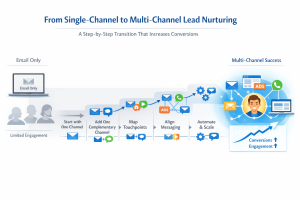
 4. Tag and Segment Based on Behavior

Use tags to group leads by interest, stage, or source, allowing for personalized follow-ups.

Example: Tag leads as “Webinar Attendee,” “Pricing Interest,” or “SEO Lead Magnet” for targeted nurturing.

Tip: Personalization can increase open rates by 26% (Campaign Monitor).
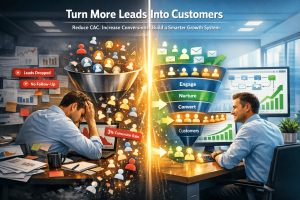
 5. Use Lead Source Tracking Consistently

Knowing where your leads come from helps you double down on what works and stop wasting budget on what doesn’t.

Example: If 60% of your qualified leads come from LinkedIn while only 5% come from a Google Ads campaign, you can confidently reallocate your spend and efforts.

Tip: Use UTM parameters on your links and map them into your CRM’s lead source fields automatically using tools like HubSpot or Zapier.

 6. Align CRM Fields with Your Sales Process

Your CRM should mirror how your team actually sells, not just generic pipeline stages. True CRM integration fosters marketing and sales alignment, ensuring that your nurturing campaigns and sales follow-ups work together seamlessly.
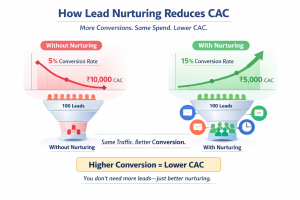
Example: If your process includes a “Demo Scheduled” stage before “Proposal Sent,” ensure your CRM stages reflect this to avoid confusion and missed follow-ups.
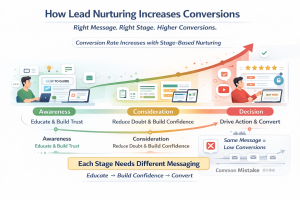
Tip: Involve your sales team in defining these fields to ensure they match reality, not just theory.
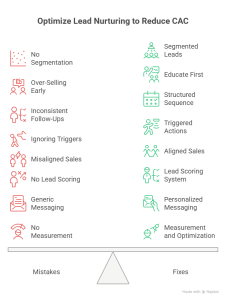
 7. Train Your Team on CRM Usage Regularly

Even the best CRM integration fails if your team doesn’t know how to use it effectively.

Example: A team might forget to log calls or update deal stages, leaving your pipeline data unreliable for forecasting and nurturing.

Tip: Host short monthly training sessions or “CRM clean-up sprints” to reinforce habits, share workflow hacks, and answer questions live.

 8. Review and Refine Workflows Regularly

Your CRM isn’t “set it and forget it.”
Check what’s working:

  • Are your nurturing sequences getting replies?
  • Are leads converting after certain touchpoints?

Example: If your webinar leads aren’t converting, tweak your post-webinar sequence to include a case study and a limited-time offer.

Tip: Review workflows quarterly to align with updated offerings and audience behaviors.

Following these best practices ensures your CRM integration is not just a tech checkbox but a strategic growth engine for your lead nurturing funnel.

Recommended Tools for CRM Integration

Your CRM is the hub, but its true power comes from what it connects to. When choosing tools, prioritize those that support CRM workflow automation to reduce manual work and increase consistency in your lead management.”Here’s your SME-friendly toolkit to integrate seamlessly:

1. CRM Platforms

HubSpot
All-in-one CRM with built-in email, chat, and ad integrations, plus lead scoring and workflow automation.
Tip: Use HubSpot’s visual workflow builder to see your nurturing flows at a glance.

Zoho CRM
Budget-friendly CRM with solid integrations and customization.
Tip: Great for SMEs needing lead scoring and workflow automation without enterprise pricing.

Salesforce
Powerful and customizable, best for scaling teams with complex pipelines.
Tip: Use Salesforce’s AppExchange to add integrations for social media, chat, and ad platforms.

2. Integration Tools

Zapier & Make (Integromat)
Connect your CRM to 5,000+ apps without coding.

Example: New Calendly booking → Create/Update lead in CRM → Trigger confirmation email.

Tip: Start with key Zaps (form submissions, lead ads, calendar bookings) and expand as needed.

3. Email Marketing Tools

Mailchimp, ActiveCampaign, ConvertKit
Sync email campaigns with CRM to track opens, clicks, and automate lead scoring. Linking email drip campaigns CRM can ensure timely follow-ups that align with lead behavior.”

Example: Lead clicks your pricing email twice → CRM tags “High Interest” → Notifies sales.

Learning how to integrate CRM with email marketing tools like Mailchimp or ActiveCampaign can supercharge your nurturing efforts

4. Live Chat & Chatbot Tools

Intercom, Drift, Tidio
Capture chats directly into your CRM while qualifying leads in real time.

Scenario: A website visitor asks about pricing, enters their email in chat → CRM auto-tags “Pricing Interest” → Starts follow-up sequence.

5. Scheduling Tools

Calendly, SavvyCal
Integrate directly to create/update CRM records when leads book demos or consultations.

Example: A lead books a call → CRM tags as “Demo Booked” and moves to BOFU nurturing stage.

6. Paid Ads Platforms

Facebook, LinkedIn, Google Ads
Integrate lead form submissions directly into your CRM, automatically tagging source and campaign for tracking ROI.

 Tip:

Before investing in tools, map your lead journey. Choose integrations that eliminate manual entry and align with your lead management strategy.

Real-World Case Studies

See how SMEs actually use CRM integration to supercharge their lead management and nurturing:

Case Study 1: Coaching Business Automating Consult Bookings

Problem:

A business coach manually tracked leads from webinar signups to consult calls, missing follow-ups.

CRM Integration:

Used HubSpot + Calendly to auto-create leads and tag them as “Webinar Attendee” when they booked calls.

Result:

1. 40% increase in consult call bookings.
2. Faster response times, leading to more paid clients.

Takeaway: Automate your booking pipeline to move leads seamlessly from interest to action.

Case Study 2: E-commerce Brand Personalizing Outreach

Problem:

An online store struggled to convert high-value shoppers who abandoned carts.

CRM Integration:

Integrated Shopify with ActiveCampaign to tag high-value cart abandoners and trigger a personalized email + SMS series.

Result:

1. 28% cart recovery rate.
2. Increased AOV (Average Order Value) due to targeted upsells.

Takeaway: Use CRM tags and workflows to prioritize warm leads for personalized re-engagement.

 Case Study 3: B2B SaaS Improving Demo Conversions

Problem:

A SaaS company wasted time on low-quality demo leads.

CRM Integration:

Linked LinkedIn Lead Gen Forms to Salesforce, adding auto-lead scoring (based on job title, company size, engagement).

Result:

1. 3x higher conversion rate from demo to paid plan.
2. Sales team focused only on high-intent leads.

One SaaS client implemented a lead scoring system within their CRM, helping the sales team focus on high-intent leads and improving conversion rates.

Takeaway: Integrate lead forms with CRM and use lead scoring to prioritize high-potential prospects.

Case Study 4: Digital Marketing Agency Streamlining Follow-Ups

Problem:

Follow-ups were delayed after discovery calls, leading to lost opportunities.

CRM Integration:

Connected Calendly + Zoho CRM, auto-tagging leads post-call and triggering a 3-email follow-up sequence with case studies and testimonials.

Result:

1.Reduced follow-up delay from 3 days to instant.
2. Improved close rates by 25%.

Takeaway: Automate post-call nurturing to keep leads warm and engaged.

Case Study 5: Online Course Creator Maximizing Lead Magnet Downloads

Problem:

Thousands downloaded free guides, but few converted to course buyers.

CRM Integration:

Used Mailchimp with HubSpot to tag leads based on the guide topic and send a tailored email drip series, followed by webinar invites.

Result:

  1. 19% increase in webinar attendance.
  2. 15% boost in course enrollments.

Takeaway: Align your lead magnets with CRM tagging and follow-up drips for targeted nurturing.

Key Lesson:

These SMEs didn’t add tools for the sake of it. They:

  • Mapped their customer journey.
  • Integrated touchpoints with their CRM.
  • Used automation for timely, personalized nurturing.

You can do the same to transform your lead management into a conversion engine.

Common CRM Integration Mistakes to Avoid

CRM integration can transform your lead management, but many SMEs fall into avoidable traps that drain resources and hurt conversions.

CRM Integration mistakes to avoid

Here are 7 mistakes to avoid (with examples and fixes):

1. Not Training Your Team on CRM Usage

What happens:
Your CRM captures and organizes leads, but if your sales and marketing teams don’t know how to use it, follow-ups get delayed or missed.

Example: Leads tagged “High Intent” are ignored because the sales team only checks emails.

Fix: Run a simple CRM training workshop and document SOPs (Standard Operating Procedures) for your team.

2. Overcomplicating Workflows Without Testing

What happens:
Complex automations may break, sending leads the wrong emails or dropping them from workflows.

Example: A new lead receives a demo invite before the welcome email.

Fix: Start with simple, clear workflows. Test them internally before scaling.

3. Failing to Clean and Deduplicate Data Regularly

What happens:
Duplicate or outdated lead data confuses your tracking and messes up reporting.

Example: The same lead receives multiple emails for the same webinar.

Fix: Use your CRM’s deduplication and cleanup tools monthly to maintain a clean database.

4. Ignoring GDPR and Data Compliance

What happens:
Collecting leads without proper consent can lead to legal issues and lost trust.

Fix: Add consent checkboxes on forms, clear opt-in messaging, and easy unsubscribe options in emails.

5. Not Aligning Sales and Marketing Teams

What happens:
Leads may be marked as “sales-ready” by marketing but aren’t contacted promptly, or sales doesn’t know which nurturing emails leads have received. Ignoring CRM integration for sales teams often leads to missed opportunities, as the team may not know which leads are ready for outreach.

Fix: Hold monthly alignment meetings. Define when a lead becomes sales-ready and log activity in your CRM for visibility.

6. Setting and Forgetting Your Integrations

What happens:
Your workflows and triggers might stop working due to updates, API issues, or tool changes.

Example: Your webinar tool updates its API, breaking the integration that tags attendees in your CRM.

Fix: Schedule a quarterly audit of your CRM integrations and test workflows regularly.

7. Missing Personalization Opportunities

What happens:
You send the same generic follow-up to every lead, regardless of their behavior, interests, or funnel stage.

Example: A lead who downloaded an advanced SEO guide gets a beginner’s “What is SEO?” email.

Fix: Use your CRM’s tagging and segmentation to send relevant, stage-appropriate content.

Key takeaway:
CRM integration should make your lead management clean, clear, and actionable, not messy and confusing. Avoid these mistakes to keep your system running like a well-oiled machine.

Conclusion: 

If you want your leads to convert consistently, your CRM can’t live in a silo.

When your CRM is fully integrated:

  • You capture leads from every channel without leaks.
  • You respond faster and nurture leads automatically.
  • You personalize follow-ups without manual chaos.
  • You track what’s working and what’s not—so you can improve.

In a world where leads expect speed, relevance, and trust, CRM integration isn’t a tech upgrade. It’s your competitive edge. CRM integration is a core strategy for sales funnel optimization, shortening sales cycles while maintaining personalization.

Remember:
You don’t need a complicated system to start. Even integrating your forms, email marketing, and calendar with your CRM can significantly shorten your sales cycle and boost conversions.

Next Step: Put Your CRM to Work

You now know how to capture, track, and nurture leads seamlessly.
The next move? Build your Lead Nurturing Funnel around this integrated CRM system so you can:

  1. Personalize your messaging
  2. Send the right content at the right time
  3. Turn more leads into customers without chasing every single one manually

Explore our actionable guide: How to Create a Lead Nurturing Funnel That Converts

How to Create a Lead Nurturing Funnel That Converts

If you’re tired of leads ghosting you after they download a freebie or attend a webinar, you’re not alone.

Most businesses think getting a lead’s email is the finish line. In reality, it’s just the starting point.

A lead nurturing funnel is your system for turning “sort-of-interested” prospects into ready-to-buy customers—without nagging or spamming. It’s the bridge between interest and decision.

And it works: Forrester reports that companies with effective lead nurturing generate 50% more sales-ready leads at a 33% lower cost. A clear lead nurturing strategy helps you systematically build trust while moving leads through your funnel.

In this guide, you’ll learn:

  1. What a lead nurturing funnel actually is (without the fluff)
  2.  How to build a lead nurturing funnel
  3.  The stages you need to guide leads toward buying
  4.  Content to use at each step
  5.  Tools to automate your funnel without overwhelm
  6.  Mistakes to avoid so you don’t waste leads

Whether you’re running a B2B SaaS, e-commerce, or coaching business, you’ll walk away knowing how to build a funnel that doesn’t just collect emails—it converts them.

What Is a Lead Nurturing Funnel?

Imagine you walk into a store just to browse, and immediately, a salesperson says, “Want to buy this right now?”

You’d back away, right?

That’s what happens when you skip nurturing and go straight for the sale.

A lead nurturing funnel is your structured system to build trust and readiness across these stages:

  1. Awareness – Leads discover you through a blog, social post, or ad.
  2. Interest – They download a guide, sign up for a webinar, or engage with your content.
  3.  Consideration – They evaluate if you’re the right fit, reading case studies or testimonials.
  4.  Decision – They’re ready to take action: book a call, start a trial, or purchase.

Real-World Scenario:

A small HR SaaS platform was getting webinar signups but zero demo bookings. They realized their “follow-up” was a single email: “Book a demo now.”

They shifted to a nurturing funnel:

  1. Post-webinar thank-you email with a key takeaway.
  2.  Follow-up email with a customer success story.
  3.  A value email addressing a common HR pain point.
  4.  Personalized email inviting them to book a call.

Result? Demo bookings increased by 47% within two months, and leads came into calls already warmed up.

Quick Tip:

Think of your funnel as dating, not speed dating. If your funnel asks for commitment before building trust, leads will bounce.

Lead Nurturing Funnel vs. Sales Funnel

While a sales funnel is the entire journey from stranger to customer, a lead nurturing funnel focuses on the “middle” stage—the critical period after someone opts in but before they purchase.

Your nurturing funnel’s job is to:

  1. Educate
  2.  Overcome objections
  3.  Build trust
  4.  Keep your brand top-of-mind

so that when the moment is right, your lead says, “Yes, I’m ready.”

Why This Matters:

Without a structured lead nurturing funnel:

  • Leads go cold because they don’t know what to do next.
  •  You lose potential customers to competitors who keep in touch.
  •  You waste ad spend on leads who drop off without converting.

With a nurturing funnel in place:

  • You warm leads systematically.
  •  You convert higher-quality customers.
  •  You reduce your sales cycle.

Next:

Now that you know what a lead nurturing funnel is and why it’s the missing piece for your business, let’s dive into the core stages you need and how to build them step-by-step.

Core Stages of a Lead Nurturing Funnel

A lead nurturing funnel isn’t a one-email wonder. It’s a structured journey guiding your leads toward readiness without pressure. A nurturing funnel should be designed to convert marketing leads into sales qualified leads, ready for your sales team

stages of a lead nurturing funnel

Here’s how to break it down:

1️. Lead Capture

What it is: The moment you turn a visitor into a lead.

How:

  • Lead magnets (eBooks, checklists)
  • Webinar signups
  • Free trials
  • Newsletter opt-ins

Scenario:
A marketing consultant offers a “10-Step LinkedIn Content Checklist” in exchange for email addresses, turning visitors into warm leads.

Tip: Keep forms simple. More fields = fewer signups.

2️. Qualification

What it is: Sorting leads to focus on the best opportunities. Before nurturing leads, implementing a lead qualification process ensures you focus on the right prospects

How:

  • Use lead scoring to track behavior (opens, clicks, visits).
  • Segment based on interests or industry.

Scenario:
A SaaS company assigns +10 points when a lead visits the pricing page and +20 when they attend a webinar, indicating high interest.

Tip: Use CRM tools like HubSpot or Zoho to automate scoring

3️. Nurturing

What it is: Consistently providing value to move leads closer to a decision.

How:

  • Email drip campaigns with education and social proof.
  • Retargeting ads to re-engage website visitors.
  • Social media touchpoints.

Scenario:
An HR software sends a 5-email drip campaign post-webinar:

  1. Thank you + webinar replay
  2. Related blog/resource
  3. Customer success story
  4. Overcoming a common objection
  5. Invite to book a call

Tip: Don’t rush to sell. Educate first, then offer solutions.

4️. Conversion

What it is: Turning leads into paying customers.

How:

  • Personalized demo invites
  • Free trial upgrades
  • Consultation calls
  • Clear CTAs on emails and landing pages

Scenario:
After nurturing, a lead books a call through a personalized invite that says, “Let’s map out your HR automation plan.”

 Tip: Add a time-limited incentive (e.g., “Get your first month free if you book this week”) to encourage action.

Recap:

Your funnel stages should flow:
Lead Capture → Qualification → Nurturing → Conversion

When built intentionally, this funnel moves leads from “just curious” to “ready to buy” systematically.

Crafting Content for Each Funnel Stage

Now that you know the funnel structure, it’s time to feed it with the right content at each stage. Customer journey mapping allows you to align your funnel stages with your leads’ actual needs and questions at each step.”

1. Awareness (Top of Funnel)

Goal: Attract and educate.

Content:

  • Blog posts
  • Social media content
  • Infographics
  • Educational videos

Example:
A B2B SaaS company writes a blog, “5 Signs You Need Automated HR Processes,” to attract HR managers.

Tip: Add CTAs like “Download our HR Automation Checklist” to capture leads.

2. Interest (Mid Funnel)

Goal: Deepen engagement.

Content:

  • Lead magnets (guides, checklists)
  • Webinars
  • Quizzes

Example:
A quiz, “How Efficient Is Your Hiring Process?”, collects emails while providing value.

Tip: Use quizzes to segment leads based on their needs automatically.

3. Consideration (Lower Mid Funnel)

Goal: Build trust and address objections.

Content:

  • Case studies
  • Testimonials
  • Comparison guides
  • Email drips with social proof

Example:
A SaaS sends an email with a mini-case study: “How Company X Reduced Turnover by 32% Using Our Software.”

Tip: Use client logos and testimonials in retargeting ads for credibility.

4. Decision (Bottom of Funnel)

Goal: Prompt action.

Content:

  • Free trials
  • Demo offers
  • Consultations
  • Time-sensitive offers

Example:
An HR tool sends a “Your Personalized Demo Awaits” email with a one-click booking link.

Tip: Use urgency carefully—pair it with value, not pressure.

Crafting the best email sequences for lead nurturing involves understanding your audience’s pain points and aligning content with funnel stages.

Putting It All Together:

Scenario:
1. A lead reads your blog → downloads your HR checklist (Awareness → Interest).
2. They receive a 5-part drip sequence with case studies and resources (Consideration).
3.  They are invited to a free demo with a personalized CTA (Decision).
4.  They convert and enter your customer onboarding flow.

Next Up:

You now know how to structure your lead nurturing funnel and feed it with content that matches your buyer’s journey.

Next, we will cover the best tools to automate your funnel so you can scale without dropping the ball.

Tools to Automate and Manage Your Lead Nurturing Funnel

Building a lead nurturing funnel is one thing. Running it manually? Impossible as you scale.

That’s where automation tools come in—Automated lead nurturing workflows save you time, maintain consistency, and ensure leads don’t slip through the cracks.

Here’s what you need in your tech stack:

1. CRM Platforms

Your CRM (Customer Relationship Management) tool is the brain of your funnel. It tracks leads, segments them, scores them, and aligns your sales and marketing teams. CRM lead tracking is critical for monitoring where each lead is within your funnel and tailoring your nurturing efforts.”

Examples:

  • HubSpot: User-friendly, great for SMEs, integrates email, forms, and landing pages.
  • Zoho CRM: Affordable, customizable, solid for small businesses.
  • Salesforce: Best for advanced customization and larger teams.

Scenario:
A B2B SaaS uses HubSpot to automatically move leads who download a guide into a mid-funnel nurturing drip, while notifying sales when they visit the pricing page.

Tip: Use CRM tags to segment leads by funnel stage automatically.

2. Email Marketing Automation

Email is still your lead nurturing backbone. Use automation to send drip email sequences, segment lists, and personalize communication at scale. Well-timed drip email campaigns are the backbone of a high-converting lead nurturing funnel. Automated email follow-ups ensure your leads receive consistent value while freeing up your time.”

Examples:

  • ActiveCampaign: Powerful automation workflows with CRM and lead scoring.
  • Mailchimp: Great for simpler drips and broadcast emails.
  • ConvertKit: Ideal for creators and coaches.

Scenario:
After a lead attends a webinar, ActiveCampaign sends a 5-part email series with case studies and a CTA to book a demo.

Tip: Use personalized subject lines (“Hey Sam, ready to simplify HR?”) to boost open rates.

3. Lead Scoring & Behavioral Tracking

Assign points for actions like:
+10 for webinar signup
+20 for pricing page visit
-5 for inactivity

This helps you prioritize hot leads and trigger workflows when leads are ready.

Tools: HubSpot, ActiveCampaign, Zoho CRM.

Scenario:
When a lead hits 50 points, your system automatically notifies sales to follow up with a personalized invite.

 Tip: Review your scoring every 6 months to match current lead behavior.

4. Retargeting Platforms

Retargeting keeps your brand top-of-mind by showing ads to leads who’ve visited your site but haven’t converted.

Platforms: Google Ads, Facebook/Instagram Ads, LinkedIn Ads.

Scenario:
An e-commerce brand uses Facebook retargeting ads to offer a 10% discount to visitors who abandoned their cart.

Tip: Use testimonial or product demo video ads for warm retargeting audiences.

5. Chatbots & Conversational Tools

AI chatbots can answer FAQs, qualify leads, and book calls while you sleep.

Examples: Drift, Intercom, ManyChat.

Scenario:
A chatbot on your demo page asks, “Want to see how this works for your business?” and books a calendar slot directly.

Tip: Combine chatbots with human handoff for complex queries.

Summary:

To automate your funnel:
1. Use a CRM as your central hub.
2.  Automate email nurturing and behavioral tracking.
3.  Retarget non-converting leads.
4.  Use chatbots for real-time engagement.

Start simple—layer in tools as your funnel scales.

Measuring Funnel Performance

If you can’t measure it, you can’t improve it.

Tracking key metrics will help you see where leads drop off, what’s working, and how to refine your funnel for more conversions.

Here’s what to track:

 1. Email Metrics

  • Open Rates: Are your subject lines grabbing attention?
  • Click-Through Rates (CTR): Is your content engaging?
  • Reply Rates: Are leads interacting?

Scenario:
Your welcome email has a 55% open rate but a 2% CTR. Test a new CTA or reposition your offer to increase clicks.

Tip: A/B test subject lines with and without personalization.

 2. Conversion Metrics

  • Lead-to-customer conversion rates.
  • Time taken from lead capture to conversion (sales cycle length).
  • Funnel drop-off points.

Scenario:
You notice leads drop after email 3 in your drip. Refine that email with a customer story or clearer CTA.

Tip: Use Google Analytics or your CRM’s funnel reports to visualize where drop-offs occur.

3. Lead Score Movements

Track how leads progress through your scoring system. Are they engaging, or going cold? Using lead scoring in your lead nurturing funnel helps prioritize hot leads and improves conversion rates.

Scenario:
A lead’s score increases rapidly after a webinar and pricing page visit—automatically trigger a sales follow-up.

 Tip: Use lead decay to subtract points for inactivity, keeping your pipeline clean.

 4. Retargeting & Ad Metrics

  • CTR on retargeting ads.
  • Conversion rate from retargeting campaigns.
  • Cost per conversion.

Scenario:
Retargeting testimonial video ads have a 2.4x higher ROAS than static ads—scale what works.

How to Use These Metrics:

1. Identify which stage of your funnel needs attention.
2. Test and tweak emails, CTAs, or ad creatives.
3.  Prioritize hot leads for personalized outreach.

Recap:

  • Your funnel isn’t “set and forget.”
  • Measure consistently to optimize performance.
  • Small tweaks compound into big conversion lifts.

Integrating your lead nurturing funnel with your sales pipeline management ensures that leads transition seamlessly from interest to purchase. Regular marketing funnel optimization helps you improve conversion rates and reduce lead drop-offs.

Next:

Now that you know how to automate and measure your lead nurturing funnel, we’ll dive into:

Common Mistakes to Avoid in Your Lead Nurturing Funnel

Even the best-intentioned funnels can leak leads if you’re not careful. Here are the most common pitfalls to watch for—and how to fix them.

Mistakes in Lead Nurturing Funnel

Mistake 1: Overcomplicating the Funnel

If your funnel has 15 emails, 6 retargeting stages, and 10 lead score triggers… you’re likely confusing your audience and yourself.

Scenario:
A coaching business had a 12-email drip but only 2 emails were consistently getting replies.

Fix:
Start simple: 3–5 core emails, clear CTAs, and retargeting only for warm leads.

Tip: You can always layer complexity later—simplicity scales.

Mistake 2: Skipping Personalization

Sending generic emails like “Hi there, check out our product” will get you ignored.

Scenario:
A SaaS company improved its open rates by 28% simply by adding “Hi [First Name]” and tailoring content based on lead behavior.

Fix:
Use merge tags, segmentation, and behavior-based triggers to personalize.

Mistake 3: Misaligned Sales & Marketing

If marketing is nurturing one way while sales is pitching another, you’re sending mixed signals.

Scenario:
A lead receives nurturing emails focusing on education, then a sales rep cold calls with aggressive closing lines.

Fix:
Have a shared lead scoring system and regular meetings between sales and marketing teams to align messaging.

Mistake 4: Ignoring Engagement Data

If you’re not checking open rates, CTRs, or drop-offs, you’re flying blind.

Scenario:
An e-commerce brand kept sending promo emails to leads who never opened them, damaging deliverability.

Fix:
Clean your list regularly and adjust content based on what your audience engages with.

Mistake 5: Using Weak or Vague CTAs

Saying “Learn More” everywhere won’t move leads forward.

Scenario:
A consulting firm switched from “Learn More” to “Book Your Free Strategy Session” and saw a 32% increase in conversions.

Fix:
Make CTAs specific, clear, and aligned with the funnel stage.

Mistake 6: Not Segmenting Leads

Sending the same content to cold leads and warm leads will lower engagement.

Scenario:
A SaaS was sending trial extension offers to leads who had never signed up for a trial.

Fix:
Segment based on actions (e.g., content download, demo request) to tailor messaging.

Mistake 7: Neglecting Mobile Optimization

Half of your leads open emails on mobile. If your emails aren’t mobile-friendly, you’re losing them.

Scenario:
A lead clicks your email on mobile, but the landing page is cluttered, causing them to drop off.

Fix:
Test your funnel on mobile devices and simplify designs for easy reading and CTA clicks.

Recap:

Avoid these pitfalls, and your lead nurturing funnel will work with you, not against you.

  1. Keep it simple
  2. Personalize
  3. Align sales and marketing
  4. Track and optimize
  5. Use clear CTAs
  6. Segment
  7. Optimize for mobile

Real-World Examples of Lead Nurturing Funnels That Convert

Nothing beats seeing how a lead nurturing funnel works in practice.

Here are lead nurturing funnel examples for small businesses you can model to generate conversions efficiently:

Example 1: B2B SaaS – Webinar to Demo Funnel

Business: A HR SaaS platform.
Goal: Convert webinar signups into demo bookings.

Workflow:
1. Lead attends webinar (Lead Capture).
2. Automated thank-you email with replay (Nurturing).
3. Follow-up email with customer case study (Nurturing).
4. Personalized demo invite email (Conversion).
5. Retargeting ad to warm leads with testimonial video.

Result: 47% increase in demo bookings within 2 months.

Takeaway: Combine education (webinars) with post-event nurturing and clear CTAs.

Example 2: E-commerce – Cart Abandonment Funnel

Business: An online sustainable fashion store.
Goal: Recover abandoned carts.

Workflow:
1. Cart abandonment detected (Lead Capture).
2.  SMS reminder 30 minutes later (Nurturing).
3. Email with “You left these behind” + social proof (Nurturing).
4. Retargeting ad offering 10% off for 48 hours (Conversion).

Result: 21% cart recovery rate increase.

Takeaway: Use multi-channel, time-sensitive touchpoints to reclaim lost revenue.

Example 3: Coaching Service – Free Resource to Strategy Call Funnel

Business: A business coach.
Goal: Turn freebie downloads into paid coaching calls.

Workflow:
1. Visitor downloads “10-Step LinkedIn Content Checklist” (Lead Capture).
2. Welcome email with checklist and quick tip video (Nurturing).
3. Email sharing a client success story (Nurturing).
4. Email with a CTA to book a free strategy session (Conversion).
5. Reminder SMS a day before the booked call.

Result: 37% lead-to-call conversion rate.

Takeaway: Free resources paired with storytelling and clear CTAs warm leads effectively.

Pro Tips for Implementing Your Funnel:

1.Map your funnel on a whiteboard before building it.
2. Start small—add complexity as you see results.
3. Use tools like HubSpot or ActiveCampaign to automate steps.
4. Test one funnel at a time to refine before scaling.

Conclusion:

A lead nurturing funnel is your ticket to predictable, scalable growth. By aligning your content, channels, and tools, you convert warm leads without being pushy.

Start with:

  1. Simple funnel stages
  2. Personalized, relevant content
  3. Automation tools to save time
  4. Tracking and refining consistently

Your lead nurturing funnel is a key part of your overall customer conversion funnel, ensuring prospects transition seamlessly to becoming customers. When you’re ready to deepen your nurturing strategy, explore our Nurturing Lead: The Complete Guide and related advanced cluster pieces to build a system that keeps working while you sleep.