Posts

Testimonials and Case Studies Build Trust and Boost Conversions in B2B Marketing

Imagine you’re about to make a big purchase for your business. You’ve done your research, read product descriptions, and even attended a demo. But something is still missing. What do you do next?

You look for proof.

That’s where testimonials and case studies come in. These aren’t just marketing buzzwords—they are trust-building powerhouses that can turn hesitant prospects into confident buyers.

But how do you create compelling testimonials and case studies that actually make an impact? Let’s break it down step by step.

 Why Testimonials and Case Studies Matter in B2B Marketing

Before we dive into the “how,” let’s quickly look at the “why.”

📌 Trust is everything – According to Demand Gen Report, 97% of B2B buyers say user-generated content like testimonials and case studies is more credible than traditional marketing.

📌 They boost conversionsTestimonials can increase conversions on sales pages by up to 34%.

📌 They shorten the sales cycle – Case studies offer real-world proof, helping prospects make faster decisions.

Now that we know they work, let’s talk about how to create them effectively.

 How to Create Compelling Testimonials
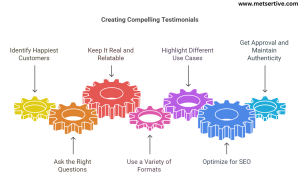
 

How to create compelling Testimonials

Step 1: Identify Your Happiest Customers

Not all customers are created equal. Some love your product but aren’t great at articulating why. Others might be satisfied but not enthusiastic enough to recommend you.

Focus on customers who:
✔️ Have seen measurable success using your product.
✔️ Are willing to share their story publicly.
✔️ Have credibility in your industry.

Pro Tip: Use Net Promoter Score (NPS) surveys to identify promoters—those who rate your company 9 or 10 out of 10 are prime candidates!

Step 2: Ask the Right Questions

A weak testimonial is just fluff. A strong one tells a story.

Here’s how to get meaningful testimonials:

  • What problem were you facing before using our product/service?
  • What made you choose us over competitors?
  • What measurable results have you achieved?
  • Would you recommend us to others? Why?

Example of a weak testimonial: “Great company, excellent service!”
Example of a strong testimonial: “Using [Product Name], we reduced customer churn by 28% in just 3 months, increasing our revenue by 15%.”

Step 3: Keep It Real and Relatable

Authenticity wins. Always use real names, job titles, and company names (with permission, of course).

Pro Tip: Video testimonials are even more powerful—79% of consumers watch video testimonials to learn more about a company.

Step 4: Use a Variety of Formats

While written testimonials are great, incorporating different formats can make them even more engaging. Consider:

Video testimonials – These are more authentic and can increase conversion rates. According to Wyzowl, two-thirds of people are more likely to purchase after watching a video testimonial .

Social media shout-outs – Screenshots of customer praise from LinkedIn, Twitter, or Google Reviews make testimonials feel organic.

Audio snippets or podcast interviews – Customers explaining their experience in their own voice adds credibility.

Step 5: Highlight Different Use Cases

Not all prospects have the same pain points. A strong testimonial strategy includes a range of stories:

Different industries – Show how your solution works across various sectors.

Different customer sizes – Testimonials from small businesses and enterprise clients can appeal to different audiences.

Different product features – If your solution has multiple benefits, highlight diverse aspects through customer stories.

Step 6: Optimize Testimonials for SEO

Make sure your testimonials work for both users and search engines by:

Including relevant keywords naturally (e.g., “This CRM software helped us reduce churn by 30%”).

Using schema markup to help testimonials appear in Google search results.

Placing testimonials on high-intent pages like product pages, landing pages, and checkout pages.

Step 7: Get Approval and Maintain Authenticity

Before publishing any testimonial, always:

Get written consent from the client.

Ensure that the wording remains authentic and unaltered—over-editing can make testimonials sound fake.

Offer to link back to the client’s website as an added incentive for them to provide a testimonial.

By following these steps, your testimonials will be more persuasive, credible, and conversion-friendly.

How to Create a Powerful Case Study

While testimonials are short and sweet, case studies go deep. They tell a before-and-after story that proves your product’s impact.

Step 1: Choose the Right Client Story

Not every client success story makes a great case study. Look for stories with:
✔️ A clear challenge and solution.
✔️ Quantifiable results.
✔️ Broad industry relevance.

Step 2: Structure It Like a Story

A case study should follow a simple, engaging format:

1. Headline (Make It Benefit-Driven!)

“How [Client Name] Increased Revenue by 40% with [Your Product]”

2. Introduction

A short overview of the company, their industry, and what they do.

3. The Challenge

Describe the problem they were facing before using your product. Keep it relatable!

4. The Solution

Explain how your product/service solved their problem. Use screenshots, step-by-step breakdowns, or even behind-the-scenes insights.

5. The Results

This is the most important part! Use specific numbers to highlight impact.

Example:
“After implementing [Product Name], [Client Name] saw a 45% increase in productivity and a 30% reduction in operational costs.”

Pro Tip: Adding graphs or before-and-after comparisons makes the impact visually clear.

Step 3: Add Social Proof and Quotes

Nothing adds credibility like a direct client quote.

✔️ Example:
“Before [Your Product], managing customer data was a nightmare. Now, we’ve streamlined everything and cut processing time by 50%.” – [Client Name], CEO at [Company]

Step 4: Use Visuals to Enhance the Story


A well-designed case study isn’t just about text—it should be visually engaging. Use images, charts, infographics, or even short videos to highlight key metrics and transformations.

·       Before-and-after comparisons help illustrate the impact clearly.

·       Graphs showing percentage improvements make data easier to digest.

·       Screenshots of product dashboards or implementation steps add credibility.

Step 5: Optimize for Readability and SEO

If your case study is hard to read, people won’t engage with it. Make it scannable by:

·       Using short paragraphs and bullet points to break down information.

·       Including subheadings like “The Challenge,” “The Solution,” and “The Results” for easy navigation.

·       Incorporating SEO keywords to ensure your case study ranks well in search engines.

Step 6: End with a Strong Call to Action (CTA)


A case study isn’t just a success story—it’s a conversion tool. Guide readers toward the next step:

·       “Want similar results? Book a free demo today.”

·       “Learn how [Company Name] can help your business. Contact us now.”

·       “Download the full case study for in-depth insights.”

Common Pitfalls to Avoid

  1. Making Testimonials Too Generic

A vague statement like “Great service!” or “We love this product!” doesn’t provide any real insight. Effective testimonials should highlight specific pain points, solutions, and measurable outcomes.

  • Instead of “This software is amazing,” aim for “This software reduced our reporting time by 50%, allowing our team to focus on revenue-generating tasks.”
  • Encourage clients to include quantifiable results to add credibility and make testimonials more persuasive.
  1. Skipping Data in Case Studies

    Case studies are meant to showcase tangible success, yet many fail to include hard numbers that prove real impact.

  • A case study that simply states, “This solution improved efficiency,” is not compelling.
  • Instead, use specific data points like “Productivity increased by 35%,” or “Customer churn dropped by 20% in six months.”
  • According to HubSpot, data-backed case studies are 70% more effective in convincing potential buyers
  1. Ignoring Mobile Optimization

    Many businesses overlook the fact that 57% of users access content from mobile devices (Statista). If video testimonials or case studies aren’t optimized for mobile viewing, engagement will suffer.

  • Ensure that videos load quickly, are formatted for vertical viewing, and have subtitles for users watching without sound.
  • Text-based case studies should use responsive design, short paragraphs, and bullet points for easy readability on small screens.
  1. Failing to Tell a Clear, Structured Story

A case study should have a beginning (the challenge), middle (the solution), and end (the results). If it lacks structure, it becomes difficult for readers to follow and connect with the story.

  1. Using Too Much Jargon or Technical Language

While industry-specific terms are sometimes necessary, overly technical descriptions can alienate potential clients. Keep the language simple, clear, and relatable to ensure accessibility.

  1. Not Updating Testimonials and Case Studies Regularly

A case study from five years ago may not reflect your company’s current capabilities. Ensure that testimonials and case studies are regularly updated with fresh, relevant success stories.

  1. Overlooking the Power of Data-Driven Results

General statements like “This solution helped our business grow!” are not compelling. Instead, focus on measurable results like “Our revenue increased by 35% within six months.” Data makes testimonials and case studies more credible and persuasive.

  1. Ignoring Distribution and Promotion

A well-written case study or testimonial won’t drive results if no one sees it. Many businesses fail to:

  • Promote case studies on landing pages, email campaigns, and social media.
  • Repurpose content into infographics, videos, or blog posts for greater reach.

By avoiding these common mistakes, your testimonials and case studies will build stronger credibility, engage potential clients, and drive conversions effectively.

 Where to Use Testimonials and Case Studies for Maximum Impact
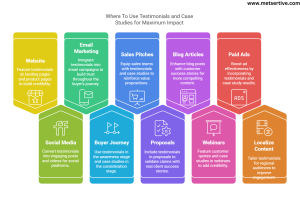
Strategic placement of Testimonials and Case Studies

  1. Website

    Feature testimonials and case studies on landing pages, product pages, and the homepage to establish instant credibility. Including them near call-to-action (CTA) buttons can help boost conversions by reinforcing trust.

  2. Social Media

    Convert testimonials into engaging social media posts, LinkedIn articles, and short-form videos. Customer success stories perform well on platforms like LinkedIn, Instagram, and Twitter, where real experiences resonate with audiences.

  3. Email Marketing

    Integrate testimonials into email campaigns and nurture sequences to build trust at different stages of the buyer’s journey. Adding a short testimonial in follow-up emails can help move leads further down the funnel.

  4. Align with Buyer Journey Stages

    • Testimonials work well in the awareness stage to spark interest.
    • Case studies are ideal for the consideration stage, providing deeper insights and convincing details.
  5. Sales Pitches and Presentations

    Equip sales teams with case studies and testimonial slides to handle objections and reinforce value propositions. Adding real-world success stories to sales decks, proposals, and one-on-one pitches can make decision-makers more confident in your solution.

  6. Proposals and Sales Decks

    Use case studies and testimonials in RFP responses, investor decks, and business proposals to validate claims with real client success stories. Highlighting customer results can differentiate your offering in competitive sales situations.

  7. Blog Articles and Thought Leadership Content

    Enhance educational blog posts and industry reports by embedding customer success stories. Testimonials provide social proof, making thought leadership content more compelling and actionable.

  8. Live Webinars and Presentations

    Featuring customer quotes, testimonial videos, or case study breakdowns in webinars and keynote speeches adds credibility and engagement. Having a client share their success story live can further enhance authenticity.

  9. Paid Ad Campaigns

    Boost the effectiveness of Google Ads, Facebook Ads, and LinkedIn Sponsored Content by incorporating testimonial snippets or case study results. Ads featuring real customer endorsements can increase click-through rates by up to 15%

  10. Localize Content for Regional Audiences

If you operate in multiple geographic regions, tailor testimonials and case     studies to resonate with specific local audiences.

  • Use regional client names and cultural references.
  • Translate content to the local language where applicable.
    Localized content improves engagement and demonstrates attention to detail, essential for global B2B marketing​

By strategically placing testimonials and case studies in these key areas, businesses can reinforce credibility, nurture leads, and drive higher conversions across multiple channels.

Final Thoughts

Testimonials and case studies aren’t just marketing fluff—they’re powerful trust-builders that can help close deals faster.

👉 Start by identifying your happiest customers.
👉 Ask the right questions to capture real impact.
👉 Structure case studies like engaging stories.
👉 Use testimonials and case studies strategically across marketing channels.

By following these steps, you’ll create compelling, credible, and conversion-boosting content that wins client trust and drives sales.

Ready to turn your customer success into your biggest sales asset?  Let’s make it happen!

Lifecycle Marketing to Engage Your Customers at Every Stage

Introduction

Lifecycle marketing is a powerful approach to connecting with customers at every stage of their journey, from their first interaction with your brand to becoming loyal advocates. In today’s competitive digital landscape, where customers are bombarded with countless marketing messages daily, adopting a strategy that caters to their evolving needs is no longer optional—it’s essential. By delivering the right message to the right audience at the right time, lifecycle marketing ensures that every touch point with your brand adds value and builds trust.

Whether you’re nurturing a lead, converting a prospect, or retaining an existing customer, this approach enables businesses to craft personalized experiences that resonate deeply. Moreover, by focusing on the entire customer journey rather than isolated transactions, lifecycle marketing not only boosts customer retention but also drives sustainable growth. This guide will walk you through the fundamentals of lifecycle marketing and provide actionable tips to help you implement it successfully in your business.

What Is Lifecycle Marketing?

Lifecycle marketing is a strategy that focuses on engaging customers with targeted, relevant messages at different stages of their journey with your brand. This approach recognizes that a customer’s needs and expectations evolve over time, from the moment they discover your business to when they become loyal advocates.

For example, imagine a small business selling eco-friendly skincare products. Here’s how lifecycle marketing might look for them:

  • Awareness Stage: A potential customer sees an engaging social media post or a blog about the benefits of eco-friendly skincare, sparking interest.
  • Consideration Stage: The customer receives an email with a personalized discount code after signing up for a newsletter, encouraging them to explore products further.
  • Purchase Stage: Upon making a purchase, the customer gets a thank-you email with tips for using the product effectively.
  • Retention Stage: A follow-up email a month later offers a subscription option for regular deliveries, helping to maintain engagement.
  • Advocacy Stage: The brand encourages the customer to leave a review or share their experience on social media, potentially bringing in new customers.

This holistic approach ensures that communication and marketing efforts are not only relevant but also foster long-term relationships with customers. By addressing specific needs at each stage, lifecycle marketing maximizes the chances of customer satisfaction and loyalty.

The Stages of Lifecycle Marketing

Understanding the customer journey is essential for effective lifecycle marketing.

  1. Awareness: Potential customers become aware of your brand or product.
  2. Interest: They express interest by seeking more information.
  3. Consideration: Prospects evaluate your offerings against competitors.
  4. Purchase: The decision to buy is made.
  5. Retention: Efforts to keep customers engaged and satisfied post-purchase.
  6. Advocacy: Satisfied customers become brand advocates, promoting your business to others.

Why Is Lifecycle Marketing Important?

Implementing a lifecycle marketing strategy offers several benefits:

  1. Personalized Engagement

    Tailoring messages to specific stages of the customer journey enhances relevance and effectiveness, ensuring customers feel understood and valued.

  2. Improved Customer Retention

    Ongoing engagement fosters loyalty and increases the likelihood of repeat purchases, helping to build long-term relationships.

  3. Increased Customer Lifetime Value (CLV)

    Satisfied and loyal customers contribute more revenue over time, boosting profitability and reducing the dependency on acquiring new customers.

  4. Efficient Resource Allocation

    Understanding customer behavior allows for better allocation of marketing resources, enabling you to focus on the most impactful strategies and channels.

  5. Enhanced Customer Experience

    Delivering relevant, timely content improves the overall customer experience, making every interaction meaningful and aligned with their needs.

  6. Stronger Brand Loyalty

    Consistent engagement and personalized communication build trust and affinity, encouraging customers to stay connected with your brand over competitors.

  7. Encourages Word-of-Mouth Marketing

    Happy customers often share their positive experiences with friends and family, turning into brand advocates who organically promote your business.

  8. Facilitates Data-Driven Decision Making

    Lifecycle marketing relies on insights from customer data, empowering your team to make informed decisions and continuously improve campaign effectiveness.

Implementing an Effective Lifecycle Marketing Strategy

To harness the full potential of lifecycle marketing, consider the following steps:

Lifecycle marketing strategy

  1. Data Collection and Analysis

    Gather comprehensive data on customer interactions, preferences, and behaviors. Utilize analytics tools to gain insights into customer journeys and identify opportunities for targeted engagement.

  2. Segmentation

    Divide your customer base into distinct segments based on demographics, behaviors, purchase history, or interests. This allows for personalized and relevant marketing efforts tailored to specific needs.

  3. Personalized Communication

    Develop tailored messages and offers for each segment and stage of the customer journey. Personalization improves customer experience and increases engagement and conversion rates.

  4. Automation

    Use marketing automation tools to streamline your communications. Automated workflows ensure timely delivery of messages and reduce the manual effort required for repetitive tasks.

  5. Performance Monitoring and Optimization

    Track the effectiveness of your lifecycle marketing campaigns using key performance indicators such as conversion rates, customer retention metrics, and engagement statistics. Continuously refine your strategies based on the data.

  6. Customer Feedback Integration

    Actively gather feedback from your customers through surveys, reviews, and direct interactions. Use this feedback to improve your products, services, and messaging for a customer-focused approach.

  7. Cross-Channel Consistency

    Ensure your brand messaging is cohesive across all touchpoints, including social media, email, website, and offline channels. Consistency strengthens trust and enhances the overall customer experience.

  8. Dynamic Content Creation

    Create flexible, engaging content that evolves with your customers’ preferences and journey stages. This could include adaptive landing pages, personalized email content, and interactive tools like quizzes.

  9. Retention-Centric Strategies

    Focus on retaining existing customers by offering loyalty programs, exclusive deals, and ongoing support. Retention strategies can significantly reduce churn rates and boost lifetime value.

  10. Training and Collaboration

    Equip your team with the necessary training and tools to execute lifecycle marketing effectively. Foster collaboration across departments to align goals and strategies, ensuring a seamless customer experience.

Key Metrics to Track in Lifecycle Marketing

Monitoring the right metrics is crucial for optimizing your lifecycle marketing efforts:

Lifecycle marketing metrics

  • Customer Acquisition Cost (CAC): The total cost of acquiring a new customer.
  • Customer Lifetime Value (CLV): The total revenue a business can expect from a single customer account over time.
  • Churn Rate: The percentage of customers who stop doing business with you over a specific period.
  • Engagement Metrics: Open rates, click-through rates, and other indicators of how customers interact with your communications.
  • Conversion Rates: The percentage of recipients who take the desired action, such as making a purchase or signing up for a newsletter.

Challenges in Lifecycle Marketing

While lifecycle marketing offers numerous benefits, it also presents certain challenges:

  • Data Management: Collecting and analyzing large volumes of customer data can be complex.
  • Integration of Tools: Ensuring that various marketing tools and platforms work seamlessly together requires careful planning.
  • Content Creation: Developing personalized content for different customer segments and stages demands significant resources.
  • Maintaining Consistency: Delivering a consistent brand message across all stages of the customer journey is essential yet challenging.

Expert Insights on Lifecycle Marketing

According to Salesforce’s State of Marketing report, only around half of marketers take a lifecycle marketing approach to personalization.

Additionally, a report by Litmus highlights that many marketers are not fully utilizing email in their lifecycle marketing strategies, missing opportunities for engagement and retention.

Conclusion

Lifecycle marketing is a powerful strategy that enables businesses to engage customers effectively at every stage of their journey. By understanding and implementing personalized communication, leveraging data-driven insights, and continuously optimizing your approach, you can enhance customer satisfaction, boost retention rates, and drive sustainable business growth.


Ethical Marketing Tips to Build Trust and Grow Your Business

In today’s digital landscape, where customers are more informed and socially conscious than ever, ethical marketing has become more than just a buzzword—it’s a necessity. Businesses that prioritize authenticity and transparency in their marketing efforts not only win over customers but also cultivate lasting relationships built on trust. But what exactly is ethical marketing, and how can your business adopt it successfully?

Let’s break it down and give you actionable insights that can set you apart from your competitors.

What Is Ethical Marketing?

Ethical marketing refers to promoting your products or services in ways that align with values like honesty, fairness, and transparency. It focuses on building genuine connections with your audience by delivering truthful information and respecting customer needs. Unlike manipulative marketing tactics, ethical marketing helps foster loyalty and trust, which translates into long-term business growth.

Why does it matter?

According to a report by Accenture, 62% of consumers prefer to purchase from brands that take a stand on issues of sustainability and social responsibility. (Source: Accenture, 2018).

The good news? Ethical marketing is not only better for your customers but also good for your bottom line.

Key Principles of Ethical Marketing

  1. Transparency Is King

Honesty builds trust, period. Customers appreciate brands that are upfront about their products, pricing, and marketing practices. Avoid exaggerated claims or hiding critical terms in fine print.
Actionable Tip: Create clear product descriptions and pricing models on your website. Ensure all promotions clearly state terms and conditions upfront.

Example: Patagonia’s website includes detailed information on its supply chain, showing their commitment to sustainability and ethical sourcing. (Source: Patagonia.com)

  1. Respect Consumer Privacy

Data privacy is a growing concern for consumers. Ethical marketers prioritize safeguarding customer information and being transparent about how that data is collected and used.

Actionable Tip: Implement a clear and straightforward privacy policy on your website. Limit data collection to only what’s necessary, and always seek consent.

Expert Insight: According to a Pew Research Center study, 79% of Americans are concerned about how companies handle their personal data. (Source: PewResearch.org)

  1. Avoid Manipulative Tactics

Clickbait, fear-based messaging, or hidden charges may get short-term results but will damage your brand reputation in the long run.

Actionable Tip: Craft content that genuinely provides value without using exaggerated claims. If you’re running ads, ensure they represent your product accurately.

Pro Tip: Conduct A/B tests to find headlines that are both compelling and authentic without resorting to clickbait tactics.

  1. Represent Your Brand’s Values Authentically

Consumers are drawn to brands that align with their values. Ensure your brand’s messaging and actions consistently reflect these values.

Actionable Tip: Support causes that matter to your audience and communicate your efforts clearly. Make sure your actions match your words—nothing turns consumers off faster than insincere corporate social responsibility initiatives.

Example: Ben & Jerry’s has long been known for its authentic advocacy for social justice and environmental issues. (Source: BenJerry.com)

  1. Focus on Customer Education, Not Just Selling

Rather than simply pushing products, provide value through educational content. Ethical marketing is about helping customers make informed decisions.

Actionable Tip: Create blog posts, videos, or guides that address common customer pain points. This positions your brand as an authority in your industry.

Stat: 70% of consumers feel more connected to brands that provide educational content. (Source: Demand Metric)

The Benefits of Ethical Marketing for Your Business

By adopting ethical marketing practices, your business stands to gain a competitive advantage and foster deeper connections with your audience. Here are 8 key benefits:

Benefits of ethical marketing

  1. Customer Trust and Loyalty

Customers are more likely to stick with brands they perceive as honest and authentic. Ethical marketing cultivates long-term relationships built on trust.

  1. Positive Brand Reputation

Ethical marketing helps establish a positive brand reputation, differentiating you from competitors and making your brand more resilient in the face of scrutiny.

  1. Increased Word-of-Mouth

Happy customers are your best marketing asset. Ethical marketing naturally encourages referrals as people love to share positive brand experiences.

  1. Higher Lifetime Value (LTV)

Ethical brands often see a better return on customer relationships, leading to increased lifetime value through repeat purchases and loyalty.

  1. Stronger Employee Engagement and Retention

Employees are more motivated and engaged when they work for a company with ethical values. This can lead to higher productivity and lower turnover rates.

Stat: 77% of employees are more likely to stay at a company if it takes a strong stance on social and environmental issues. (Source: Cone Communications)

  1. Improved Relationships with Partners and Stakeholders

Ethical marketing practices help build stronger relationships with vendors, investors, and other stakeholders who prioritize ethical operations.

  1. Better Crisis Management and Risk Mitigation

Brands that prioritize ethical marketing are less likely to face scandals or customer backlash. In the event of a crisis, their transparency fosters quicker recovery.

  1. Enhanced Brand Differentiation

In a crowded market, ethical marketing becomes a powerful differentiator. Consumers are increasingly drawn to companies that stand for something beyond profit.

Insight: Research shows that 88% of consumers want brands to help them make a difference in the world. (Source: Havas Group)

By embracing these benefits, you can position your business as a leader in the market while earning the loyalty and respect of your customers. Ready to lead with ethics and make a meaningful impact? Let’s get started!

How to Implement Ethical Marketing in Your Business Today

Here are 10 actionable steps you can take to incorporate ethical marketing into your digital marketing strategy and build lasting trust with your audience:

Implementing ethical marketing

  1. Audit Your Current Marketing Practices

Identify any areas where your messaging may be misleading or unclear. Revise content to prioritize honesty and clarity in communication.

  1. Define Core Values

What does your brand stand for? Communicate these values consistently across all touchpoints, from social media to email marketing campaigns.

  1. Create Transparent Content

Be upfront about product features, pricing, and potential limitations. Avoid fine-print disclaimers that could mislead customers.

  1. Prioritize Customer Feedback

Listen to your customers and address their concerns promptly. Ethical marketing is about fostering two-way communication and improving based on customer input.

  1. Stay Compliant with Data Privacy Laws

Ensure your marketing practices comply with regulations like GDPR (General Data Protection Regulation) and CCPA (California Consumer Privacy Act) to protect customer information.

  1. Engage in Ethical Advertising Practices

Ensure that your advertising campaigns are truthful, accurate, and not designed to mislead consumers. Be cautious with retargeting ads and respect user preferences regarding ad frequency.

Pro Tip: Add a “Why am I seeing this ad?” button on your site or ad campaigns to promote transparency.

  1. Use Inclusive and Respectful Language

Ensure that your marketing content is free of stereotypes, insensitive language, or discriminatory messaging. Diverse representation in content matters to modern audiences.

Stat: 71% of consumers expect brands to promote diversity and inclusivity in their marketing efforts. (Source: Adobe Digital Trends)

  1. Support Ethical Partnerships

Partner with influencers, vendors, and affiliates who share your values. An unethical partnership can damage your brand reputation, so vet collaborators carefully.

Actionable Tip: Develop a partnership agreement that highlights shared ethical marketing guidelines and principles.

  1. Promote Ethical Product Sourcing

If you sell physical products, be transparent about where they are sourced. Highlight sustainable practices and ensure suppliers meet ethical labor standards.

Example: Brands like Everlane openly share factory details and pricing breakdowns to maintain ethical transparency. (Source: Everlane.com)

  1. Measure and Report Ethical Marketing Outcomes

Track the success of your ethical marketing initiatives through KPIs such as brand sentiment, customer trust scores, and repeat purchase rates. Share these results with your audience to reinforce your commitment to ethical business practices.

Actionable Tip: Publish an annual transparency report that outlines ethical achievements and goals.

By implementing these 10 steps, your business can develop an ethical marketing strategy that builds trust, credibility, and long-term customer loyalty.

Final Thoughts: Ethical Marketing Is the Future

Ethical marketing is not just a trend—it’s a necessary approach in today’s digital landscape. By embracing transparency, respecting consumer privacy, and staying true to your values, your brand will stand out as a trusted and credible voice in your industry.

Want to take your digital marketing strategy to the next level ethically? Let’s chat and see how we can craft a transparent and effective campaign tailored to your business goals.

Have you experienced success with ethical marketing, or are you facing challenges implementing it? Drop your thoughts below or connect with us!