Social Proof in Lead Nurturing to Turn Skeptics into Customers
Ever found yourself double-checking a purchase because others loved it too? That’s social proof in action—a powerful psychological phenomenon rooted in what behavioral scientists call herd behavior or authority bias . When we see real people (not brands) vouching for something, it instantly boosts our trust.
For SMEs and B2B brands, social proof is a lead nurturing superpower. It bridges that gap when prospects say, “I like what I see—but I need confidence before I commit.” Whether they’re early in the funnel or just at the decision phase, strategically placed testimonials, case studies, or even influencer shout-outs can make all the difference. Social proof is one of the most powerful psychological triggers in marketing, driven by how we trust the actions of others—especially when we’re unsure ourselves.
In this guide, we’ll explore:
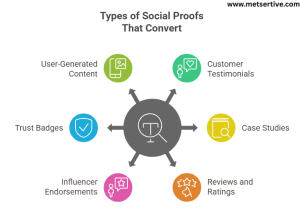
- The six types of social proof that truly convert
- How to use each at key funnel stages
- Real-world case studies and plug-and-play examples
By the end, you’ll know exactly how to sprinkle trust into your campaigns—without spending a penny on ads.
Why Social Proof Matters in Lead Nurturing
Trust is the foundation of conversion
Most people won’t buy from someone they don’t trust. Adding even a testimonial or review can drastically increase confidence in your brand. After all, hearing “It helped us grow by 30%” from another CEO feels a lot stronger than any claim you might make yourself. According to recent social proof statistics, 92% of customers trust peer recommendations over branded content—making reviews and case studies essential to your nurture strategy.
Credibility needs to build at every stage
From top-of-funnel awareness emails to bottom-of-funnel pricing pages, each touchpoint should subtly reassure prospects that others have walked this path—and succeeded.
- Awareness: Share an influencer quote (“This approach changed how we market”).
- Consideration: Feature a mini case study showcasing ROI.
- Decision: Add customer logos or star ratings right next to the sign-up button.
Peer-generated beats brand-created—every time
Humans trust humans. In fact, 92% of consumers around the globe say they trust recommendations from friends or strangers more than branded messages That’s why user-generated content—like a quick video testimonial—will almost always outperform a glossy brochure or hero banner.
Smart Tip:
Mix formats: combine reviews, video quotes, and certifications to maximize credibility and resonate with different audiences. A written testimonial backed by stats feels both authentic and authoritative.
6 Types of Social Proof That Convert
-
Customer Testimonials
What it is: Short quotes from satisfied clients highlighting real results.
Funnel stage: MOFU (Middle of Funnel) – ideal for nurturing and trust-building.
Example: “We increased our demo bookings by 40% thanks to this tool.”
Visual tip: Add a headshot + name + company under each testimonial for authenticity.
If you’re wondering how to use testimonials to increase conversions, place them strategically on pricing pages or within email campaigns to reinforce decision-making
-
Case Studies
What it is: In-depth stories showing the problem, solution, and outcome.
Funnel stage: BOFU (Bottom of Funnel) – perfect for prospects comparing options.
Example: A B2B SaaS case study demonstrating how a client cut onboarding time by 50%.
Visual tip: Use before-and-after stats in a simple graphic or timeline.
-
Reviews and Ratings
What it is: Star ratings and user reviews on public platforms.
Funnel stage: BOFU – adds last-minute trust before purchase.
Example: “4.7 ★ average rating from 120+ customers on Trustpilot.”
Tip: Display ratings near key CTAs, like a pricing page or signup form.
-
Influencer or Expert Endorsements
What it is: Validation from industry experts or niche influencers.
Funnel stage: TOFU/MOFU – builds authority early in the journey.
Example: “Top marketer Jane Doe calls it ‘a must-have for growing SMBs.’”
Tip: Use quotes from micro-influencers—they drive 60% more engagement than big names
-
Trust Badges and Certifications
What it is: Industry verification marks or award badges.
Funnel stage: MOFU/BOFU – assures prospects that you’re legitimate.
Example: “Hosted on AWS. ISO 27001 compliant.”
Tip: Show them near forms and pricing tables to reduce friction.
-
User-Generated Content (UGC)
What it is: Real photos, video demos, or social posts from customers.
Funnel stage: TOFU/BOFU – especially powerful for ecommerce and visual products.
Example: Customers’ Instagram posts tagged with your brand hashtag.
Why it works: 92% of consumers trust UGC more than branded content .
Visual tip: Create a “Shop the look” gallery using UGC on your website.
Real-World Case Studies That Got Results
Case Study 1: B2B SaaS – Testimonials Boost Email Conversions
Problem: Low conversion rates from nurture emails.
Social Proof Used: Customer testimonials added to email bodies.
Result: 23% increase in click-through rate and demo signups.
Takeaway: Even a short, relatable quote in an email can significantly improve conversions.
Case Study 2: Ecommerce – Reviews in Retargeting Ads
Problem: High abandonment cart rates.
Social Proof Used: Customer reviews featured in retargeting ads.
Result: 2.4× higher ROAS compared to generic ads .
Takeaway: Social proof in ads nudges hesitant buyers toward action—especially when tied to offers.
Case Study 3: Coaching Service – Social Shares + LinkedIn
Problem: Long sales cycles with low follow-ups.
Social Proof Used: Weekly student success stories on social media + LinkedIn recommendations.
Result: Sales cycle shortened by 60% and inbound leads increased significantly.
Takeaway: Sharing real-world success stories across platforms builds momentum—and trust.
Quick Takeaway:
Mixing and matching different types of social proof—visible at the right stages—helps guide prospects from “just browsing” to “where do I sign?” Let me know if you want visuals or templates for testimonials, case studies, or UGC galleries!
Case Study 4: Health & Wellness Clinic – Social Media Reach and Brand Trust
Problem:
A local IV hydration clinic needed a stronger online presence after in-person visits dropped significantly during the pandemic.
Social Proof Used:
They showcased customer testimonials and before/after stories through Facebook and Instagram ads, paired with an influencer shout-out from a local wellness guru. This social proof circulated widely across platforms.
Result:
Within two years, the clinic’s sales tripled, with over 1 million ad impressions and nearly 292,000 users reached in a single month. The campaign delivered an exceptional 1,039% ROI
Takeaway:
Well-executed UGC combined with credible influencer endorsement doesn’t just raise awareness—it massively drives conversions.
Case Study 5: Fitness Subscription Box (E-commerce) – UGC and Ratings Boost AOV
Problem:
A subscription-based fitness product company needed to improve credibility and increase average order value.
Social Proof Used:
They redesigned product pages to highlight star ratings, user photos, testimonials, and an Instagram “real customer” gallery.
Result:
Product page conversions jumped by 148.3% after featuring review badges and UGC prominently.
Takeaway:
Even simple visual updates that emphasize UGC and star ratings can dramatically improve purchase decisions and revenue per visitor.
Case Study 6: Legal Services – Interactive Chatbot with Trust Signals
Problem:
A small law firm struggled with low lead engagement and high website bounce rates.
Social Proof Used:
They integrated an interactive video chatbot on their homepage that featured client success stories, case summaries, and video testimonials highlighting satisfied clients .
Result:
Their user engagement rates soared—more visitors stayed on the site, engaged with the chatbot, and more leads converted into consultations.
Takeaway:
Combining real-time interaction with trust-building content establishes credibility instantly—ideal for professional services.
Where to Use Social Proof in Your Lead Nurturing Funnel
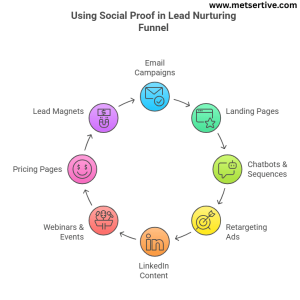
Here’s where to sprinkle social proof so it packs maximum punch in your funnel:
-
Email Campaigns
- Where: Place testimonial banners or mini-case snippets mid-email or near CTAs.
- Why it works: A quick perspective like “Our demo-to-conversion time improved by 30% thanks to this” adds real-world credibility.
- Tip: Try A/B testing subject lines or email copy using your reviews—emails with quotes often get 20–30% higher CTR.
-
Landing Pages (Pricing or Demo)
- Where: Right next to ‘Get Started’ or ‘Book a Demo’ buttons—customer testimonials, star ratings, or trust logos.
- Why it works: Prospects see proof just when they’re about to act—and trust seals the deal.
-
Chatbots & Automated Sequences
- Where: In conversation flows: “Client X saw results in 7 days.”
- Why it works: As prospects chat, real stories reinforce trust in real time—no human needed.
Social proof acts as one of the most important trust signals for lead generation, especially when embedded into chatbots or retargeting ads.
-
Retargeting Ads & Paid Social
- Where: Feature image of a happy customer, review quote, or before/after screenshot.
- Why it works: Adding social proof in an ad makes it pop compared to generic brand messages.
- Tip: Use dynamic ads showing different reviews tailored to products a visitor browsed.
-
LinkedIn Content & DMs
- Where: Include success stories in posts or one-to-one LinkedIn messages—like “XYZ achieved a 40% faster pipeline using this method.”
- Why it works: Social proof shines bright in a professional network and feels less salesy.
-
Webinars and Live Events
Where: During registration pages, in-event slides, and follow-up emails after webinars or live workshops.
Why it works: People are more likely to sign up or engage during live sessions when they see others have benefited. Including a testimonial like “This workshop helped us double our qualified leads” reduces skepticism and increases attendance and post-event conversions.
Tips:
- Add 1–2 testimonials on the registration page near the CTA button.
- Use a customer quote on your opening slide for credibility.
- Post-event, include a mini case study in your thank-you email with the replay link.
-
Pricing and Comparison Pages
Where: On your pricing page or “compare plans” page, next to feature tables or CTA buttons.
Why it works: Leads on pricing pages are evaluating purchase decisions. Seeing a relatable testimonial or result here builds trust at the decision point, easing concerns about cost and ROI.
Tips:
- Use trust badges or short quotes like “Paid for itself in 2 months.”
- Place testimonials from customers who chose a higher-tier plan to nudge up-sells.
- A/B test testimonial placement to find the highest-impact spots.
-
Lead Magnets and Download Pages
Where: On opt-in forms for guides, checklists, or free tools, and on the thank-you/download confirmation page.
Why it works: Social proof here reassures leads that the resource is valuable and worth exchanging their email for, reducing friction in list building.
Tips:
- Use quotes like “This checklist saved us 10 hours in setup time” near download CTAs.
- Add a mini case study on the thank-you page encouraging the next step, like booking a demo.
- Combine social proof with urgency, e.g., “Join 5,000+ marketers who’ve used this to boost conversions.”
Adding genuine testimonials and case studies across your funnel helps you build trust with potential customers—especially when they’re still weighing their options.
How to Collect and Use Social Proof the Right Way
-
Ask Post-Purchase or Post-Onboarding
Scenario: A SaaS company sends new customers a short email two weeks after activation:
“How’s it going? Mind sharing one thing you love so far?”
Insight: Within a month, they collect dozens of fresh quotes. One email quote—“It cut our customer follow‑up time in half”—gets featured in nurture emails and boosts demo bookings.
-
Use Video Testimonials When Possible
Scenario: A marketing agency scheduled 15‑minute Zoom interviews with happy clients.
Example: These were edited into 45-second clips: “Thanks to them, we doubled our engagement.”
Insight: These clips were mashed into landing pages, email campaigns, and social stories—resulting in a 28% increase in conversion rate.
-
Turn Survey Feedback into Quote Graphics
Scenario: After an e‑commerce workshop, participants are asked:
“What was your biggest win from the session?”
Responses like “We hit our first 4-figure week!” were turned into branded image cards.
Insight: Shared on LinkedIn, these visuals lifted post engagement by 5× and drove subscribers to sign up for the next session.
-
Use the Right Tools
Scenario: A software startup implemented:
- Endorsal to collect text + video testimonials
- VideoAsk to prompt two-question video responses
- Hotjar to capture heatmaps that added to qualitative feedback
Insight: They embedded these assets in onboarding sequences and saw a 15% drop in trial abandonment and a 12% bump in plan upgrades.
-
Get Permissions & Stay Compliant
Scenario: A B2B consultant firm sends a gentle follow-up form asking:
“Can we share your success story? We’ll send over a draft before posting!”
Many clients happily agree, and it ensures GDPR compliance.
Insight: This transparency builds trust—not just with customers, but also with their legal teams—while keeping the firm protected and credible.
These real-world examples show how and where to get and use social proof smartly—so your collateral and campaigns stay authentic, compliant, and irresistibly persuasive. One of the most compelling ways to market your solution is by marketing with real customer stories that speak directly to your target audience’s pain points.
Common Mistakes to Avoid
Even the best social proof can misfire if used badly. Here’s what to skip to keep your systems sharp and effective:
-
Using Outdated or Irrelevant Testimonials
What usually happens: You pop a 5-year-old quote under your latest email—hits like a ghost.
Why it hurts: People want to see recent relevancy, especially in fast-moving industries.
Fix: Refresh testimonials every 6–12 months or remove them if they no longer speak to what you offer now.
-
Placing Proof in the Wrong Funnel Stage
What usually happens: You include a long case study in awareness emails.
Why it hurts: Early-stage leads aren’t ready for heavy details—they just need a reason to keep reading.
Fix:
- Top of funnel? Use a quick stats snippet or influencer endorsement.
- Bottom of funnel? Drop in full case studies near CTAs.
-
Overusing Superlatives Without Specificity
What usually happens: Your site claims “best product ever”—but why?
Why it hurts: Clichés feel salesy and untrustworthy.
Fix:
- Swap “best in the market” for “boosted our email opens by 32%”.
- Use specific numbers, contexts, and even a story line.
-
Ignoring Visual Formatting (Walls of Text = No Go)
What usually happens: You paste twenty testimonials back-to-back with no images or design.
Why it hurts: People scroll past blocks of text—they don’t read them.
Fix:
- Break quotes into cards or quote bubbles
- Use customer headshots or avatars
- Keep each testimonial short—2–3 sentences max
-
Using Proof Without Context
What happens: You drop a great testimonial… but it’s unclear what service or result it relates to.
Why it hurts: Prospects are left guessing: “Is this about the product I’m considering? How does it help me?”
Fix: Always include context: who the customer is, what they used, and what changed.
Example: Instead of just “Great results,” go for: “In just 3 weeks, our onboarding process was cut in half using [Tool Name].”
-
Forgetting to Localize or Personalize
- What happens: You show U.S.-based testimonials to your global audience or enterprise case studies to startups.
Why it hurts: Audiences tune out when they don’t see themselves in the message.
Fix: Segment proof by region, industry, or company size—and serve the right one at the right time.
Example: A lead from Australia sees proof from a fellow Aussie SME. That relatability increases trust tenfold.
-
Hiding Social Proof Below the Fold
What happens: Your best testimonials are buried at the bottom of your site or email.
Why it hurts: People may never scroll far enough to see them.
Fix: Bring your strongest proof higher—above the fold, near your CTA, or even in subject lines.
Example: Move a top quote from your case study footer into the email header or landing page hero for instant credibility.
Conclusion
Social proof isn’t optional—it’s essential.
When used correctly, it builds trust, adds authority, and shortens your sales cycle. The right testimonial at the right time makes someone say, “Hey, I can see myself doing that too.”
When used wisely, social proof becomes a cornerstone of B2B lead nurturing best practices, helping you build authority, reduce friction, and guide leads down the funnel. The right type of social proof, presented at the right stage, not only converts but helps you convert leads into loyal customers who champion your brand.
Want to go deeper? Check out our flagship “Nurturing Lead” guide and explore other helpful reads in the series, like:
- Using Social Proof in Lead Nurturing: Case Studies That Work
- Top Drip Email Campaign Examples That Convert
- The Ultimate Guide to Multi‑Channel Lead Nurturing