Posts

Product Review Strategies to Enhance Your Business Growth

Product review is more than just an evaluation—it’s a powerful marketing tool that can drive sales, build trust, and boost your brand’s reputation. For small and medium-sized businesses (SMBs), a well-crafted product review can influence potential buyers by providing authentic insights that help them make informed decisions.

However, to maximize the impact of product reviews, it’s best to rely on your internal team of writers and marketing strategists. Why? Because your internal team understands your brand’s values, voice, and target audience, allowing them to create reviews that are not only informative but also aligned with your overall business strategy. This article explores the essential steps and strategies for crafting product reviews that convert readers into loyal customers.

Why Product Reviews Are Essential for Business Growth

Product reviews serve as a bridge between your brand and potential customers. When crafted with precision and authenticity, they:

  • Build Trust and Credibility: Genuine reviews give customers confidence in their purchasing decisions.
  • Enhance SEO and Visibility: SEO-optimized reviews can improve search engine rankings, driving organic traffic to your site.
  • Drive Conversions and Sales: Reviews that address customer pain points and highlight benefits can lead to higher conversion rates.

By leveraging the expertise of your internal team, you ensure that product reviews not only reflect accurate information but also resonate with your target audience, leading to stronger engagement and increased sales.

Key Elements of an Effective Product Review
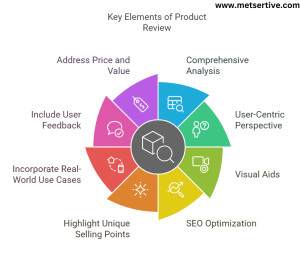
 

Key Elements of Product Review

  1. Comprehensive Analysis

    Provide an in-depth evaluation of the product, covering features, benefits, and potential drawbacks. Your internal team can dig deeper into what sets your product apart and align the review with customer expectations.

  2. User-Centric Perspective

    Write from the user’s viewpoint, addressing common questions and concerns. An internal team familiar with your customer personas can tailor the content to answer the most pressing concerns of your target audience.

  3. Visual Aids

    Incorporate high-quality images or videos to showcase the product, enhancing the reader’s understanding and engagement.

  4. SEO Optimization

    Integrate relevant keywords naturally throughout the review to improve visibility on search engines. Internal writers, with their knowledge of your SEO goals, can ensure that keywords are placed strategically without compromising readability.

  5. Highlight Unique Selling Points (USPs)

    Clearly articulate what makes the product stand out from the competition. An in-house team can emphasize these points effectively, aligning the review with your brand’s positioning.

  6. Incorporate Real-World Use Cases

    Share practical examples of how the product can be used in everyday scenarios.

  7. Include User Feedback

    Feature insights or testimonials from actual users to provide diverse perspectives. This reinforces trust and shows that your product delivers real value.

  8. Address Price and Value

    Discuss the product’s cost in relation to its quality and features. Mention whether it offers good value for money and if there are any promotions, discounts, or bundled deals available.

Steps to Writing a Compelling Product Review
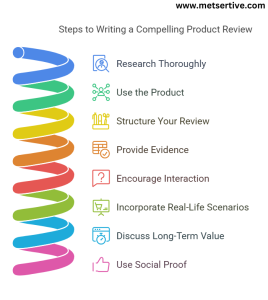
 

Writing a compelling product review

  1. Research Thoroughly

    Gather detailed information about the product, including specifications, user feedback, and comparisons with similar products. Your marketing or your internal team can access insider knowledge and customer data to enrich the review.

  2. Use the Product

    Whenever possible, personally use the product to gain firsthand experience. Marketing or Internal teams have easy access to test and explore the product, enabling them to provide authentic insights.

  3. Structure Your Review

    Organize your review with clear headings and subheadings, making it easy for readers to navigate.

  4. Provide Evidence

    Support your claims with data, testimonials, or expert opinions.

  5. Encourage Interaction

    End with a call-to-action, inviting readers to share their experiences or ask questions.

  6. Incorporate Real-Life Scenarios

    Show how the product can solve specific problems or fit into everyday life.

  7. Discuss Long-Term Value

    Evaluate how the product performs over time. Mention durability, maintenance, and any cost considerations.

  8. Use Social Proof

    Include user testimonials, ratings, or quotes from reputable sources.

  9. Test Across Multiple Scenarios

    If applicable, test the product in various situations or settings to provide a comprehensive assessment.

  10. Provide Practical Buying Tips

    Share additional advice such as where to purchase, tips for getting the best deals, or complementary products.

SEO Best Practices for Product Reviews

  • Keyword Integration

    Identify and incorporate relevant keywords that potential customers might use when searching for product reviews. Tools like Google’s Keyword Planner can assist in this process.

  • Meta Descriptions

    Craft compelling meta descriptions that include the focus keyword to improve click-through rates from search engine results.

  • Internal and External Links

    Include links to related content on your site and reputable external sources to enhance SEO and provide additional value to readers.

Avoiding Common Pitfalls

  1. Bias

    Maintain objectivity to build trust. Disclose any affiliations and provide balanced views.

  2. Overwhelming Jargon

    Use clear and concise language, avoiding technical terms that may confuse readers. Your Marketing team can ensure the tone aligns with your brand voice and is accessible to your audience.

  3. Neglecting Updates

    Regularly update your reviews to reflect any changes in the product or market, ensuring the content remains relevant.

  4. Focusing Solely on Positives

    Avoid creating overly promotional reviews that only highlight the positives.

  5. Ignoring the Target Audience

    Tailor your review to the needs and interests of your target audience.

  6. Failing to Verify Claims

    Avoid relying solely on manufacturer descriptions or marketing materials.

  7. Poor Formatting

    Reviews that are difficult to read can discourage readers.

  8. Neglecting Legal Disclosures

    If you’re an affiliate or received the product for free, disclose this information to maintain transparency.

Conclusion

Product review is a powerful marketing tool that can significantly boost business growth when executed effectively. By leveraging your internal team of writers and marketing strategists, you ensure that product reviews not only capture the essence of your brand but also address the needs of your audience, ultimately driving conversions and building long-term customer trust. When done right, product reviews can position your brand as a trusted authority and pave the way for sustainable growth.

For businesses looking to harness the power of well-crafted product reviews, investing in internal expertise can make all the difference. Start refining your product review strategy today and watch your brand thrive.
Testimonials and Case Studies Build Trust and Boost Conversions in B2B Marketing

Imagine you’re about to make a big purchase for your business. You’ve done your research, read product descriptions, and even attended a demo. But something is still missing. What do you do next?

You look for proof.

That’s where testimonials and case studies come in. These aren’t just marketing buzzwords—they are trust-building powerhouses that can turn hesitant prospects into confident buyers.

But how do you create compelling testimonials and case studies that actually make an impact? Let’s break it down step by step.

 Why Testimonials and Case Studies Matter in B2B Marketing

Before we dive into the “how,” let’s quickly look at the “why.”

📌 Trust is everything – According to Demand Gen Report, 97% of B2B buyers say user-generated content like testimonials and case studies is more credible than traditional marketing.

📌 They boost conversionsTestimonials can increase conversions on sales pages by up to 34%.

📌 They shorten the sales cycle – Case studies offer real-world proof, helping prospects make faster decisions.

Now that we know they work, let’s talk about how to create them effectively.

 How to Create Compelling Testimonials


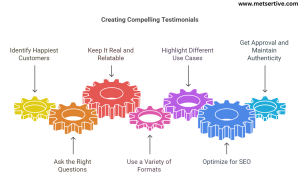
How to create compelling Testimonials

Step 1: Identify Your Happiest Customers

Not all customers are created equal. Some love your product but aren’t great at articulating why. Others might be satisfied but not enthusiastic enough to recommend you.

Focus on customers who:
✔️ Have seen measurable success using your product.
✔️ Are willing to share their story publicly.
✔️ Have credibility in your industry.

Pro Tip: Use Net Promoter Score (NPS) surveys to identify promoters—those who rate your company 9 or 10 out of 10 are prime candidates!

Step 2: Ask the Right Questions

A weak testimonial is just fluff. A strong one tells a story.

Here’s how to get meaningful testimonials:

  • What problem were you facing before using our product/service?
  • What made you choose us over competitors?
  • What measurable results have you achieved?
  • Would you recommend us to others? Why?

Example of a weak testimonial: “Great company, excellent service!”
Example of a strong testimonial: “Using [Product Name], we reduced customer churn by 28% in just 3 months, increasing our revenue by 15%.”

Step 3: Keep It Real and Relatable

Authenticity wins. Always use real names, job titles, and company names (with permission, of course).

Pro Tip: Video testimonials are even more powerful—79% of consumers watch video testimonials to learn more about a company.

Step 4: Use a Variety of Formats

While written testimonials are great, incorporating different formats can make them even more engaging. Consider:

Video testimonials – These are more authentic and can increase conversion rates. According to Wyzowl, two-thirds of people are more likely to purchase after watching a video testimonial .

Social media shout-outs – Screenshots of customer praise from LinkedIn, Twitter, or Google Reviews make testimonials feel organic.

Audio snippets or podcast interviews – Customers explaining their experience in their own voice adds credibility.

Step 5: Highlight Different Use Cases

Not all prospects have the same pain points. A strong testimonial strategy includes a range of stories:

Different industries – Show how your solution works across various sectors.

Different customer sizes – Testimonials from small businesses and enterprise clients can appeal to different audiences.

Different product features – If your solution has multiple benefits, highlight diverse aspects through customer stories.

Step 6: Optimize Testimonials for SEO

Make sure your testimonials work for both users and search engines by:

Including relevant keywords naturally (e.g., “This CRM software helped us reduce churn by 30%”).

Using schema markup to help testimonials appear in Google search results.

Placing testimonials on high-intent pages like product pages, landing pages, and checkout pages.

Step 7: Get Approval and Maintain Authenticity

Before publishing any testimonial, always:

Get written consent from the client.

Ensure that the wording remains authentic and unaltered—over-editing can make testimonials sound fake.

Offer to link back to the client’s website as an added incentive for them to provide a testimonial.

By following these steps, your testimonials will be more persuasive, credible, and conversion-friendly.

How to Create a Powerful Case Study

While testimonials are short and sweet, case studies go deep. They tell a before-and-after story that proves your product’s impact.

Step 1: Choose the Right Client Story

Not every client success story makes a great case study. Look for stories with:
✔️ A clear challenge and solution.
✔️ Quantifiable results.
✔️ Broad industry relevance.

Step 2: Structure It Like a Story

A case study should follow a simple, engaging format:

1. Headline (Make It Benefit-Driven!)

“How [Client Name] Increased Revenue by 40% with [Your Product]”

2. Introduction

A short overview of the company, their industry, and what they do.

3. The Challenge

Describe the problem they were facing before using your product. Keep it relatable!

4. The Solution

Explain how your product/service solved their problem. Use screenshots, step-by-step breakdowns, or even behind-the-scenes insights.

5. The Results

This is the most important part! Use specific numbers to highlight impact.

Example:
“After implementing [Product Name], [Client Name] saw a 45% increase in productivity and a 30% reduction in operational costs.”

Pro Tip: Adding graphs or before-and-after comparisons makes the impact visually clear.

Step 3: Add Social Proof and Quotes

Nothing adds credibility like a direct client quote.

✔️ Example:
“Before [Your Product], managing customer data was a nightmare. Now, we’ve streamlined everything and cut processing time by 50%.” – [Client Name], CEO at [Company]

Step 4: Use Visuals to Enhance the Story


A well-designed case study isn’t just about text—it should be visually engaging. Use images, charts, infographics, or even short videos to highlight key metrics and transformations.

·       Before-and-after comparisons help illustrate the impact clearly.

·       Graphs showing percentage improvements make data easier to digest.

·       Screenshots of product dashboards or implementation steps add credibility.

Step 5: Optimize for Readability and SEO

If your case study is hard to read, people won’t engage with it. Make it scannable by:

·       Using short paragraphs and bullet points to break down information.

·       Including subheadings like “The Challenge,” “The Solution,” and “The Results” for easy navigation.

·       Incorporating SEO keywords to ensure your case study ranks well in search engines.

Step 6: End with a Strong Call to Action (CTA)


A case study isn’t just a success story—it’s a conversion tool. Guide readers toward the next step:

·       “Want similar results? Book a free demo today.”

·       “Learn how [Company Name] can help your business. Contact us now.”

·       “Download the full case study for in-depth insights.”

Common Pitfalls to Avoid

  1. Making Testimonials Too Generic

A vague statement like “Great service!” or “We love this product!” doesn’t provide any real insight. Effective testimonials should highlight specific pain points, solutions, and measurable outcomes.

  • Instead of “This software is amazing,” aim for “This software reduced our reporting time by 50%, allowing our team to focus on revenue-generating tasks.”
  • Encourage clients to include quantifiable results to add credibility and make testimonials more persuasive.
  1. Skipping Data in Case Studies

    Case studies are meant to showcase tangible success, yet many fail to include hard numbers that prove real impact.

  • A case study that simply states, “This solution improved efficiency,” is not compelling.
  • Instead, use specific data points like “Productivity increased by 35%,” or “Customer churn dropped by 20% in six months.”
  • According to HubSpot, data-backed case studies are 70% more effective in convincing potential buyers
  1. Ignoring Mobile Optimization

    Many businesses overlook the fact that 57% of users access content from mobile devices (Statista). If video testimonials or case studies aren’t optimized for mobile viewing, engagement will suffer.

  • Ensure that videos load quickly, are formatted for vertical viewing, and have subtitles for users watching without sound.
  • Text-based case studies should use responsive design, short paragraphs, and bullet points for easy readability on small screens.
  1. Failing to Tell a Clear, Structured Story

A case study should have a beginning (the challenge), middle (the solution), and end (the results). If it lacks structure, it becomes difficult for readers to follow and connect with the story.

  1. Using Too Much Jargon or Technical Language

While industry-specific terms are sometimes necessary, overly technical descriptions can alienate potential clients. Keep the language simple, clear, and relatable to ensure accessibility.

  1. Not Updating Testimonials and Case Studies Regularly

A case study from five years ago may not reflect your company’s current capabilities. Ensure that testimonials and case studies are regularly updated with fresh, relevant success stories.

  1. Overlooking the Power of Data-Driven Results

General statements like “This solution helped our business grow!” are not compelling. Instead, focus on measurable results like “Our revenue increased by 35% within six months.” Data makes testimonials and case studies more credible and persuasive.

  1. Ignoring Distribution and Promotion

A well-written case study or testimonial won’t drive results if no one sees it. Many businesses fail to:

  • Promote case studies on landing pages, email campaigns, and social media.
  • Repurpose content into infographics, videos, or blog posts for greater reach.

By avoiding these common mistakes, your testimonials and case studies will build stronger credibility, engage potential clients, and drive conversions effectively.

 Where to Use Testimonials and Case Studies for Maximum Impact

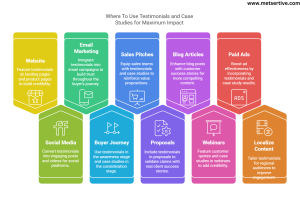
Strategic placement of Testimonials and Case Studies

  1. Website

    Feature testimonials and case studies on landing pages, product pages, and the homepage to establish instant credibility. Including them near call-to-action (CTA) buttons can help boost conversions by reinforcing trust.

  2. Social Media

    Convert testimonials into engaging social media posts, LinkedIn articles, and short-form videos. Customer success stories perform well on platforms like LinkedIn, Instagram, and Twitter, where real experiences resonate with audiences.

  3. Email Marketing

    Integrate testimonials into email campaigns and nurture sequences to build trust at different stages of the buyer’s journey. Adding a short testimonial in follow-up emails can help move leads further down the funnel.

  4. Align with Buyer Journey Stages

    • Testimonials work well in the awareness stage to spark interest.
    • Case studies are ideal for the consideration stage, providing deeper insights and convincing details.
  5. Sales Pitches and Presentations

    Equip sales teams with case studies and testimonial slides to handle objections and reinforce value propositions. Adding real-world success stories to sales decks, proposals, and one-on-one pitches can make decision-makers more confident in your solution.

  6. Proposals and Sales Decks

    Use case studies and testimonials in RFP responses, investor decks, and business proposals to validate claims with real client success stories. Highlighting customer results can differentiate your offering in competitive sales situations.

  7. Blog Articles and Thought Leadership Content

    Enhance educational blog posts and industry reports by embedding customer success stories. Testimonials provide social proof, making thought leadership content more compelling and actionable.

  8. Live Webinars and Presentations

    Featuring customer quotes, testimonial videos, or case study breakdowns in webinars and keynote speeches adds credibility and engagement. Having a client share their success story live can further enhance authenticity.

  9. Paid Ad Campaigns

    Boost the effectiveness of Google Ads, Facebook Ads, and LinkedIn Sponsored Content by incorporating testimonial snippets or case study results. Ads featuring real customer endorsements can increase click-through rates by up to 15%

  10. Localize Content for Regional Audiences

If you operate in multiple geographic regions, tailor testimonials and case     studies to resonate with specific local audiences.

  • Use regional client names and cultural references.
  • Translate content to the local language where applicable.
    Localized content improves engagement and demonstrates attention to detail, essential for global B2B marketing​

By strategically placing testimonials and case studies in these key areas, businesses can reinforce credibility, nurture leads, and drive higher conversions across multiple channels.

Final Thoughts

Testimonials and case studies aren’t just marketing fluff—they’re powerful trust-builders that can help close deals faster.

👉 Start by identifying your happiest customers.
👉 Ask the right questions to capture real impact.
👉 Structure case studies like engaging stories.
👉 Use testimonials and case studies strategically across marketing channels.

By following these steps, you’ll create compelling, credible, and conversion-boosting content that wins client trust and drives sales.

Ready to turn your customer success into your biggest sales asset?  Let’s make it happen!